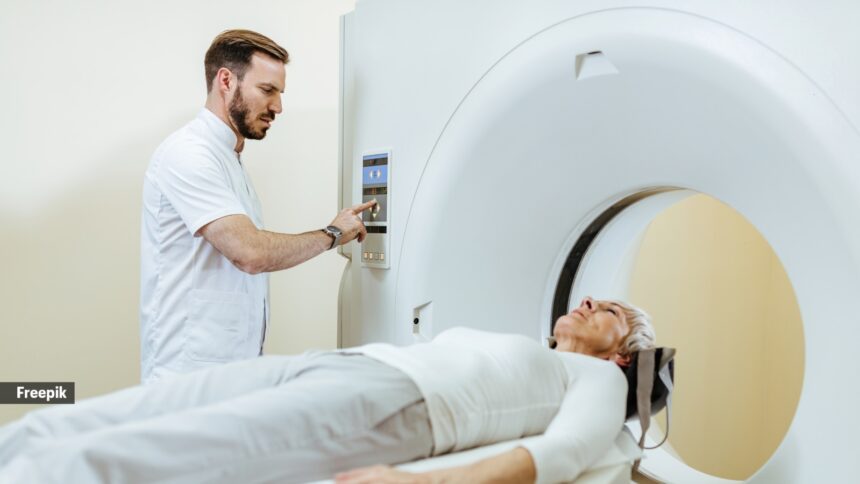
Magnetic Resonance Imaging or MRI scan is often considered one of the safest and most detailed imaging tests available today. Unlike X-rays or CT scans, it does not use radiation, making it a preferred option for diagnosing conditions involving the brain, spine, joints, nerves, and internal organs.
But despite being widely used, MRI safety continues to confuse many people — especially those with metal implants, pacemakers, tattoos, or medical conditions like pregnancy and kidney disease.
According to Dr Atampreet Singh, Senior Director & Head – Neurosciences, ShardaCare–Healthcity, while MRI is safe for most people, there are certain situations where extra caution is necessary.
DISCLAIMER:
The biggest concern with MRI lies in its powerful magnetic field. “People with certain older implanted medical devices, such as non-MRI-compatible pacemakers, cochlear implants, or metal clips in the brain, may need to avoid MRI scans because the strong magnetic field can interfere with these devices or move metal inside the body,” Dr Singh tells indianexpress.com.
People who have metal fragments in sensitive areas like the eyes may also be advised against MRI. However, doctors usually assess every patient individually before deciding whether the scan is unsafe.
One common misconception is that anyone with a metal implant automatically cannot undergo MRI anymore. Experts say that is no longer true in many cases.
Modern pacemakers, artificial joints, stents, and today are often designed to be MRI-compatible. However, doctors still carefully review the type of implant, when it was placed, and its safety instructions before allowing the scan.
“Patients should always inform the MRI team about any implant, surgery, or metal device inside the body to avoid possible risks,” the neurologist strongly recommends.
Pregnancy is another area where many patients become anxious about MRI scans.
Dr Singh explains that MRI is generally considered safe during pregnancy because it does not expose the body to harmful radiation. However, doctors are usually more cautious during the first trimester and may avoid MRI unless it is medically necessary.
MRI contrast dye is also generally avoided during pregnancy unless there is a strong reason to use it.
Some MRI scans require a contrast dye to make certain tissues or blood vessels more visible. While most people tolerate it well, it may not be suitable for everyone.
“, certain allergies, or previous reactions to MRI contrast dye may need to avoid it.” Dr Singh cautions.
Doctors often check kidney function before giving contrast dye because, in rare situations, it can cause complications in people with poor kidney health.
Sharing complete medical history before the scan is extremely important for safety.
Patients should inform doctors about pacemakers, surgeries, implants, pregnancy, kidney disease, allergies, hearing devices, tattoos, or any history of metal injuries. Even small metallic objects can become dangerous near the MRI magnet.
In fact, people are also asked to remove jewellery, watches, hairpins, hearing aids, and electronic devices before entering the MRI room.
According to Dr Singh, one of the most common misunderstandings is that MRI exposes patients to harmful radiation.
“In reality, MRI uses magnetic fields and radio waves, not radiation.”
He adds that another misconception is that all metal implants automatically make MRI unsafe, even though many modern devices today are specifically built to be MRI-safe. Still, proper screening before the scan remains non-negotiable.
For people who cannot undergo MRI, doctors may recommend alternatives such as CT scans, ultrasound, or X-rays depending on the condition being investigated. While these tests may not always provide the same level of detail, they can still help diagnose many problems safely.
DISCLAIMER: