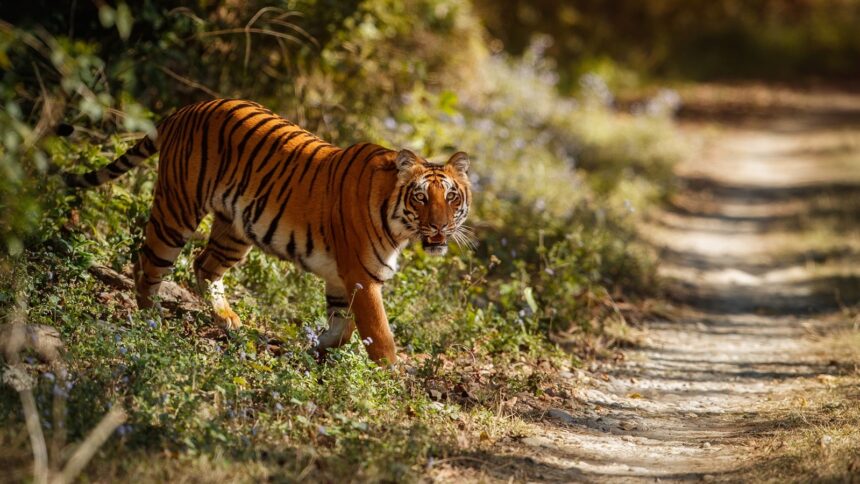
Tigers are constantly communicating, not through spoken sounds, but through a system of scent markings, scratches, calls, and behavioural signals invisible to most human eyes. To wildlife experts, these hidden clues form a sophisticated “language” that helps scientists understand tiger movement, territorial dominance, breeding patterns, and even personality traits. According to Indrajit Ghorpade, Founder, Deccan Conservation Foundation, these territorial signs are crucial not only for the animals themselves, but also for conservation efforts.
“Territory marking helps scientists and the Forest Department understand range, territory, and tiger movements. Knowledge is key to policy and conservation planning,” Ghorpade explained.
Unlike social animals that rely heavily on group interactions, tigers communicate through subtle environmental signals. Their forests function like giant information boards filled with
“Markings establish presence,” said Ghorpade. “Scent and urine, gland secretions, and even calls and oral communication, these combinations convey various messages and moods.”
These messages can serve multiple purposes. A dominant tiger may warn rivals to stay away, while a tigress in heat may use scent trails to attract a mate. Some signals announce territorial ownership, while others communicate aggression, fear, or submission.
“Territory and warnings would be for challengers. Invitation to females in heat, etc,” he added.
While documentaries often dramatise tiger tracking, decoding these signs in real life is incredibly difficult and requires years of scientific observation. “It is difficult to recognise these signs, markings, and sounds unless in-depth scientific studies and research conclude results,” Ghorpade noted.
However, experts can still identify individual tigers through a mix of physical and behavioural traits. Stripe patterns act almost like fingerprints, while movement patterns and territorial habits offer additional clues.
“But each tiger has individual characteristics that can also identify them and their behaviours — including if dominant, or even feeling threatened, in some cases,” he said.
“Conservationists, researchers and experts use all available data, including scat, pug marks, striped patterns, etc., to study individual specimens,” Ghorpade explained.
Camera traps have become especially important because tiger territories can stretch across vast and inaccessible forest landscapes.
“Since territories are fairly large, camera traps also help. Some portions of the jungle may not be accessible. Seasonal weather changes affect movement. Breeding seasons and prey movement also affect tigers,” he said.
“That’s why water bodies are a magnet for water sources for all predators and prey,” Ghorpade noted. He added that long before advanced camera traps and GPS mapping, forest departments relied heavily on local trackers with intimate knowledge of jungle ecosystems. “Whatever signals and tell-tale signs help, it’s useful. That’s why in early days local trackers who could read the forest were used.”