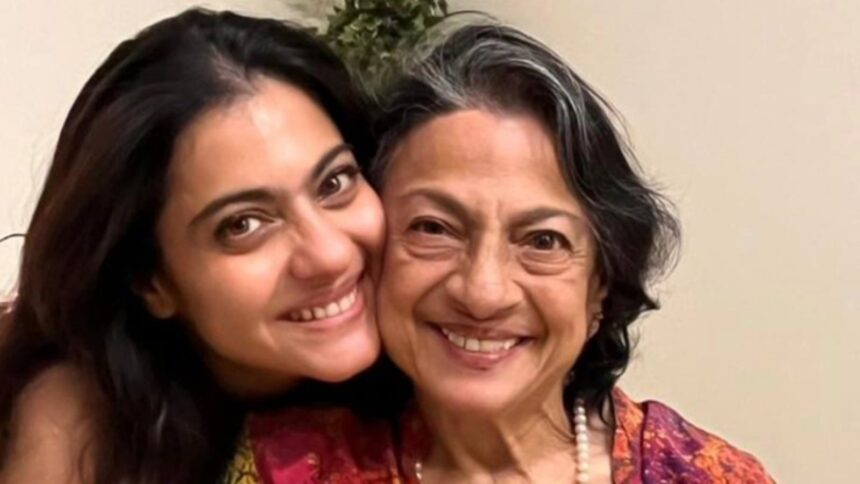
Kajol, 51, recently expressed how becoming a parent made her rethink her perspective about motherhood and the unconditional love of a mother. “I realised exactly how much a parent loves their child when I had my own kids. When I had my daughter, one of the first conversations I had with my mother… after some six months, I called up my mom, and I had howled on the telephone…,” she told Canadian YouTuber Lilly Singh.
The Dilwale actor continued, “I have been like…you know mom, I never knew how much you loved me…I never knew how much you took care of me…I always think I have done everything right for my mother… and I have taken care of her…I love her to death and beyond…But I never understood how much she loved me…you may not agree on certain things, but he or she loves you…you can’t leave them…you will want to make things right.”
What does Kajol’s reflection reveal about the mother-child bond and emotional maturity?
Delnna Rrajesh, psychotherapist and life coach, shared how there are certain truths in relationships that we don’t fully understand until we live them. “From a psychology and emotional intelligence perspective, the parent-child bond is one of the most complex we experience. It carries love, expectation, disagreement, sacrifice and sometimes distance, all at once,” said Delnna.
When a woman becomes a mother, she moves from being cared for to being responsible for another life. “In that moment, something deep shifts internally. She begins to feel the instinct to protect; the fear of losing, the weight of , and the unconditional nature of love. And suddenly, past experiences are reinterpreted,” reflected Delnna.
From a psychotherapy perspective, this is called emotional reframing through lived experience. “sWhat once felt like control may now feel like protection. What once felt like strictness may now feel like care.”
This does not mean everything was perfect. “It means there is now space to see the full picture. From an emotional healing perspective, this is where many adult relationships with parents begin to transform. Not by changing the past. But by changing the understanding of it,” expressed Delnna.
In today’s world, where boundaries and independence are rightly emphasised, there is also a growing tendency to distance ourselves at the first sign of conflict. “But from a relationship psychology perspective, not all disagreements are reasons to disconnect. Some relationships are layered, imperfect, and still deeply valuable. Especially parent-child relationships, which are built over decades, not .”
Healthy connection looks like:
*acknowledging differences
*communicating without blame
*holding space for imperfection
*choosing repair over distance when possible