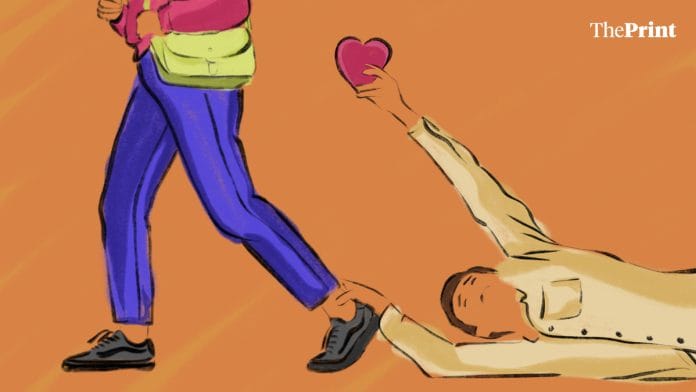
After a romantically charged first date, a Delhi-based poet found himself in a metaphorical cage. His date had just dropped a three-stanza poem on WhatsApp. None of it made sense, and the parts that did were riddled with grammatical errors. If the date had been any less cute, the poet would have obliterated him. Instead, he could only reply: “Oh, v cute.” Such was the power of the poem that he told me, “I surely can’t date him now.”
Been there, done that. Two years ago, the very first column in this series mentioned a vigilante verse villain. The words of his pathetic poem still make my whole face cringe. I dated him for a month, and I can tell you it’s not worth investing in such poetic endeavours. Fake praise only feeds the beast.
It is only because a Kalkaji resident couldn’t tell his ex-girlfriend that her poems weren’t worth sharing that she now runs an entire Instagram page dedicated to her embarrassing body of work. Peppered with intimidating Urdu words like ‘mujammal’, her heartbreak poems fall somewhere between gibberish and primary-school calibre. And yet, she complains that they never work on her boyfriends. I wonder why.
I am no poet, and that is why I never dare to woo people by writing one. Why play the game with a weapon that you can’t actually wield? And that is why it confuses me when ordinary people who have never spent a minute understanding a poem turn into poets in love (or delusion).
Those who consider themselves kinder than most have a different perspective. They say love can turn us into poets—even bad ones—and that should be okay. It’s almost endearing to watch someone try really hard to please you. But is it really love that possesses people to write poetry after a first date?
Most such poems, sourced through gossip channels, seem more interested in stroking the poet’s ego than impressing the muse. In eight of 10 cases, they scream, “Look, this is how deep I am. You’re so lucky, my love.”
A Mumbai-based documentary filmmaker wanted to write a poem that would make his poet girlfriend cry happy tears. To make it personal, he told ChatGPT everything he loved about his girl. It worked. The girlfriend was sobbing with joy—even though she knew the poem had been written by a bot. “It’s the effort that counts,” she said. The effort, in this case, was mostly typing prompts.
A word of caution to those opening a chatbot—the couple was already mad about each other before the filmmaker introduced a poem in the dynamic. The story would have been completely different if he had sent it to her on the first day of their talking stage.
There’s a girl in Delhi who saves screenshots of the shoddy poems sent to her on Bumble and performs dramatic readings of them over cocktails with her friends. She does it only because she understands the so-called poet’s bluff.
In the words of Elizabeth Bennet, poetry has the power to drive away love. “Of a fine stout love, it may. But if it is only a vague inclination, I’m convinced one poor sonnet will kill it stone dead.”
(Edited by Theres Sudeep)