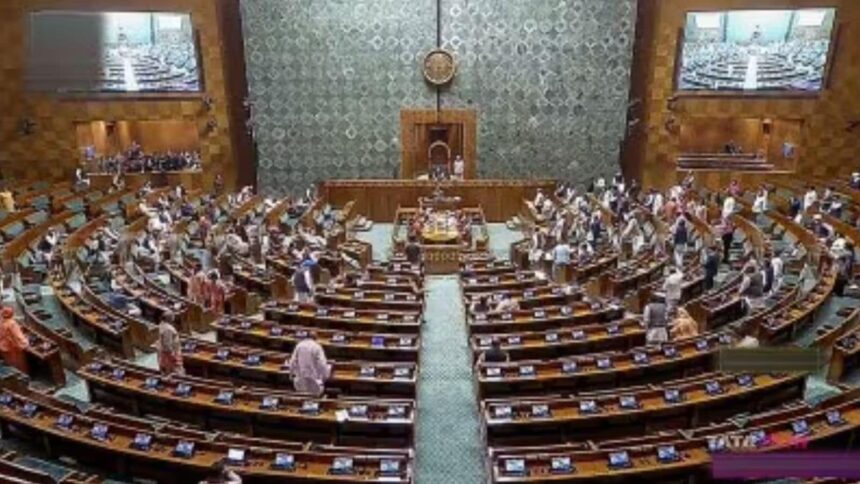
Opposition members, part of the Joint Committee of Parliament examining the Viksit Bharat Shiksha Adhishthan (VBSA) Bill, are learnt to have raised concerns about the Bill, pointing out that it is violative of the federal character of the Constitution, and that it can result in a loss of academic autonomy for higher education institutions.
The 31-member joint committee, with D Purandeswari as chairperson, met on Tuesday, and the meeting included a briefing by the Education Ministry. The VBSA Bill seeks to set up an umbrella body with three councils that will perform regulatory, standard-setting, and accreditation functions for higher education. This body will subsume the functions of the University Grants Commission (UGC), the National Council for Teacher Education (NCTE), and the All India Council for Technical Education (AICTE).
The ministry, in its briefing, is learnt to have highlighted the complexities in the current regulatory system – multiplicity of regulators, and overlapping functions. It is learnt to have indicated that a single regulator, as envisioned by the National Education Policy 2020, can streamline regulations and set up a transparent regulatory process. It has also pointed out that the functions of the three councils will be separated, creating a system of checks and balances.
Opposition members in the committee are learnt to have pointed out that the Bill violates the federal character of the Constitution since the jurisdiction of the higher education commission will be all universities in India, and the members of the commission and the three councils are nominees of the Centre or selected by committees set up by the Centre.
The Ministry, meanwhile, is learnt to have told the committee that entry 66 of the Union List of the Constitution provides for coordination and determination of standards in higher education institutions, and the VBSA Bill makes provisions for this “mandate assigned to the Central Government under entry 66 of the Union List.”
The Bill does not provide any grant-giving powers to the regulatory council. Opposition members have raised the concern that if funding is kept out of the VBSA’s purview, institutions will have to deal directly with the Centre for funding, and this can entail delays, bureaucratic red tape, and “political discrimination”.
On funding, the Ministry has told the committee that the Department of Higher Education currently disburses grants to central universities through the UGC and directly to institutions of national importance. The UGC decides funding based on adherence to quality standards assessed through accreditation status or NIRF rankings, and similar processes will be devised and adopted under the VBSA.
Funding to the States under the PM-USHA scheme will continue, along with other support to institutions such as JRF and SRF (junior, senior research fellowships).
Opposition members have also flagged the section of the Bill which says that the VBSA (the higher education commission) can ask institutions to remove from “employment” individual persons who are found “responsible for contravention” of the provisions of the Act. They have referred to this as an “assault on the academic autonomy of institutions” and a “weapon to crush dissent.”
It is learnt that the Ministry informed the committee that the regulatory system proposed by the Bill will be a single-window one for approvals and clearances, while graded autonomy of institutions will be based on their accreditation level. The accreditation process will be online through a “public website”, it is learnt.
The Ministry is also learnt to have told the committee that while the Bill proposes a system of penalties that can be imposed on defaulting institutions, regulations will be framed to specify the modalities.