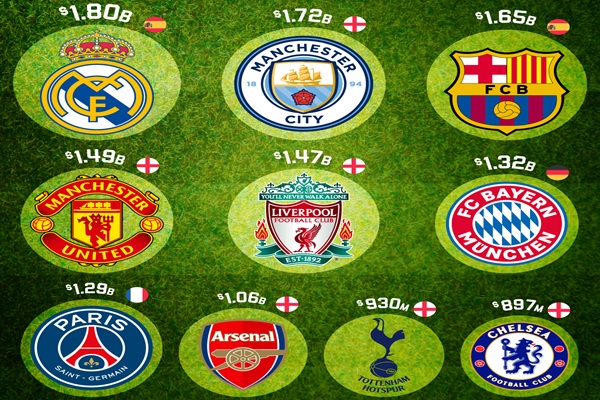
The Global Pitch: Ranking the Top 10 Football Clubs with the Most Fans and the Roots of Their Immense Following
In the beautiful game, success is measured not only in trophies but in the deafening roar of a crowd, the sea of colors in a stadium, and the unwavering passion of a global community. A club’s fanbase is its lifeblood, its cultural legacy, and its most significant commercial asset. Determining the “most fans” is a complex equation, blending match attendance, social media reach, global merchandise sales, and historical influence.
This analysis moves beyond a simple list to provide a deep dive into the ten clubs that command the most colossal global followings. We will explore the historical, cultural, and sporting factors that have transformed these institutions from mere football teams into global phenomena.
1. Real Madrid CF (Spain) – The Royal Standard-Bearers
Estimated Global Following: Over 450 Million
The Pillars of Their Popularity:
Real Madrid is more than a club; it is a global institution synonymous with excellence, glamour, and a relentless pursuit of the biggest stars. Their brand is built on a foundational philosophy of Los Galácticos—signing the world’s best players, from Alfredo Di Stéfano and Ferenc Puskás in the past to Cristiano Ronaldo and Zinedine Zidane in the modern era.
-
Trophy Cabinet: With a record 14 UEFA Champions League titles, Real Madrid is the undeniable “Kings of Europe.” This consistent dominance on the continent’s biggest stage has created a bandwagon effect, attracting fans who want to associate with a perennial winner.
-
Global Marketing Prowess: Real Madrid was an early adopter of global tours and strategic marketing, cultivating a massive following in Asia, the Americas, and Africa. Their all-white kit is a symbol of purity and prestige recognized worldwide.
-
Cultural Significance: As the club representing the Spanish capital, it has historically been associated with the establishment and the monarchy, adding a layer of grandeur and tradition that resonates globally.
2. FC Barcelona (Spain) – More Than a Club
Estimated Global Following: Over 400 Million
The Pillars of Their Popularity:
Barcelona’s identity is intrinsically linked to its motto, Més que un club (“More than a club”). For decades, it represented the cultural and political aspirations of Catalonia, a region with a distinct identity within Spain. This narrative of resistance and identity has garnered deep, emotional loyalty.
-
The Tiki-Taka Revolution: The era under Pep Guardiola, led by the magical Lionel Messi, was a footballing revolution. The club’s commitment to La Masia academy and an attractive, possession-based style of play captivated purists and casual fans alike, creating a golden age of global appeal.
-
The Messi Factor: For over 15 years, Lionel Messi was not just a player for Barcelona; he was the club’s global ambassador. His otherworldly talent and loyalty drew millions of fans who primarily identified as supporters of the Argentine genius.
-
Unique Philosophy: Unlike their rivals in Madrid, Barcelona’s ethos of building from within and playing “the right way” created a distinct and intellectually appealing brand of football.
3. Manchester United (England) – The English Juggernaut
Estimated Global Following: Over 350 Million
The Pillars of Their Popularity:
Manchester United’s global dominance is a direct product of the Sir Alex Ferguson era (1986-2013). During this period, the club combined relentless success with a thrilling, never-say-die attacking philosophy.
-
The Ferguson Dynasty: Under Ferguson, United won 13 Premier League titles and two UEFA Champions Leagues. This sustained success coincided with the global commercialization and broadcast explosion of the Premier League, allowing the club to become a household name from Mumbai to Miami.
-
Global Branding: United were pioneers in pre-season tours, merchandise, and satellite fan clubs. Their iconic red jersey, worn by global icons like David Beckham, Ryan Giggs, and Cristiano Ronaldo, became one of the world’s most recognizable sports garments.
-
The “Theatre of Dreams”: Old Trafford, with its history and immense capacity, became a pilgrimage site for fans worldwide, cementing the club’s mythical status.
4. Juventus (Italy) – The Pride of the Peninsula
Estimated Global Following: Over 110 Million
The Pillars of Their Popularity:
Juventus is the most successful club in Italian football history, a fact that forms the bedrock of its massive domestic and international support. Their black and white stripes are a symbol of Italian calcio.
-
Domestic Dominance: Their record streak of nine consecutive Serie A titles (2012-2020) created an era of total supremacy, attracting fans who admire consistent winning.
-
Global Icons: The club has been home to some of the most marketable and talented players in history, from Michel Platini and Alessandro Del Piero to the transformative signing of Cristiano Ronaldo, which exponentially grew their social media footprint and global commercial appeal.
-
Diaspora Influence: The large Italian diaspora, particularly in North America and South America, has served as a natural base for spreading the Juventus brand globally.
5. Chelsea FC (England) – The Modern Powerhouse
Estimated Global Following: Over 100 Million
The Pillars of Their Popularity:
Chelsea’s modern global stature was catalyzed by the 2003 takeover by Roman Abramovich. The massive investment transformed them from a cup team into a perennial Premier League and European force.
-
The Abramovich Era: The injection of capital allowed Chelsea to compete for and sign world-class talent instantly. Their rapid ascent to winning Premier League titles and, crucially, their first Champions League in 2012, created a new generation of success-hungry fans.
-
London Appeal: Based in one of the world’s most global cities, Chelsea has a natural advantage in attracting international fans and commercial partnerships.
-
Competitive Brand: Under managers like Jose Mourinho, Chelsea cultivated an identity of being mentally tough, pragmatic, and consistently competitive, which appeals to a broad audience.
6. Paris Saint-Germain (France) – The New Money Supernova
Estimated Global Following: Over 90 Million
The Pillars of Their Popularity:
PSG’s fanbase has exploded since the club’s 2011 takeover by Qatar Sports Investments. The strategy has been clear: sign the most marketable superstars on the planet to put the club and the city of Paris on the global football map.
-
The Galáctico Model 2.0: The signings of Neymar Jr. and Kylian Mbappé, followed by Lionel Messi, were seismic events in the football world. This concentration of talent created unprecedented global media attention and drew in millions of fans of these individual superstars.
-
Cultural Cachet: The club is intrinsically linked with the city of Paris—a global capital of fashion, art, and culture. This association gives PSG a “cool factor” that resonates with a younger, style-conscious demographic.
-
Dominance in a Major League: Their near-total dominance of Ligue 1 ensures consistent Champions League football and a platform for their stars to shine, maintaining their global relevance.
7. Bayern Munich (Germany) – The Model of Efficiency
Estimated Global Following: Over 85 Million
The Pillars of Their Popularity:
Bayern Munich represents a different model of success: one built on financial prudence, superb governance, and relentless dominance of the Bundesliga.
-
Sustained Domestic Success: Their record number of Bundesliga titles creates a powerful image of reliability and excellence. Fans are drawn to an organization that is consistently the best in a major footballing nation.
-
“Mia san mia” Mentality: The club’s motto, meaning “We are who we are,” embodies a culture of self-belief, strength, and Bavarian identity. This strong, unique cultural identity fosters deep loyalty.
-
European Pedigree: With six European Cup/Champions League titles, Bayern has a storied history on the continent, earning the respect of purists worldwide. Their development of world-class German internationals also attracts fans who follow the national team.
8. Liverpool FC (England) – The Power of Anfield
Estimated Global Following: Over 85 Million
The Pillars of Their Popularity:
Liverpool’s support is arguably the most passionate and storied in world football. It is built on a rich history of success, tragedy, and a unique, emotionally charged culture.
-
The Anfield Mythos: The famous “You’ll Never Walk Alone” anthem and the electrifying atmosphere of Anfield on a European night are legendary. This creates a powerful sense of community and belonging that transcends borders.
-
Glory and Tragedy: The club’s immense success in the 1970s and 1980s, coupled with the tragedies of Heysel and Hillsborough, has forged an unbreakable bond between the city, the club, and its fans. This narrative of resilience is profoundly compelling.
-
Modern Resurgence: The charismatic leadership of Jurgen Klopp and a return to winning the Premier League and Champions League has re-energized the global fanbase and attracted a new generation of supporters.
9. Manchester City (England) – The Ascent to the Apex
Estimated Global Following: Over 80 Million
The Pillars of Their Popularity:
Manchester City’s story is one of the most dramatic transformations in sports history. From a historically mid-table club to a global superpower, their rise has been swift and spectacular.
-
The Abu Dhabi Project: The 2008 takeover fundamentally altered the club’s trajectory. Massive investment in world-class players, a state-of-the-art academy, and Pep Guardiola’s appointment created a footballing project of immense ambition and quality.
-
Dominant, Attacking Football: Under Guardiola, City has played some of the most aesthetically pleasing and tactically sophisticated football ever seen, attracting fans who admire artistic and effective play.
-
Global Expansion: The City Football Group model, with sister clubs on multiple continents, acts as a global marketing and talent-scouting network, systematically building the City brand worldwide.
10. Arsenal FC (England) – The Invincible Legacy
Estimated Global Following: Over 75 Million
The Pillars of Their Popularity:
Arsenal’s global appeal is rooted in a long history of playing attractive, technical football and a period of immense success under Arsène Wenger.
-
The Wenger Revolution: The French manager transformed English football in the late 1990s and early 2000s. His focus on a stylish, possession-based game and his discovery of foreign talent made Arsenal a favorite for neutrals who appreciated the “beautiful game.”
-
The Invincibles: The 2003-04 team that went an entire Premier League season unbeaten created a legacy of perfection that is still revered today. This historic feat is a cornerstone of the club’s global marketing.
-
London and Global Reach: Like Chelsea, Arsenal benefits from its location in London. Their iconic red and white kit and the grandeur of the Emirates Stadium have helped maintain their global profile even during less successful periods.
The Common Threads of Global Fandom
While each club’s story is unique, common threads bind these global giants: a legacy of sustained success, iconic players who transcend the sport, a distinct and compelling cultural identity, and strategic adaptation to the global media landscape. In the 21st century, a massive fanbase is no longer an accident; it is the ultimate prize, forged through a combination of history, excellence, and shrewd brand management. These ten clubs have not only mastered the game on the pitch but have also perfected the art of capturing the imagination of the world.