The Global Demographic Divergence: An Aging West and a Youthful Africa
While headlines are dominated by political crises, economic fluctuations, and military conflicts, a far more profound and irreversible transformation is quietly reshaping our world’s future. This transformation is demographic. We are witnessing a great global divergence, a splitting of the world’s population into two starkly different realities: a rapidly aging Global North facing population decline and a explosively youthful Global South, with Africa at its helm, poised for unprecedented growth.
This is not a temporary trend but a tectonic shift with consequences that will unfold over decades. Understanding this divergence is essential for any business leader, policymaker, or global citizen who hopes to navigate the 21st century. It is the slow-moving current beneath the choppy waves of daily news, and it will determine the future of global economic power, migration patterns, and geopolitical stability.
Part 1: The Two Worlds – A Tale of Contrasting Pyramids
The Graying Giants: The Demographic Decline of the Global North
Across Europe, East Asia, and North America, a similar, unsettling pattern is emerging. Birth rates have plummeted far below the replacement rate of 2.1 children per woman, while life expectancies continue to climb. The result is an inversion of the traditional population pyramid.
-
Japan: The world’s poster child for hyper-aging, where over 29% of the population is aged 65 or older. Its population has been shrinking for over a decade, and by 2050, it is projected to lose 20 million people. The sight of abandoned villages and a workforce struggling to support a massive retiree cohort is a glimpse into the future for many nations.
-
China: The one-child policy has created a demographic time bomb. Its working-age population has already peaked and is now in decline. The infamous “4-2-1” problem—where one child is responsible for two parents and four grandparents—is straining the social fabric and will challenge China’s economic ambitions long before it reaches high-income status.
-
Europe: Germany, Italy, and Spain all have median ages above 45 and fertility rates languishing around 1.5. Their social welfare systems, built for a different demographic era, are creaking under the pressure.
The economic consequences are stark: shrinking labor forces, suppressed innovation, rising healthcare costs, and unsustainable pension systems. The “demographic dividend” that fueled their 20th-century growth has been spent.
The Youthful Tide: The Demographic Surge of Africa
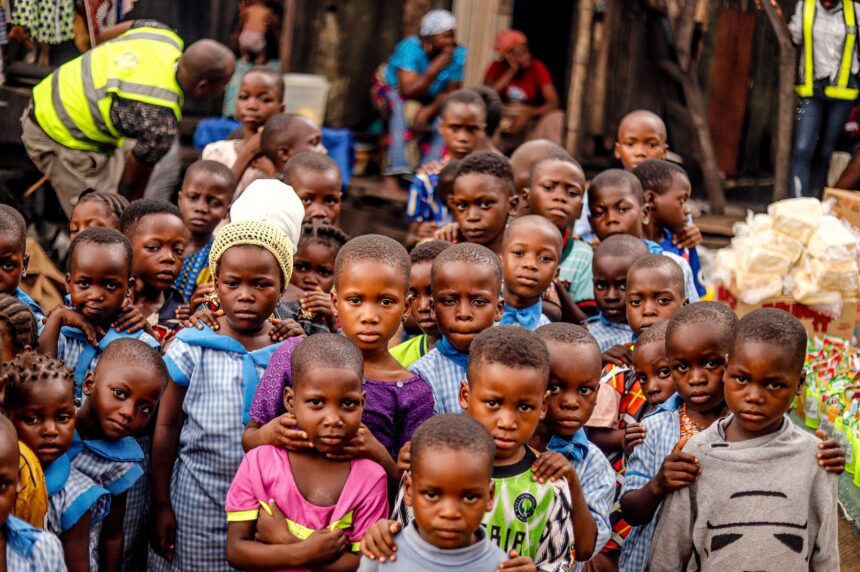
In stark contrast, the population pyramid of Africa remains broad-based and young. While fertility rates are declining, they are doing so from a very high base. The continent is on track to be home to over one-quarter of the world’s population by 2050, and by the end of the century, one in three people on Earth could be African.
-
Nigeria: Already Africa’s most populous nation, it is projected to become the third-most populous country in the world by 2050, surpassing the United States.
-
The Demographic Structure: Over 60% of Africa’s population is under the age of 25. This represents an enormous reservoir of future human potential—a “youth bulge” that can be either its greatest asset or its most significant liability.
This divergence creates two parallel sets of challenges and opportunities that will define the coming century.
Part 2: The Crisis of the Aging World – Stagnation and the Search for Workers
For the aging nations, the demographic winter presents a multi-faceted crisis that threatens their economic model and social cohesion.
-
The Shrinking Workforce and Economic Stagnation: Fewer young people entering the workforce means a direct contraction in the labor supply. This acts as a permanent drag on economic growth (GDP). With fewer workers to generate output and pay taxes, the engine of the economy slows down.
-
The Pension Time Bomb: Pay-as-you-go pension systems, where current workers fund the pensions of current retirees, become mathematically impossible when the ratio of workers to pensioners collapses. In Italy, this ratio is already approaching 2-to-1. This will force painful choices: dramatically raise taxes, slash pension benefits, or increase the retirement age significantly, each with profound social consequences.
-
The Healthcare Crunch: An older population requires vastly more healthcare resources. Age-related diseases like dementia, cancer, and cardiovascular conditions will place an immense, unaffordable strain on public health systems.
-
The Innovation Slowdown: Historically, young populations are associated with dynamism, risk-taking, and innovation. An aging, risk-averse society may struggle to produce the disruptive startups and technological breakthroughs needed to drive future growth.
The Inevitable Response: Migration as a Necessity
Faced with an intractable domestic demographic reality, the aging economies of the Global North have only one viable medium-term solution: large-scale immigration. Europe, Japan, and even China will be forced to compete for the one resource they lack—young workers. This will transform migration from a contentious political issue into an urgent economic imperative, fundamentally reshaping societies and politics.
Part 3: The Opportunity and Peril of Africa’s Youth Bulge
Africa stands at a historic crossroads. Its youthful population is a potential “demographic dividend” of staggering proportions, but it is a dividend that is not guaranteed—it must be earned.
The Pathway to Prosperity: Harnessing the Dividend
The demographic dividend is the economic growth potential that arises when a country’s working-age population is larger than its non-working-age (dependent) population. To realize this, Africa must:
-
Massive Investment in Human Capital: This is the non-negotiable prerequisite. It requires a revolution in education, moving beyond mere literacy to focus on digital skills, vocational training, and STEM education. Healthcare, particularly for mothers and children, is equally critical to ensure a healthy, productive workforce.
-
Breakneck Job Creation: Africa needs to create 20-25 million new jobs every year just to absorb new entrants into the labor market. This requires fostering a vibrant private sector, improving the ease of doing business, and investing in infrastructure. The African Continental Free Trade Area (AfCFTA) could be a game-changer by creating a single, massive market.
-
Governance and Stability: Economic growth is stifled by corruption, bureaucracy, and conflict. Nations that can provide stable, transparent governance will be the ones to attract investment and unlock their human potential.
The Peril of a “Bomb” Instead of a “Dividend”
If the necessary investments in education and job creation fail to materialize, the youth bulge will become a “youth bomb.”
-
Mass Unemployment and Instability: A generation of educated but unemployed and disillusioned young people is a recipe for social unrest, political extremism, and criminality. We have already seen glimpses of this in the Arab Spring and the rise of terrorist groups like Boko Haram, which often recruit from pools of disaffected youth.
-
Accelerated Migration: Failure to create opportunity at home will fuel an unstoppable wave of migration. The perilous journeys across the Mediterranean and the political crises they trigger in Europe are a small preview of what could come.
Part 4: The Geopolitical and Global Consequences
The interaction of these two demographic realities will reshape global politics and economics.
-
The Great Migration Reversal: For centuries, Europeans migrated to populate the world. The 21st century will see a reversal, with the Global South, particularly Africa, becoming the primary source of migrants heading to an aging and labor-hungry North. This will test the limits of multiculturalism and redefine national identities across Europe and Asia.
-
The Shift of Economic Gravity: If Africa successfully harnesses its demographic dividend, it will become the world’s last great frontier market and a major engine of global economic growth. Its consumer market will be vast, attracting investment from around the world. The center of economic gravity will continue its southward shift.
-
A New Global Political Voice: A more populous and economically powerful Africa will demand a greater say in global governance. The current structure of the UN Security Council and Bretton Woods institutions will appear increasingly anachronistic, leading to calls for reform to reflect 21st-century demographic realities.
-
Climate Change Multiplier: This demographic divergence intersects with the climate crisis. Africa, despite contributing the least to global emissions, is the most vulnerable to its effects. A growing population facing resource scarcity and climate disruption could create hundreds of millions of climate refugees, adding another layer of complexity to global migration pressures.
Conclusion: The Defining Challenge of the 21st Century
The global demographic divergence is not a prediction; it is a destiny already locked in by the children born today. The world of 2050 will be older in the North and younger in the South than at any point in human history.
Navigating this transition is the defining long-term challenge of our time. For the aging West and East Asia, it requires a pragmatic, managed approach to immigration and a fundamental restructuring of their social contracts. For Africa, it is a race against time to educate its youth and build economies that can employ them.
The outcome of this race will determine whether the 21st century is one of unprecedented global prosperity driven by a final, great demographic dividend, or one defined by instability, inequality, and conflict between a grayed, stagnant world and a young, frustrated one. The choices made today in classrooms, boardrooms, and government halls will echo for generations to come.