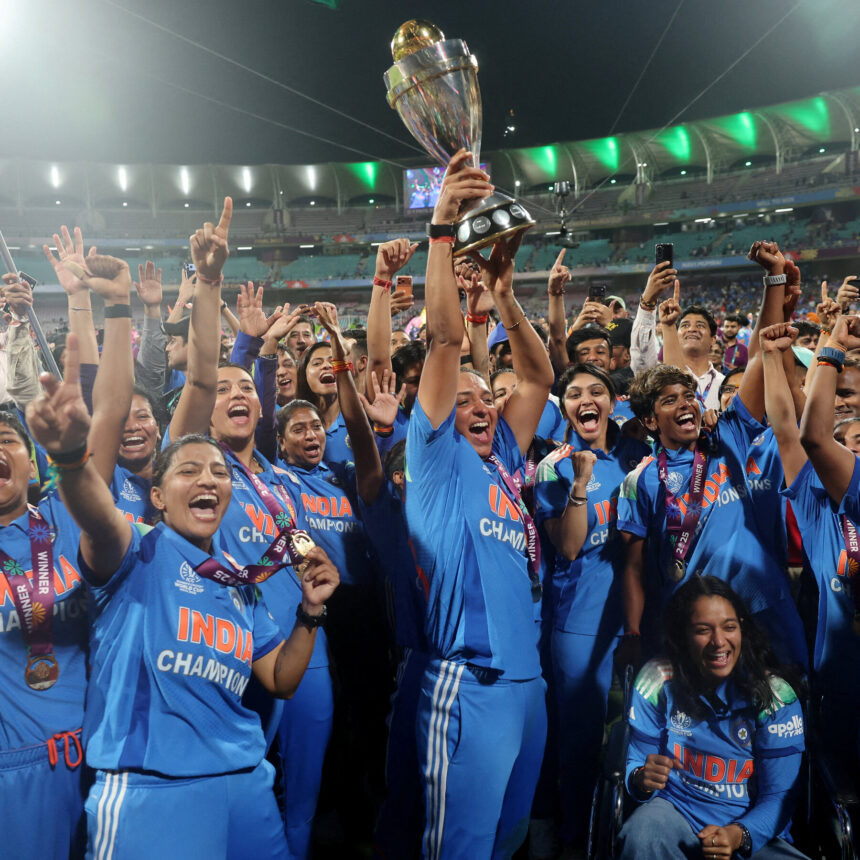
From Obscurity to Center Stage: The Remarkable Evolution of Women’s Cricket in India
For decades, women’s cricket in India existed in the long, imposing shadow of its male counterpart. It was a story of passion persevering against a tide of institutional neglect, societal indifference, and a glaring lack of infrastructure. The journey from being a fringe activity to a mainstream sporting spectacle is not merely one of incremental progress; it is a narrative of a radical transformation, driven by a combination of gritty pioneers, a watershed World Cup, and a belated but powerful institutional embrace.
The evolution of women’s cricket in India is a case study in how sport can catalyze social change, challenging deep-seated stereotypes and inspiring a new generation to dream. This analysis traces this extraordinary journey, from its humble beginnings to its current golden era, and examines the forces that are shaping its future.
Part 1: The Pioneering Era (1970s – 2000s): Sowing the Seeds in Barren Soil
The foundation of women’s cricket in India was laid not by a formal body, but by the sheer willpower of a few determined women.
-
The Early Days: While the first women’s cricket association was formed in 1973, the sport was largely amateur, self-funded, and received scant media attention. Players often had to pay for their own equipment, travel, and accommodation. Matches were played on underprepared grounds, and the idea of a career in cricket was unthinkable.
-
The First Stars: In this challenging landscape, the first stars emerged. Figures like Shanta Rangaswamy, India’s first women’s Test captain, and Diana Edulji, a formidable left-arm spinner, became icons through their on-field performances and off-field advocacy. Their battles were not just against opposing teams but against a system that offered them little recognition or reward.
-
The Merger and a Glimmer of Hope: A significant administrative step came in 2006 when the Women’s Cricket Association of India (WCAI) was merged with the Board of Control for Cricket in India (BCCI). This integration promised access to the BCCI’s vast resources, though the initial years were slow to yield tangible benefits. The team remained semi-professional, and the gap with powerhouse nations like Australia and England was vast.
Part 2: The Turning Point (2017 ICC Women’s World Cup): The Catalyst for Change
If one single event can be pinpointed as the catalyst for the modern era, it is the 2017 ICC Women’s Cricket World Cup.
-
The Cinderella Run: Led by the inspirational Mithali Raj, the Indian team, considered underdogs, embarked on a spectacular campaign. They defeated hosts England, New Zealand, and Australia in the group stages, eventually reaching the final at Lord’s.
-
A Nation Awakens: The final against England was a heartbreaker, lost by a mere nine runs. But in that loss, the Indian women’s team won something far more valuable: the heart of a nation. Millions of Indians, many watching women’s cricket for the first time, were captivated by the skill, passion, and fighting spirit on display. The image of a tearful Mithali Raj and Jhulan Goswami, the veteran pace spearhead, became a symbol of a dream deferred, but not broken.
-
The Shift in Narrative: The 2017 World Cup shattered the perception that women’s cricket was an inferior product. It demonstrated that the game could be just as compelling, dramatic, and skilful as the men’s version. The public demand for more coverage and better support for the team became impossible for the BCCI and broadcasters to ignore.
Part 3: The Professional Era (Post-2017): Building the Infrastructure
The momentum from the 2017 World Cup forced a rapid and systemic overhaul of the women’s game in India.
3.1. The Dawn of Central Contracts
In 2018, the BCCI announced its first-ever central contracts for women cricketers. This was a landmark moment, transforming cricket from a passion project into a viable profession. Players now had a stable income, allowing them to focus entirely on training and competition without financial anxiety.
3.2. The Inaugural Women’s T20 Challenge
Recognizing the success of the IPL, the BCCI launched the Women’s T20 Challenge in 2018. Initially a single exhibition match, it evolved into a three-team tournament played alongside the IPL playoffs. While a modest beginning compared to the men’s league, it was a crucial first step. It provided domestic players exposure to high-pressure environments, allowed them to share dressing rooms with international stars, and, most importantly, gave them a platform to be seen.
3.3. The Rise of the Digital Age and Broadcast Boom
The increased broadcast of bilateral series and ICC events meant that stars were no longer anonymous. The rise of digital platforms and social media allowed players like Smriti Mandhana and Harmanpreet Kaur to build their own brands and connect directly with fans, creating a new level of celebrity and relatability.
Part 4: The Modern Superstars and the WPL Revolution
The current era is defined by a cohort of confident, world-class athletes and the single most significant development since the BCCI merger: the Women’s Premier League (WPL).
4.1. The New Vanguard
-
Smriti Mandhana: The elegant left-hander, with her flawless technique and marketable appeal, became the face of the new generation.
-
Harmanpreet Kaur: The “Hitman” of the women’s game, whose blistering 171* against Australia in the 2017 World Cup semi-final is etched in history. Her aggressive captaincy and power-hitting embody the new, fearless attitude of the team.
-
Jemimah Rodrigues & Shafali Verma: The young guns. Rodrigues’ innovative stroke-play and Verma’s explosive power at the top of the order represent a fearlessness that their predecessors could rarely afford.
-
Deepti Sharma & Pooja Vastrakar: The multi-skilled all-rounders who provide crucial balance, showcasing the growing depth in the national squad.
4.2. The Women’s Premier League (WPL): A Game-Changer
Launched in 2023, the WPL is the final piece in the professionalization puzzle. Its impact cannot be overstated:
-
Financial Empowerment: The inaugural auction saw mind-boggling figures, with Smriti Mandhana being bought for ₹3.4 crore. This financial security is transformative, putting the women on a par with many mid-tier male cricketers and validating their years of struggle.
-
Exposure and Competition: Domestic Indian players now regularly share the field and learn from legends like Meg Lanning, Ellyse Perry, and Sophie Ecclestone. This accelerates their development in a way that domestic tournaments alone never could.
-
Creating a Viable Pathway: The WPL provides a clear and lucrative career path for young girls. They can now aspire to not just playing for India, but also to being a sought-after star in a glamorous, high-profile T20 league.
-
Changing Perceptions: The high-quality production, packed stadiums, and intense competition of the WPL have firmly established women’s cricket as premium sports entertainment.
Part 5: The Remaining Frontiers and The Road Ahead
Despite the monumental progress, the journey is far from complete. Several challenges remain to be addressed to ensure the growth is sustainable and equitable.
-
Grassroots Development: While the top tier is now well-supported, the pyramid’s base needs strengthening. There is a need for more structured talent identification programs, better coaching at the district and state levels, and increased investment in girls’ cricket in schools.
-
Infrastructure and Facilities: Access to quality grounds, training facilities, and gyms remains inconsistent across the country, often lagging far behind what is available for men.
-
Building Consistent Depth: The Indian team, while possessing world-class stars, still lacks the consistent bench strength of a team like Australia. The WPL and a more robust domestic calendar are key to solving this.
-
The Test Cricket Conundrum: India plays very few Test matches, denying players the opportunity to develop the temperament and skills required for the longest format. A more regular schedule of multi-day games is essential for all-round development.
A Revolution Still in Progress
The evolution of women’s cricket in India is one of the most inspiring sports stories of the 21st century. It is a tale that has moved from the periphery to the center, from obscurity to primetime. It is a narrative powered by the silent perseverance of its pioneers, the spectacular heroics of its 2017 World Cup team, and the transformative power of professional structures like central contracts and the WPL.
Today, a young girl in India can pick up a bat and see a clear path to stardom, financial independence, and national adulation—a reality that was unimaginable two decades ago. The journey has rewritten the rules of Indian sport, proving that excellence, when given a platform and a chance, can flourish regardless of gender. The baton has been passed, the stage is set, and the revolution, while well underway, is still gathering pace. The future of women’s cricket in India is not just bright; it is dazzling.
Indian Women’s Cricket Team: Current Status and Recent Developments
Recent Performance Highlights (2023-2024)
1. T20 International Series:
-
Against England (2023): Drew the series 2-2
-
Against Australia (2023-24): Competitive performances though lost the series
-
Against Bangladesh (2024): Dominant series win
2. ODI Performance:
-
Consistent performances in ICC Championship
-
Strong showing against top-ranked teams
Current Team Leadership and Core Players
Captain: Harmanpreet Kaur
-
Dynamic batter and off-spinner
-
Known for aggressive captaincy
-
Key match-winner with experience of 144 ODIs and 161 T20Is
Vice-Captain: Smriti Mandhana
-
Elegant left-handed opener
-
Vice-captain across formats
-
Consistent performer at top order
Other Key Players:
-
Jemimah Rodrigues – Middle-order batswoman
-
Deepti Sharma – Premier all-rounder
-
Richa Ghosh – Wicketkeeper-batter
-
Shafali Verma – Explosive opener
-
Pooja Vastrakar – Pace bowling all-rounder
Recent Major Achievements
1. Asian Games 2023:
-
Gold Medal in Hangzhou
-
Comprehensive performance throughout
-
Defeated Sri Lanka in final
2. ICC Rankings:
-
Currently ranked 2nd in ODIs
-
4th in T20Is
-
Continuous improvement in Test cricket
Upcoming Important Series
1. South Africa Tour (2024-25):
-
Multi-format series
-
3 ODIs, 3 T20Is, and 1 Test match
-
Crucial for ICC Championship points
2. ICC Women’s T20 World Cup 2024:
-
Preparation in full swing
-
Team looking to improve on previous performances
Recent Selection Updates
New Inclusions:
-
Shreyanka Patil – Promising all-rounder
-
Mannat Kashyap – Young spinner
-
Titas Sadhu – Fast bowling prospect
Comeback Stories:
-
Jhulan Goswami – Now in mentoring role
-
Mithali Raj – Continued involvement in advisory capacity
Domestic Structure Developments
1. Women’s Premier League (WPL):
-
Second season completed successfully
-
Major platform for talent exposure
-
Financial growth for players
2. Domestic Cricket:
-
Improved infrastructure
-
Better remuneration
-
Enhanced training facilities
Coaching and Support Staff
Head Coach: Amol Muzumdar
-
Former domestic stalwart
-
Focus on technical excellence
-
Building strong team culture
Support Staff:
-
Bowling Coach: Former international
-
Fielding Coach: Specialized trainer
-
Mental Conditioning Coach: Sports psychologist
Future Prospects and Challenges
Strengths:
-
Strong batting lineup
-
Improved depth in bowling
-
Better fitness standards
-
Growing domestic pool
Areas for Improvement:
-
Consistency in big tournaments
-
Handling pressure situations
-
Fielding standards
-
Pace bowling depth
Recent Notable Performances
Individual Highlights:
-
Harmanpreet Kaur: Consistent match-winning contributions
-
Smriti Mandhana: Elegant centuries in overseas conditions
-
Deepti Sharma: Crucial all-round performances
-
Richa Ghosh: Finishing skills in tight situations.