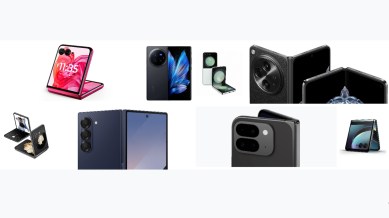
The Unfolding Revolution: A Comprehensive History and Future of Foldable Smartphones
In the world of technology, where incremental updates often masquerade as innovation, the rise of the foldable smartphone represents a genuine paradigm shift. It is a bold attempt to break free from the decades-old slab-style form factor, offering a tantalizing promise: the pocketability of a classic phone with the expansive screen real estate of a tablet.
The journey of the foldable from a sci-fi concept to a mainstream consumer device has been fraught with engineering hurdles, market skepticism, and breathtaking innovation. This deep dive traces the complete evolution of foldable smartphones, from their nascent prototypes to the sophisticated devices of today, and peers into the unfolding future of this transformative technology.
Part 1: The Genesis – Dreams and Early Prototypes (Pre-2019)
Long before they hit store shelves, foldable displays lived in research labs and concept videos. The seed was planted by the natural human desire for larger screens constrained by the practical limits of pocket size.
-
The Conceptual Foundation: Science fiction, from Star Trek’s PADDs to futuristic films, often depicted flexible, rollable screens. Tech companies took note, with many filing patents for foldable devices as early as the 2000s.
-
The Polymer Breakthrough: The key enabler was the development of flexible OLED (Organic Light-Emitting Diode) technology. Unlike rigid LCDs that require a backlight, OLEDs are self-emissive and can be built on flexible plastic polymer substrates instead of glass. This fundamental material science breakthrough made bendable screens physically possible.
-
The “Dragonstone” Prototype (2011): In a now-legendary moment, Lenovo showcased a working prototype of a device that could fold from a smartphone into a tablet. It was thick, clunky, and clearly not consumer-ready, but it sent a clear message to the industry: this was possible.
-
Royole’s FlexPai (2018): While many were waiting for Samsung or Apple, a relatively unknown Chinese company, Royole, shocked the world by launching the FlexPai, the first commercially available foldable phone. It was a proof-of-concept more than a polished product—thick, with a prominent outward-folding screen that felt fragile and an unrefined software experience. However, it deserves its place in history as the device that officially started the foldable race.
Part 2: The First Wave – Launch, Stumble, and Refine (2019-2020)
This period was marked by the entrance of major players, a highly publicized false start, and a rapid cycle of learning and improvement.
1. Samsung’s Galaxy Fold: The Infamous False Start
In February 2019, Samsung unveiled the Galaxy Fold to immense hype. Promising a 7.3-inch tablet that folded into a compact phone, it seemed like the future had arrived. However, when review units were sent out, disaster struck.
-
The Catastrophe: Reviewers immediately encountered critical failures. The protective polymer layer on the screen, which appeared to be a removable screen protector, was integral to the display. Removing it caused immediate damage. More fundamentally, debris could easily enter the gap of the hinge, causing the screen to bulge, flicker, or die completely.
-
The Recall and Redemption: In a humbling but necessary move, Samsung delayed the launch by months. It went back to the drawing board, implementing crucial changes:
-
Redesigned Hinge: The ends of the hinge were capped to prevent debris ingress.
-
Reinforced Screen: The protective layer was extended beneath the bezel, making it clear it was not to be removed.
-
Public Learning: This episode was a brutal but invaluable public beta test. It taught the entire industry that durability was the single most important challenge.
-
2. The Form Factor Schism: Book vs. Clamshell
While Samsung struggled with the Fold, another major player entered the arena with a different approach.
-
Huawei Mate X: Also announced in 2019, the Mate X featured an outward-folding design. This eliminated the need for a secondary external screen, creating a seamless large display. However, it left the fragile flexible screen exposed to the elements when folded, raising durability concerns that limited its global reach due to trade restrictions.
-
Motorola Razr (2020): Motorola revived its iconic brand with a new flip-style foldable. Instead of unfolding into a tablet, the Razr folded a traditional smartphone screen in half, prioritizing extreme pocketability and nostalgia over screen size. This created a clear market segmentation that exists to this day.
This era established the two dominant form factors:
-
Horizontal Foldables (Tablet-Style): Like the Galaxy Fold and Mate X, offering a phone-to-tablet experience.
-
Vertical Foldables (Flip-Style): Like the Motorola Razr, offering a compact, pocketable phone.
Part 3: The Refinement Era – Building Reliability and Credibility (2021-2023)
With the initial hurdles (partially) cleared, the focus shifted to making foldables tougher, more affordable, and more useful.
-
Samsung’s Iterative Dominance: Samsung solidified its lead with the Galaxy Z Fold 2, which addressed nearly every criticism of the first generation with a robust hinge, a large, usable cover screen, and high-end specs. Subsequent Z Fold and Z Flip models refined the formula with better cameras, water resistance (IPX8), and the introduction of the S Pen, making the Fold a true productivity powerhouse.
-
The Rise of the Ecosystem: Other Android manufacturers joined the fray, each adding their own twist:
-
Google Pixel Fold: Entered the market late but with a refined software experience and a wider, more usable cover screen.
-
Oppo Find N & OnePlus Open: Pioneered a shorter, wider aspect ratio in tablet mode, which many found more ergonomic and useful for multi-tasking, avoiding the “tall and narrow” problem of some earlier folds.
-
Microsoft Surface Duo: Took a different path, using two separate screens with a gap instead of a single flexible one, focusing purely on productivity.
-
-
The Durability Leap – Ultra-Thin Glass (UTG): A significant materials breakthrough was the adoption of UTG. Samsung partnered with Schott to develop a glass layer thin enough to be flexible yet hard enough to offer a more premium, scratch-resistant feel than the plastic polymer used in the first generation. This was a major step in making the screens feel less like a compromise.
-
Software Maturation: The hardware was only half the battle. Google and OEMs worked to optimize Android for large, flexible screens. Features like app continuity (seamlessly transitioning from the cover screen to the main screen), split-screen modes, and taskbars became standard, finally delivering on the software promise of the form factor.
Part 4: The Present Landscape – Mainstream Aspirations (2024-Onwards)
Today, foldables are no longer niche novelties. They are establishing themselves as a legitimate, high-end segment of the smartphone market.
-
Durability is No Longer a Question: Modern foldables are tested to withstand hundreds of thousands of folds. Hinge designs have become incredibly sophisticated, often including brushes to sweep out debris and mechanisms that allow the screen to bend with a gentle, stress-free radius. The crease, while still visible, has become significantly less pronounced.
-
The Price Paradigm Shift: While still premium, prices have begun to fall. Aggressive pricing from players like OnePlus and more affordable flip models are bringing the technology to a wider audience.
-
The “Good Enough” Camera: Early foldables often had compromised cameras to save space and cost. Today’s flagship folds, like the Galaxy Z Fold 5 and Pixel Fold, feature camera systems that rival their top-tier slab-style counterparts.
-
Market Maturity: The conversation has shifted from “Will it break?” to “Which form factor is better for me?” The market is maturing, with clear use cases for both the productivity-focused horizontal folds and the style-centric vertical flips.
Part 5: The Technical Hurdles – What Remains to Be Solved
Despite the incredible progress, several challenges persist:
-
The Crease: While minimized, the physical crease in the screen is still visible and palpable. The dream is a perfectly flat, seamless screen when unfolded. This requires further innovation in hinge mechanics and display laminate materials.
-
Screen Durability: UTG is a leap forward, but it’s still more susceptible to micro-scratches than traditional Gorilla Glass. The inner screen’s polymer layer is also softer and can be dented by fingernails or sharp objects. The quest for a truly rigid, yet truly flexible, material continues.
-
Weight and Thickness: Foldables are inherently thicker and heavier than the sleekest slab phones. Advances in battery technology (like silicon-anode or solid-state) and component miniaturization are needed to achieve a more balanced profile.
-
Battery Life: Powering two screens (the main flexible one and the external cover screen) is a drain on battery. While optimization has improved, the large main display is power-hungry, often resulting in battery life that lags behind the best traditional phones with similar battery capacities.
-
Cost of Repair: The complex hinge and the expensive flexible display make repairs costly. As the technology matures, bringing down repair costs is crucial for long-term consumer confidence.
Part 6: The Future – What Comes Next?
The evolution of the foldable is far from over. The next phase will be about moving beyond the simple fold.
-
The Multi-Fold and Tri-Fold Devices: Prototypes already exist of devices that fold twice, transforming from a phone into an even larger tablet-like canvas. This could redefine mobile productivity and media consumption.
-
The Rollable Revolution: The logical endpoint of flexible displays is a device that rolls out, like a scroll, rather than folds. Companies like LG (before exiting the phone business) and TCL have shown stunning rollable concept phones that can expand their screen size without a crease. This could offer a more elegant and potentially more durable solution.
-
Materials Science Breakthroughs: The “holy grail” is flexible glass that is as durable as current smartphone glass. Further developments in self-healing polymers for the screen surface could also automatically erase minor scratches.
-
The Form Factor Fusion: We will see more hybrid devices. Imagine a device that can both fold and slide, or one that incorporates flexible displays into wearable bands, creating entirely new product categories.
-
The Software Ecosystem: The ultimate success of these advanced form factors hinges on software. We will see the rise of “adaptive UI”—operating systems and apps that can dynamically and intelligently reformat themselves for any screen size or shape, from a compact phone to a large tablet.
More Than a Gimmick, A New Paradigm
The evolution of the foldable smartphone is a testament to the relentless pursuit of innovation in the face of immense technical complexity. It has journeyed from a fragile, expensive curiosity to a sophisticated and desirable product category.
It is no longer a question of if foldables will succeed, but how they will redefine our relationship with personal technology. They represent a fundamental break from the static rectangle, offering a glimpse into a future where our devices are dynamic, malleable, and adapt to our needs rather than the other way around. The screen is no longer a constraint; it is a canvas. And as this technology continues to unfold, it promises to reshape not just our pockets, but the very fabric of digital interaction.