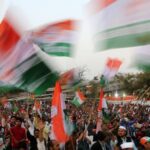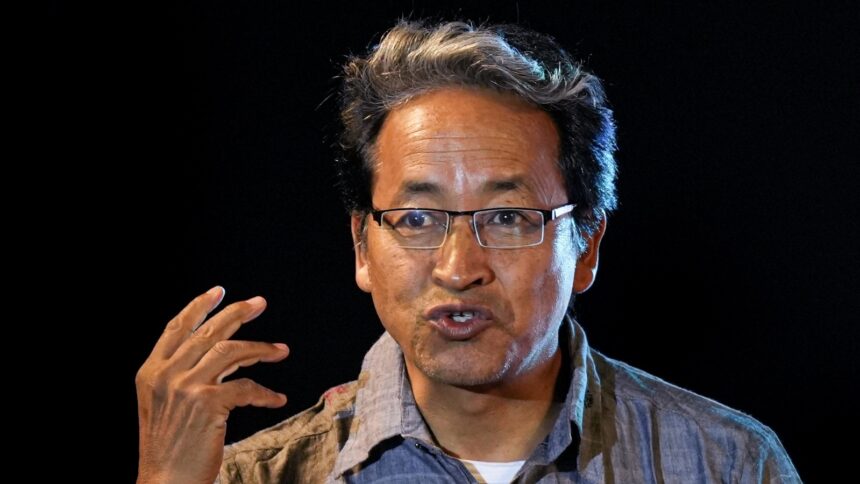
Despite the Centre on Saturday of climate activist Sonam Wangchuk under the National Security Act, protests planned for March 16 across Ladakh will go ahead as scheduled.
On March 13, the Kargil Democratic Alliance (KDA) had announced that the people of Ladakh would take to the streets again as the Ministry of Home Affairs (MHA) was “dragging its feet” on extending guarantees sought by the union territory.
Two bodies representing socio-political and religious groups in Ladakh — KDA and Apex Body Leh — have been in talks with the Centre as part of a high-powered committee (HPC) under the MHA to press various demands of the region.
On Saturday, KDA member Sajjad Kargilli said the constitutional guarantees that Ladakh is seeking are not “an individual matter” but a collective concern. “We are very relieved by his (Wangchuk’s) release. However, the issue of Mr Wangchuk’s detention was created and resolved by the Centre. Our protests and demands have a wider ambit,” he said.
While announcing the March 16 shutdown, KDA leader Asgar Ali Karbalai had said, “We have reached the end of our tether, and we want to inform the government of India and the people of India that we will not sit quietly, and we will continue the fight for our constitutional rights. The key part of that is statehood and inclusion under the Sixth Schedule.”
After the meeting with the Centre on February 4, the ABL and the KDA said it had ended “without any conclusions”. They said that the MHA had promised to set up another meeting in 15 days, but they are yet to hear back.
“They (the Centre) think that the Ladakhi people can be taken lightly. Therefore, from the indications we’ve received from the MHA, the delay tactics, we believe they are pushing some agenda on the Ladakhi people. If this attitude continues, we will be forced to protest on the streets and extend our agitation,” Karbalai had said.
Urging the MHA “not to test our patience repeatedly”, Karbalai also alleged that the government is trying to divide the people of Ladakh.
The region has been in a churn after Article 370 was repealed and the and Kashmir Reorganisation Act, 2019, was passed, leading to the bifurcation of the erstwhile state of J&K into two Union Territories: Jammu and Kashmir with a legislature, and Ladakh without one.
The political and legal status of Ladakh has remained contentious since, with the people of the UT finding themselves under direct central administration.
In 2023, the HPC was constituted by the MHA to discuss measures to protect the region’s unique culture and language, taking into consideration its geographical location and its strategic importance. Its charter includes examining “constitutional safeguards that could be provided to ensure the measures and protection”.
Since the first meeting of the HPC headed by Minister of State, Home, Nityanand Rai, ABL and KDA have jointly pushed a four-point agenda, which includes statehood for Ladakh; safeguards under the Sixth Schedule of the Constitution; reservation of jobs for the youth of Ladakh; and creation of separate parliamentary constituencies for the two parts of the region.
This agenda, on which the representatives of the two regions have not budged, has also been a unifying factor for both the Kargil and Leh regions.
The demand to include the region under the Sixth Schedule has been a consistent one as over 90% of Ladakh’s population belongs to the Scheduled Tribes.
Protests on the issue broke out in 2024 and 2025 — the latter turned violent after protestors set a BJP office on fire and police lobbed teargas shells and fired to disperse them, leaving four people dead. It was after this that Wangchuk was detained on September 26 for allegedly instigating the violent protests.