Nearly seven years after she was declared a foreigner by a Foreigner’s Tribunal in Assam — as a result of which she spent two years in a detention camp — Depali Das received a certificate of naturalisation on Friday after applying for citizenship under the provisions of the Citizenship Amendment Act.
Interestingly, the 60-year-old’s lawyer Dharmananda Deb said the document they relied on to prove that she is a national of Bangladesh — an essential requirement under the CAA rules — is the reference report prepared by a sub-inspector of the Assam police to open the foreigner case against her.
The case against Depali Das, who lives with her family in a village in the Hawaithang area of Assam’s Cachar district, began after the sub-inspector of the Assam Police sent a reference to the Foreigner’s Tribunal stating that she was suspected to be a foreigner who had entered Assam from Bangladesh after March 25, 1971 — the cut-off date for citizenship in Assam. Subsequently, a Foreigner’s Tribunal in Cachar declared her a foreigner in February 2019.
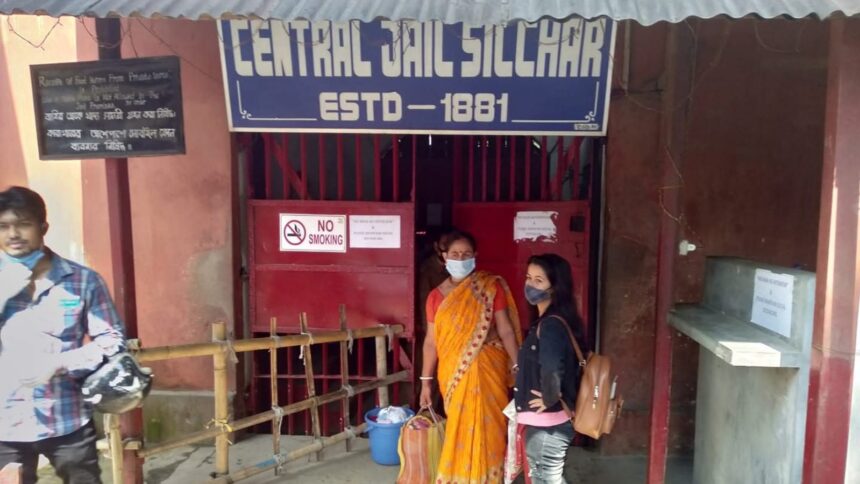
“That day in 2019, some police came to my father’s fast-food shop in the village and said that she needed to go with them to sign some papers. But they directly took her to Silchar Central Jail, and she was there for more than two years,” said her son Aditya, 33.
Kamal Chakraborty, an activist working on citizenship issues in the Barak Valley who has been helping the family, said he helped them secure bail for her in May 2021 based on the Supreme Court’s general order in 2020 that declared foreigners who had completed two years in detention may be released on bail.
“For all these years, we have been running circles of courts and the police. Since she was released on bail, she has had to report every week to the Dholai police station, which is also difficult because my father is very sick and she needs to look after him. There have been a lot of difficulties,” said Aditya, who downloaded his mother’s naturalisation certificate from the MHA’s CAA citizenship portal on Friday evening.
While the passage of the CAA witnessed intense protests across Assam in December 2019, especially in the primarily Assamese-speaking Brahmaputra valley, the reception was very different in the Bengali-dominated districts of Cachar, Karimganj and Hailakandi in the Barak Valley. This region — which shares more than a 125-km international border with Bangladesh — saw a large Bengali Hindu population migrate after Partition to escape persecution in what was then East Pakistan, and the Act was welcomed as a means to bring relief to Bengali Hindus facing challenges to their citizenship.
It was rolled out in 2024, but as of September 2025, the state government had said only three people had received citizenship under the provisions of the Act. The had earlier reported that one reason the CAA route was not feasible for many Bengali Hindus facing citizenship cases in the Barak Valley was the required documentation to prove that they are nationals of Bangladesh, or any document showing that either of their parents, grandparents or great-grandparents is or had been a citizen of Bangladesh.
“In Depali Das’s case, the inquiry report prepared by the sub-inspector who referred her to the Foreigners Tribunal was key. There, he had explicitly stated an address in Bangladesh, Parani Baniachung, Sylhet, saying that she had come to Assam from there. We accessed this inquiry report from the FT, and since this is an official police report, we used it as the required proof. Today, she has been granted citizenship under the Act on the grounds that she entered India in February 1988 due to religious persecution,” said lawyer Dharmananda Deb.