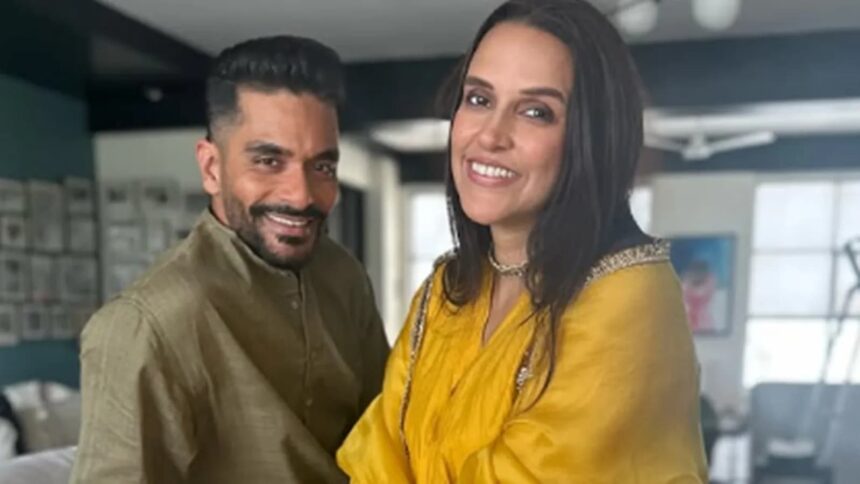
Stressing that partners must be alike in their choices and habits to be together and on the same page, actor reflected on her relationship with her husband, Angad Bedi. “Genuine friendships are very few. One of them I got married to. And I think that’s a great choice both ways. I don’t understand the system where opposites attract. Angad and I have everything in common, whether film industry, fitness, language, or food choices. We have everything in common. Choices in terms of what to watch. Imagine if opposites attract…tumhe rajma khaana hai…mujhe momos khaane hai…kaise hoga? Woh chalta hi nahi hai…hamari life me toh woh sab chalta hi nahi hai (You want to eat rajma, I want momos…how will it work out? I don’t think it works for us at all),” she told Bollywood Bubble in a podcast.
According to the Chup Chup Ke actor, a relationship means “love, friendship, companionship, understanding, humour, fights, resolving fights, being there, making time, prioritising, , and keeping expectations real”.
On keeping expectations real, Neha, who got married to Angad in 2018, said, “I don’t remember him giving me flowers ever. But the number of people who gave me flowers…I didn’t get married to them. I got married to the one who never gave me flowers. These are all unreal expectations. Life is not a Hallmark card. You have to keep it very real. He and I are very different but very similar. There are a lot of differences. I can multitask. He will do one thing, but he will do it properly. I can micromanage, but he manages different kinds of things. It has taken time….it’s taken eight years…Professionally, yes, but domestically too, we have understood whose skill set is better in what…”
Taking a cue from her candid confession, we understand what it means for relationships when partners are similar rather than opposites.
The popular idea that opposites attract sounds romantic, but in real, lived relationships, it often collapses under the weight of daily life, agreed Delnna Rrajesh, psychotherapist and life coach. “What sustains a partnership is not dramatic contrast but quiet compatibility. Shared rhythms, similar values, aligned lifestyles, and emotional understanding matter far more than novelty or polarity,” said Delnna.
Long-term relationships are not built in moments of excitement. “They are built-in routines. At what time you sleep, eat, how you unwind, how you argue, or how you repair after conflict. When two people share overlapping internal clocks and similar life preferences, life flows with far less friction. This does not mean they are identical. It means they are aligned where it counts.”
According to Delnna, there is a deep “misunderstanding about compatibility”. “Many confuse it with sameness. Compatibility is not about doing everything the same way. It is about respecting differences without feeling threatened by them. One partner may multitask while the other focuses deeply on one thing at a time. One may manage details, the other systems. Over time, emotionally mature couples stop competing and start complementing each other’s strengths. Domestic harmony, like professional teamwork, evolves through recognising who is better at what and letting go of ego,” said Delnna.
Another illusion that damages relationships is the fantasy of romance as . “Flowers, grand gestures, dramatic expressions of love are often mistaken for emotional depth. It is consistency. It is reliability. It is showing up when things are ordinary, stressful, repetitive, or unglamorous. Many people chase symbolic romance while overlooking practical partnership. They end up disappointed, not because love is missing, but because expectations are unrealistic,” expressed Delnna.
Strong partnerships are built on a few quiet pillars:
*Shared values and life rhythms
*Emotional safety during conflict
*Respect for differences without power struggles
*Clear division of responsibilities based on strengths
*Friendship that outlasts attraction
*Expectations rooted in reality, not fantasy
Delnna explained that love deepens when two people grow together rather than pull each other in opposite directions. “When companionship feels natural rather than negotiated. The most sustainable relationships are not the loudest or most dramatic ones. They are the ones where life feels easier, lighter, and more honest with the other person beside you,” said Delnna.