


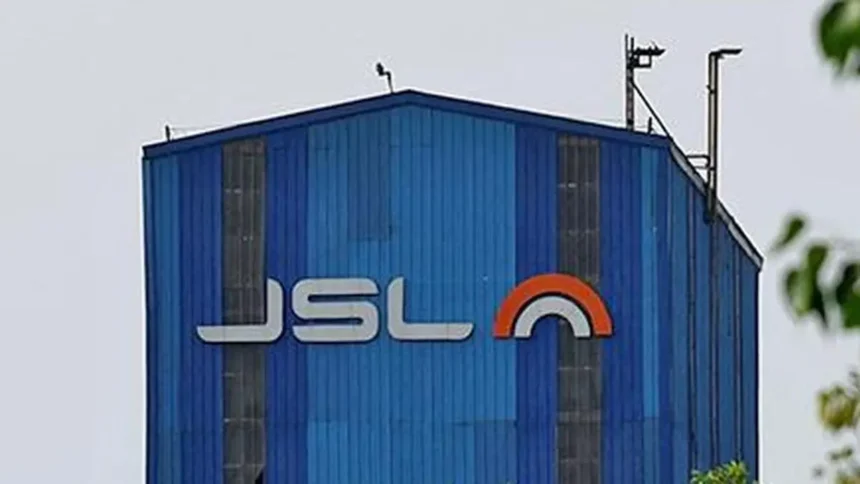
Jindal Stainless is investing ₹900 crore to increase its cold rolling capacity to cater to the rising demand of the product from sectors such as automotive, appliances, and food processing, the company’s Managing Director Abhyuday Jindal said.
The investment will increase the company’s cold rolling capacity from 2.05 MTPA to 2.67 MTPA by FY28, he said in the company’s annual report for FY26.
Besides upstream, the company is also making significant investments to build up its downstream capabilities, the industry executive said.
“Our ₹900 crore investment across Hisar and Kharagpur, along with new hot rolled annealing, pickling, and cold rolling facilities at Jajpur, will…support a higher-value mix for automotive, appliances, food processing, and industrial applications,” Jindal said.
Cold rolling is a precision metalworking process that shapes and compresses steel without heat. This method enhances structural strength, tightens dimensional tolerances, and delivers a smooth, high-quality surface finish, making cold-rolled sheet metal essential for high-precision, high-durability applications.
About the Maharashtra project, he said the proposed facility will improve logistics efficiency, support import substitution, and serve high-growth strategic sectors.
Jindal Stainless is in the process of identifying a site for its proposed ₹40,000-crore stainless steel manufacturing facility in Maharashtra, where it will produce specialised grades of steel for critical applications in emerging sectors such as hydrogen, nuclear energy, defence, mobility, infrastructure, and process industries.
ONGC bags US licence to resume full Venezuela operations
Jindal further said that during FY26, renewable sources accounted for nearly 47 per cent of total electricity consumption across its Hisar and Jajpur facilities.
The company also maintained approximately 70 per cent recycled scrap utilisation in its electric arc furnace-based manufacturing process and continued to progress towards its targets of reducing Scope 1 and Scope 2 emissions by 50 per cent by 2035 and achieving net zero by 2050.
Sharing financial details, the MD said that in FY26, consolidated revenue of his company stood at ₹42,955 crore, while EBITDA increased 19.2 per cent year-on-year to ₹5,560 crore and profit after tax grew 27.4 per cent to ₹3,185 crore.
Finished goods sales volume reached a record 2.57 million tonnes during the year, while the balance sheet remained strong with a net debt-to-equity ratio of 0.15x, providing the financial flexibility to support future growth investments.
Published on August 16, 2026