“I came across your post and it stopped me mid-scroll because I’ve been Punch,” Bhavin Kunjadiya’s email sat in my inbox today morning. A candid admission, followed by a story that feels ‘hashtag relatable’ to say the least.
A few years ago, he was the only one in his team who kept raising uncomfortable truths with leadership. No allies, no backing, just a quiet room after he spoke. People would privately agree with him but remain silent in meetings. “It was isolating in a way that’s hard to describe. You’re not being screamed at; there’s no dramatic villain. You’re just… alone in a crowd that’s chosen comfort over honesty,” the PR professional shared.
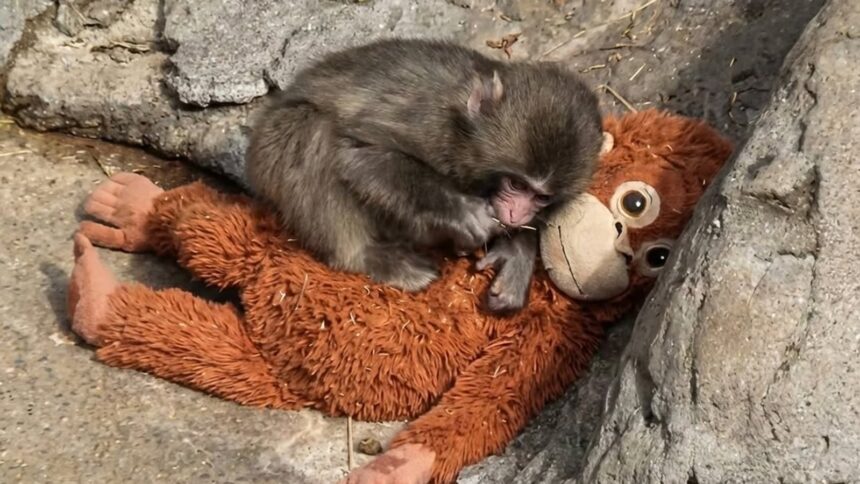
Kunjadiya found himself relating hard with the tiny macaque fighting for his life in Japan’s Ichikawa Zoo.
Abandoned by his mother at birth, the seven-month-old monkey has been clinging to an orangutan stuffed toy for comfort while navigating the rocky terrains of primate politics. And the world has been watching him fight big bullies through their phone screens. Every day, there’s a new update. “Punch monkey makes his first friend.” “Is Punch the monkey going to be okay?” Even his hair loss has triggered concerns among worried fans thronging to see him in his natural habitat.
Clinical psychologist Dr Rimpa Sarkar decoded his virality, explaining how animal clips often become vessels for human projection. “Viewers are not necessarily responding to the literal act, but to the exaggerated expression of emotion—such as frustration, irritation, or impulsiveness—that mirrors their own suppressed feelings,” she said. In a fast-paced, overstimulating digital environment, exaggerated reactions feel relatable and cathartic.
“Short clips of Punch in his zoo enclosure act as a symbolic outlet for everyday frustrations that people cannot openly express in professional or social settings. And the internet rewards amplified reactions,” explained Dr Sarkar, adding that dramatic or chaotic behaviour becomes meme-friendly because intensity captures attention.
Sure, he is adorable and can fit in a pocket, and it’s emotionally stimulating watching animals fight, but is that the only reason why the world is going bananas over ?
Kunjadiya thinks it has more to do with the “specific loneliness of doing the right thing when no one’s standing beside you”.
Rohan Agarwal believes all living beings need companionship at different stages of life. “Someone to play with, spend time with, and share experiences with. Perhaps that is where Punch begins to resonate with us,” said the Founder and Creative Strategist at Illumineye Communications LLP.
Thanks to technology and social media, our friends, family and colleagues are just a call or message away. Yet we lack meaningful interaction. We are connected, but not always present.
“There are times when I want to share something: a thought, a small win, a frustration, a fear. But not every time do I find someone to share it with. That, for me, is a ‘Punch’ moment,” shared Agarwal.
Of course, humans are wired to respond to vulnerability, and watching a baby monkey at play instinctively evokes care and protection. Since humans evolved from primates, Agarwal said perhaps “our empathy is not just emotional, but evolutionary”. We recognise something familiar in Punch.
Jessica Killbane too echoed Agrawal’s sentiments. “Most people have a version of the feeling Punch carries,” she said. You feel it when you walk into rooms you don’t quite belong in, or when you put in effort into something but it makes no dent.
“We live with that feeling quietly, without a language for it, and a Japanese macaque in a wildlife sanctuary gives us somewhere to put it,” said the Founder and Brand Strategist at Riversong, a business consulting firm. But the fact that Punch is a monkey plays a role in it. “Close enough to recognise, distant enough to feel safely. He gets to be small and still going. We get to feel that emotion without having to say it’s ours,” she shared.
When Sangeeta Sharma first saw Punch fighting oversized bullies, she was reminded of a client who was chubby and very cute when he was little, and his loved ones used to pull his cheeks and pinch his butt. It was harmless fun for years, till he started getting bullied by his classmates in school
“He was constantly teased about his body and as an adult, developed self-esteem issues and social anxiety. Early experiences of being hurt by family members and peers made it harder for him to trust anyone and make real friends. Sharma’s client learnt to suppress his feelings of helplessness and shame, and began attaching his worth to how people treated him.
‘s story mirrors her client’s tale in a way that is not just real but also a stark reminder of how difficult it has become to find genuine connection in today’s day and age. “Everyone has their story of pain and hurt, and everyone’s seeking love, but no one’s ready to understand another’s perspective — all due to an inflated sense of ego and false identity woven around themselves,” explained the clinical hypnotherapist.
Most of us have been there — maybe in childhood, facing classmates who seemed more intelligent, louder, bigger or more confident. Or even in adulthood, at workplace hierarchies or family bonds that made us feel small or powerless. This little monkey highlights resilience, the refusal to give up or back down even when challenges grow bigger.
“When we cheer for Punch, we are actually cheering for ourselves — the stronger, fragile yet unyielding version of us that aches for respect, worth and belonging,” said Sharma. And each punch that little monkey throws reminds us that we are not powerless. We can survive any challenge that we put our mind to.