List of top Iranian leaders killed in 2026: Iran’s Intelligence Minister Esmail Khatib has been killed in an Israeli overnight airstrike, Israeli Defence Minister Israel Katz confirmed on Wednesday, making him the third senior Iranian official eliminated in 48 hours as Israel’s campaign to decapitate Iran’s leadership intensifies.
Katz vowed that “significant surprises are expected throughout this day on all fronts,” signalling further strikes are imminent. Iran has not yet confirmed Khatib’s death.
The killing follows Israel’s elimination of Ali Larijani, Secretary of Iran’s Supreme National Security Council and its most important wartime strategist, and Basij commander Gholamreza Soleimani, both killed on March 17 in precision strikes on Tehran.
Iran hit back overnight, launching missiles described by officials as capable of evading air defence systems. Two people were killed near Tel Aviv. Strikes were also reported against Israeli-aligned targets across the Persian Gulf, as the broader Middle East war showed no sign of slowing.
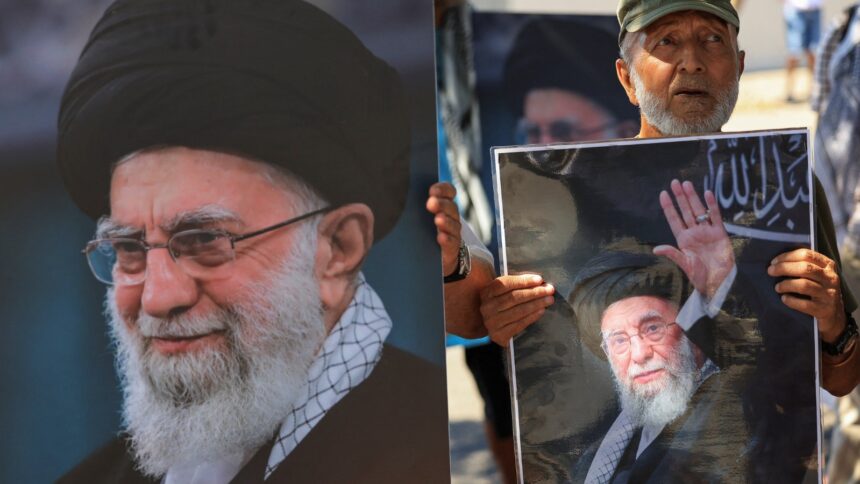
The latest deaths are part of a sustained US-Israeli campaign that has already killed Supreme Leader Ayatollah Ali Khamenei on February 28, along with the chiefs of the IRGC, the Iranian military, and the country’s defence minister, gutting the Islamic Republic’s entire command structure within three weeks.
“We unequivocally condemn any actions aimed at harming the health of, or indeed murdering or eliminating, members of the leadership of sovereign and independent Iran, as well as those of other countries. We condemn such actions,” Kremlin spokesman Dmitry Peskov told reporters when asked about Russia’s reaction to Larijani’s death.
Iran’s top leadership has taken a severe hit in the ongoing conflict. in a massive joint US-Israeli airstrike targeting his residence and leadership complex in Tehran. On the same day, Ali Shamkhani, a senior advisor to the Supreme Leader, was also killed in strikes aimed at the country’s top security leadership.
The losses continued into March. and a key wartime strategist, was killed in a precision strike in Pardis on March 17. A day later, Intelligence Minister Esmail Khatib was confirmed dead following a targeted overnight strike on the Ministry of Intelligence headquarters.
Iran’s military leadership has also been significantly weakened. Chief of the General Staff Abdolrahim Mousavi was killed on February 28 in a strike that effectively disrupted the armed forces’ central command. The same day, IRGC chief Mohammad Pakpour and Defence Minister Aziz Nasirzadeh were also killed in coordinated attacks on Iran’s defence infrastructure.
The leadership vacuum deepened when Majid Ebn-e-Reza, appointed as Nasirzadeh’s successor, was killed in an Israeli strike just a day after taking charge on March 3. Later, on March 17, Basij commander Gholamreza Soleimani was killed along with several deputies in a targeted strike. Mohammad Shirazi, who headed the Supreme Leader’s military office, was also among those killed in the initial wave of attacks.
Strikes have also targeted Iran’s specialised military and intelligence network. Hossein Jabal Amelian, who headed SPND, an organisation linked to advanced military and nuclear research, was killed on February 28. On the same day, police intelligence chief Gholamreza Rezaian was eliminated in coordinated strikes on Iran’s domestic surveillance apparatus.
Beyond Iran’s borders, the campaign extended to key operatives. Ali Reza Bi-Azar, intelligence chief of the Lebanon Corps, was killed in a drone strike in Beirut on March 8 during a Quds Force meeting. Abu Dhar Mohammadi, an IRGC commander linked to Hezbollah’s missile unit, was also killed on March 12 as part of operations targeting Iran-backed assets in Lebanon.
The killing of Ali Larijani could be a turning point. While Khamenei’s death was a major symbolic and structural blow, Larijani played a crucial role in both directing Iran’s military response and maintaining diplomatic backchannels with the West.
With his death, Iran’s interim leadership, led by President Masoud Pezeshkian and Chief Justice Gholam-Hossein Mohseni-Ejei, , raising serious questions about the country’s ability to coordinate both military strategy and international engagement going forward.
(With inputs from agencies)