India’s Space Ambitions Beyond Chandrayaan: The Next Frontier
Introduction
India’s journey into space has been nothing short of inspiring. From launching its first satellite, Aryabhata, in 1975 to the historic Chandrayaan-3 lunar landing in 2023, India has cemented its place among the world’s leading space powers. What makes this story remarkable is not just the technological achievement, but the vision, resilience, and innovation that define India’s space program.
With ISRO (Indian Space Research Organisation) at the helm, India has proven that world-class space exploration doesn’t require astronomical budgets. The country’s success with Chandrayaan, Mangalyaan, and its growing satellite programs have sparked a new era of space diplomacy, private innovation, and global collaboration.
But as the world looks toward Mars, asteroids, and deep space, the question now arises: What’s next for India beyond Chandrayaan?
This blog takes a detailed look at India’s post-Chandrayaan ambitions — from interplanetary missions and human spaceflight to private-sector participation and international cooperation — shaping the country’s future in the global space race.
The Legacy of Chandrayaan: A Defining Moment in Space History
Before exploring what lies ahead, it’s important to understand how Chandrayaan redefined India’s space journey.
1. Chandrayaan-1 (2008)
India’s first lunar mission, launched in 2008, made global headlines when it discovered water molecules on the Moon’s surface — a breakthrough that changed how scientists view lunar geology. It firmly established ISRO as a serious contender in deep-space exploration.
2. Chandrayaan-2 (2019)
Although the lander Vikram suffered a crash landing, Chandrayaan-2 successfully placed an orbiter in lunar orbit, which continues to send valuable data about the Moon’s surface and exosphere.
3. Chandrayaan-3 (2023)
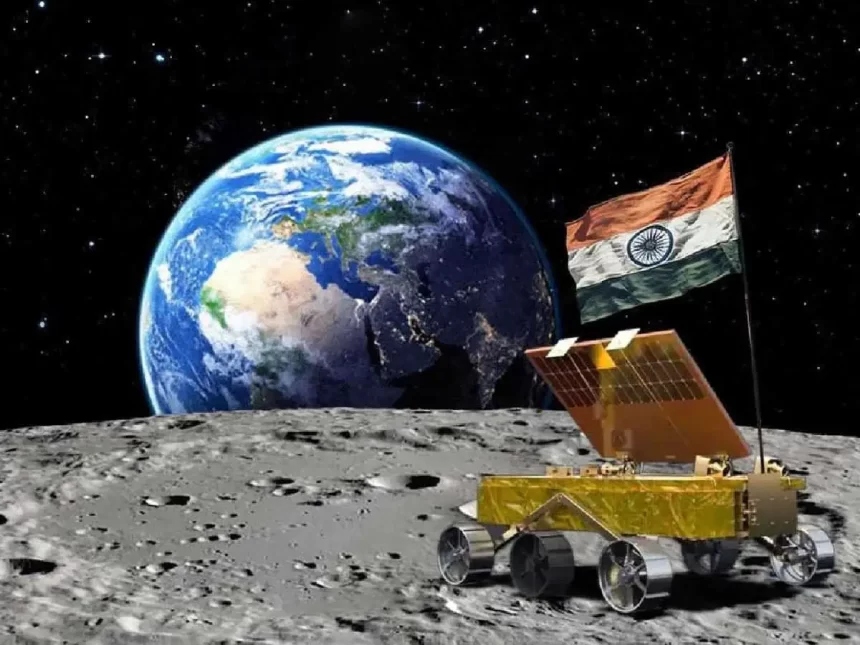
A landmark achievement — India became the first country to land near the Moon’s south pole, a region of immense scientific interest due to its potential water ice deposits. The mission was hailed globally as a symbol of India’s engineering excellence, precision, and cost-effectiveness.
Chandrayaan-3 didn’t just showcase technical mastery; it inspired a generation and demonstrated that India’s space dreams are limited only by imagination.
ISRO’s Next Chapter: Beyond the Moon
After conquering the lunar frontier, India’s space agency is setting its sights much higher — both literally and figuratively. ISRO’s roadmap for the next decade includes ambitious missions to Mars, Venus, the Sun, and beyond.
Here’s a look at what lies ahead.
1. Aditya-L1: India’s Mission to the Sun
In 2023, shortly after the success of Chandrayaan-3, ISRO launched Aditya-L1, India’s first solar observatory. Positioned at the Lagrange Point 1 (1.5 million km from Earth), the mission studies the Sun’s corona, solar flares, and solar wind — critical for understanding space weather that affects satellites and communication systems.
Key Objectives:
-
Study solar activity and its impact on Earth’s climate.
-
Observe coronal mass ejections (CMEs) that can disrupt power grids and satellites.
-
Advance India’s capability in heliophysics research.
Aditya-L1 represents a significant step toward scientific self-reliance and demonstrates India’s growing expertise in multi-planetary observation.
2. Gaganyaan: India’s First Human Spaceflight Program
Perhaps the most anticipated project after Chandrayaan is Gaganyaan — India’s first manned space mission.
The goal: to send three Indian astronauts (Vyomnauts) into low Earth orbit (~400 km) for 3–5 days and safely return them to Earth.
Key Highlights:
-
Developed in collaboration with DRDO, ISRO, and Indian Air Force.
-
The crew module is designed for reusability and advanced safety.
-
Unmanned test flights (G1 & G2) are scheduled before the final human mission.
-
The astronauts are being trained in India and at Russia’s Gagarin Cosmonaut Training Centre.
The success of Gaganyaan will make India the fourth nation in the world (after the US, Russia, and China) to independently conduct a human space mission. It’s not just a technological milestone — it’s a symbol of national pride and self-reliance.
3. Mangalyaan-2: The Second Mars Orbiter Mission
Following the success of Mangalyaan (Mars Orbiter Mission) in 2014 — which made India the first Asian nation to reach Mars and the first in the world to do so on its first attempt — ISRO is planning Mangalyaan-2.
Expected Features:
-
Advanced scientific instruments to study the Martian surface and atmosphere.
-
High-resolution imaging capabilities.
-
Possible inclusion of a lander or rover.
Mangalyaan-2 will deepen India’s research into Mars’ geology, climate, and potential for life — while enhancing the country’s reputation as a deep-space pioneer.
4. Shukrayaan-1: The Venus Mission
Next in line is Shukrayaan-1, India’s first mission to Venus, the hottest planet in our solar system. The mission aims to study Venus’s dense atmosphere, volcanic activity, and surface composition.
Mission Objectives:
-
Understand the greenhouse effect and atmospheric chemistry.
-
Study solar radiation interaction with Venus’s surface.
-
Compare Venus’s climate evolution with Earth’s.
With this mission, India joins a select group of nations exploring Venus, including NASA, ESA, and Roscosmos.
Shukrayaan-1 reflects India’s growing confidence in planetary science and technological sophistication in interplanetary travel.
5. NISAR: A Joint Mission with NASA
The NASA-ISRO Synthetic Aperture Radar (NISAR) is a collaborative mission between ISRO and NASA, set to launch in 2025.
It’s one of the world’s most advanced Earth observation satellites designed to study:
-
Earth’s surface changes, glaciers, and forest biomass.
-
Natural disasters such as earthquakes, floods, and landslides.
-
Climate change and its impact on ecosystems.
NISAR showcases India’s ability to work at par with the world’s leading space agencies and emphasizes the importance of space diplomacy and international cooperation.
6. Lunar Polar Exploration Mission (LUPEX) – Collaboration with Japan
ISRO and the Japan Aerospace Exploration Agency (JAXA) are jointly developing LUPEX, a mission to explore the Moon’s south pole in greater detail.
Mission Goals:
-
Confirm and analyze lunar water ice.
-
Test new technologies for future human exploration.
-
Deploy a Japanese lander and an Indian rover.
LUPEX will build upon Chandrayaan-3’s legacy and pave the way for future lunar bases and potential resource utilization.
7. Astrosat-2 and Space-Based Observatories
After the success of Astrosat-1 — India’s first multi-wavelength space observatory — ISRO is developing Astrosat-2, designed to study:
-
Distant galaxies and black holes.
-
X-ray and ultraviolet radiation.
-
Cosmic phenomena such as supernovae and pulsars.
This project highlights India’s commitment to advancing space-based astronomy and astrophysics research, expanding beyond planetary missions.
8. Reusable Launch Vehicles (RLVs) and Low-Cost Space Access
A key factor behind ISRO’s global reputation is its ability to launch missions at a fraction of the global cost. To enhance this further, ISRO is developing Reusable Launch Vehicles (RLVs) — capable of returning to Earth and being reused for multiple missions.
RLVs will drastically reduce launch costs, making India a leader in affordable space transportation. Combined with private participation, this technology can make India a major player in space commerce and satellite deployment.
9. Private Space Revolution in India
India’s space journey is no longer driven by ISRO alone. The rise of private space startups is transforming the country’s space ecosystem into a vibrant, collaborative industry.
Some key players include:
| Startup | Focus Area | Notable Achievements |
|---|---|---|
| Skyroot Aerospace | Launch vehicles | Launched Vikram-S (India’s first private rocket, 2022) |
| Agnikul Cosmos | 3D-printed rocket engines | Developing customizable micro-launchers |
| Pixxel | Earth imaging satellites | Deploying hyperspectral satellites for climate monitoring |
| Bellatrix Aerospace | Space propulsion | Working on green propulsion technologies |
| Dhruva Space | Satellite systems | Providing end-to-end satellite solutions |
The government’s new IN-SPACe (Indian National Space Promotion and Authorization Centre) framework allows private companies to access ISRO’s infrastructure, boosting innovation and commercialization.
Together, public-private partnerships are expected to create a $50 billion Indian space economy by 2030.
10. Space Commerce and Satellite Expansion
India is also focusing on the commercial side of space exploration. ISRO’s commercial arm, NewSpace India Limited (NSIL), and the earlier Antrix Corporation are driving international collaborations and satellite launches for global clients.
Key Goals:
-
Expand India’s satellite communication and navigation systems.
-
Support global climate and disaster monitoring.
-
Strengthen India’s role in space-based broadband (via GSLV and GSAT missions).
India is also working on the Indian Regional Navigation Satellite System (NavIC) — its answer to the US GPS — for navigation and strategic purposes.
11. India’s Long-Term Space Vision: 2040 and Beyond
India’s space ambitions extend far beyond the next decade. Under the Vision 2040, ISRO aims to:
-
Establish a Space Station by 2035.
-
Conduct interplanetary human missions (to Moon and Mars).
-
Lead in satellite-based climate monitoring and communications.
-
Enable space-based solar power generation and asteroid mining research.
With a focus on sustainability and global leadership, India’s long-term vision aims to make it not just a participant — but a leader in space exploration and innovation.
Challenges Along the Way
While India’s space ambitions are soaring, several challenges remain:
-
Budget Constraints:
ISRO’s missions are cost-effective but still limited by modest funding compared to NASA or ESA. -
Technology Gaps:
Developing heavy-lift launchers, reusable vehicles, and deep-space propulsion requires continuous R&D investment. -
Private Sector Regulation:
Clear policies are needed to encourage startups while ensuring safety and compliance. -
Global Competition:
As more countries and private companies enter space, India must balance innovation with collaboration to maintain competitiveness. -
Talent Retention:
Retaining top engineers and scientists amid global opportunities remains an ongoing challenge.
The Global Impact: India as a Space Power
India’s consistent success has made it a trusted space partner globally. Its low-cost, high-precision missions have inspired developing nations to collaborate rather than compete.
By combining scientific excellence, affordability, and diplomacy, India is positioning itself as a “space bridge” — connecting nations through shared missions, data, and sustainable technology.
Moreover, India’s leadership in space for social good — using satellites for weather forecasting, agriculture, telemedicine, and disaster management — demonstrates how space technology can directly uplift lives on Earth.