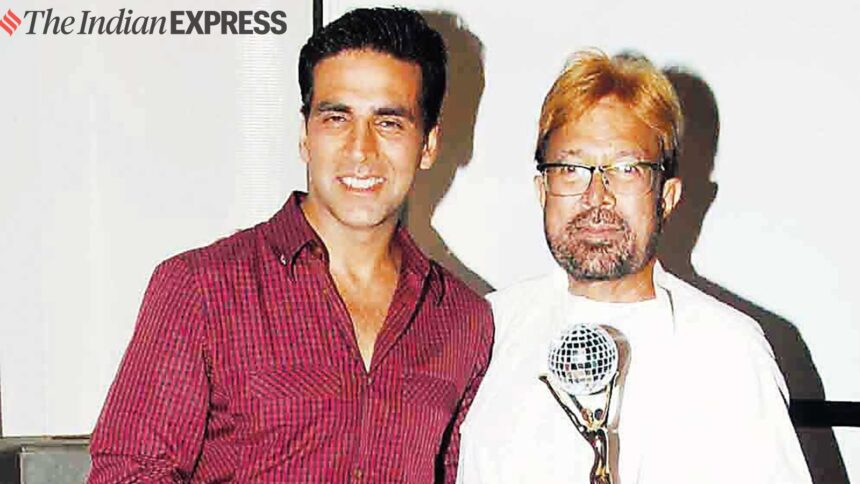
Success stories often focus on what to do. The right habits, the right choices, and the right influences. But just as important, though less frequently discussed, is the idea of learning from mistakes, both our own and those of others. Actor Akshay Kumar recently reflected on this idea while speaking about the people who have influenced him.
During an interaction with , he named Amitabh Bachchan, Sanjeev Kumar and Mehmood as his inspirations. When asked why he did not include his father-in-law, Rajesh Khanna, who is widely regarded as one of Hindi cinema’s biggest superstars, Akshay offered an honest perspective. “I have learnt a lot from my father-in-law. I . He used to actually sit me down and tell me about all the mistakes that he had made. He was the number one superstar that India had seen (sic).”
He also recalled how, as a child, he had admired Rajesh Khanna from afar, long before becoming part of his family. “When I was 7-8 years old, I would pass Carter Road with my father. My parents and I used to stand outside Rajesh Khanna‘s bungalow, Aashirwad, and my father would make me sit on his shoulders just to get a glimpse of him. This is (fate). I never imagined that his daughter would be my wife.” His reflections highlight how inspiration can take different forms, not just admiration, but also honest conversations about failure and self-awareness.
Counselling psychologist Athul Raj tells indianexpress.com, “In our culture, success is usually told as a clean story – talent, luck, destiny. What gets edited out is the mess. Failure, however, is all mess. It shows you the cracks: poor judgement, unchecked ego, loss of discipline.”
When someone like Rajesh Khanna declines, the learning is not abstract – it’s behavioural. “The brain holds on to these narratives because they carry emotional weight and a sense of threat. You don’t just admire from a distance; you instinctively ask, ‘Where could this go wrong for me?’ That question is psychologically powerful. It builds caution, pattern recognition, and realism. In many ways, failure offers clearer instructions–it tells you what to guard against, not just what to chase,” notes Raj.
When someone speaks about their mistakes without packaging them, it changes the quality of listening. Raj mentions, “You’re not hearing advice; you’re witnessing consequence. That makes decision-making more grounded–you start factoring in what can go wrong, not just what looks promising. It doesn’t make you risk-averse, but it makes your risks more considered.”
There’s also a quiet shift in self-awareness. You begin to recognise familiar tendencies in yourself — overconfidence, the need for validation, and a tendency to ignore dissent. Raj states that because the , not theory, it sticks. It also builds trust. You’re more likely to absorb insight from someone who is not trying to appear flawless.
Early admiration is shaped by distance and imagination. Raj explains, “You see the aura around someone like Amitabh Bachchan–the voice, the presence, the certainty–– and you mistake it for a complete picture. With time, that distance collapses. You begin to see the grind behind the image–the discipline, reinvention, the ability to withstand irrelevance and return. Success stops looking effortless. It starts looking structured, even fragile. That shift is important.”
Admiration becomes less about wanting that life, he says, and more about understanding the cost of sustaining it. It brings maturity – because you’re no longer chasing an image, you’re evaluating whether you can live with what that image demands.