Train Smarter, Not Just Harder: A Comprehensive Guide to Building an Athlete’s Body and Mindset
The allure of athletic fitness is undeniable. It’s not just about a certain physique; it’s about functional strength, explosive power, relentless endurance, and a resilient mindset that thrives under pressure. For too long, the public’s approach to fitness has been disconnected from the principles that guide the world’s top performers. We often focus on isolated muscles, fleeting trends, and short-term goals, while athletes build their bodies as integrated, high-performance systems.
Improving your fitness “like an athlete” is not about mimicking the exact two-a-day training sessions of an Olympic sprinter. It’s about adopting the foundational principles, disciplines, and strategic thinking that form the bedrock of all elite athletic development. This guide deconstructs the athlete’s blueprint, providing a actionable framework to elevate your training, nutrition, and recovery from a casual endeavor to a professional-grade system.
Part 1: The Foundational Pillar – The Athlete’s Mindset
Before you lift a weight or run a mile, you must cultivate the mental architecture of a competitor. This is the non-negotiable first step.
1.1. Define Your “Why” and Set Process-Oriented Goals
An athlete doesn’t train abstractly; they train for a purpose—to win a championship, set a personal record, or make the team.
-
Actionable Strategy: Move beyond vague goals like “get fit” or “lose weight.” Define a clear, objective, and time-bound Performance Goal. Examples: “Run a 5k in under 25 minutes in 12 weeks,” “Deadlift 1.5 times my bodyweight in 6 months,” or “Complete 10 consecutive pull-ups in 3 months.”
-
The Power of Process: Then, focus on the Process Goals that will get you there. These are the daily and weekly non-negotiables. “Execute all three scheduled strength sessions this week,” “Add 2.5kg to my squat each session,” or “Get 7-8 hours of sleep 5 nights this week.” This shifts your focus from an distant outcome to the controllable daily actions, reducing frustration and building consistency.
1.2. Embrace Discipline Over Motivation
Motivation is fleeting and emotional. Athletes rely on discipline—the commitment to the process even when they don’t feel like it. The workout happens not because you are inspired, but because it is what you do.
1.3. Adopt a Growth Mindset
Athletes view setbacks, plateaus, and even failures as data, not definitions. A missed lift is a lesson in technique or recovery, not proof of inadequacy. Cultivate curiosity about your own limits and a willingness to learn and adapt.
Part 2: The Training Trifecta – Strength, Conditioning, and Mobility
An athlete’s body is a versatile tool, capable of generating power, sustaining effort, and moving efficiently. Your training must reflect this multi-faceted approach.
2.1. Foundational Strength: The Bedrock of Performance
Strength is not just for appearance; it’s the basis for power, injury resilience, and metabolic health.
-
Priority on Compound Movements: Athletes build their programs around multi-joint exercises that train movement patterns, not just muscles. Your program should be built on:
-
The Squat Pattern (Goblet Squats, Barbell Back Squats)
-
The Hinge Pattern (Deadlifts, Kettlebell Swings)
-
The Push Pattern (Push-Ups, Overhead Press)
-
The Pull Pattern (Pull-Ups, Bent-Over Rows)
-
The Carry Pattern (Farmer’s Walks, Suitcase Carries)
-
-
Principle of Progressive Overload: To get stronger, you must systematically challenge your body. This doesn’t always mean more weight. It can be:
-
More Weight: Adding load to the bar.
-
More Reps: Completing more repetitions with the same weight.
-
More Sets: Increasing the volume of work.
-
More Density: Completing the same work in less time.
-
2.2. Intelligent Conditioning: Beyond “Cardio”
“Cardio” is a misnomer. Athletes train their energy systems with specificity.
-
Understand Your Energy Systems:
-
Phosphagen System (0-10 seconds): For max power and speed. Train with sprints (e.g., 8x100m sprints with full recovery).
-
Glycolytic System (10 seconds – 2 minutes): For high-intensity efforts. Train with circuits or interval training (e.g., 8 rounds of 20 seconds of hard rowing, 40 seconds of rest).
-
Oxidative System (2+ minutes): For endurance. Train with steady-state cardio (e.g., a 45-minute brisk jog or bike ride).
-
-
The Athlete’s Mix: A well-rounded program incorporates all three. Don’t just be a slow-distance jogger or a only a sprinter. Blend them. A sample week could include one sprint session, one interval session, and one longer, steady-paced session.
2.3. Proactive Mobility and Recovery: The Secret Weapon
Athletes don’t just train hard; they recover harder. Mobility is your body’s insurance policy against injury and the key to efficient movement.
-
Dynamic Warm-Ups: Never train “cold.” Spend 10-15 minutes before each session preparing your body for the work ahead with dynamic stretches (leg swings, cat-cow, hip circles, bird-dog) and activation drills (glute bridges, band pull-aparts).
-
Dedicated Mobility Work: Treat this as seriously as your strength training. Incorporate 2-3 weekly sessions of focused mobility work or yoga to improve range of motion in key areas like the hips, thoracic spine, and ankles.
-
Cool-Down and Soft-Tissue Work: Post-workout, use a foam roller or lacrosse ball to address tight spots (quads, glutes, lats, chest). This aids recovery and identifies potential problem areas before they become injuries.
Part 3: The Fueling Engine – An Athlete’s Approach to Nutrition
You cannot out-train a poor diet. Athletes view food as fuel and medicine, not just as a source of pleasure or comfort.
3.1. Strategic Macronutrient Balance
-
Protein (The Builder): Crucial for muscle repair and growth. Aim for 1.6-2.2 grams of protein per kilogram of body weight daily. Distribute this across 3-4 meals (e.g., 30-40g per meal) to optimize muscle protein synthesis. Sources: Chicken, fish, eggs, lean beef, Greek yogurt, tofu, lentils.
-
Carbohydrates (The Fuel): Your primary energy source. Intake should be periodized—higher on heavy training days, lower on rest or light days. Focus on complex carbs (oats, sweet potatoes, quinoa, brown rice, fruits) for sustained energy.
-
Fats (The Regulator): Essential for hormone production (including testosterone), joint health, and vitamin absorption. Don’t fear healthy fats. Sources: Avocado, nuts, seeds, olive oil, fatty fish.
3.2. Nutrient Timing
-
Pre-Workout (1-2 hours before): A meal containing easily digestible carbs and a modest amount of protein. Example: A banana with a scoop of protein powder or a small bowl of oatmeal with berries.
-
Post-Workout (within 1-2 hours after): The “anabolic window” is wider than once thought, but it’s still good practice to consume a meal with protein and carbs to kickstart recovery. Example: A chicken and rice bowl or a protein shake with a piece of fruit.
-
Hydration: This is non-negotiable. Dehydration cripples performance and recovery. Drink water consistently throughout the day, not just during your workout. A good baseline is 30-35ml per kg of body weight.
Part 4: The Regeneration Protocol – The Unseen 20 Hours
You only break down muscle in the gym; you build it while you rest. The 23 hours a day you spend outside the gym are what truly determine your progress.
4.1. Prioritize Sleep as a Performance Enhancer
Sleep is the most powerful legal performance-enhancing “drug” available.
-
Aim for 7-9 Hours: During deep sleep, your body releases Growth Hormone, which is critical for tissue repair and muscle growth.
-
Quality Matters: Create a sleep-conducive environment: cool, dark, and quiet. Implement a digital curfew 60 minutes before bed.
4.2. Manage Stress
Chronic, elevated levels of the stress hormone cortisol promote muscle breakdown, fat storage, and inflammation. Incorporate daily stress-reduction practices:
-
Mindfulness or Meditation: 10-15 minutes daily.
-
Walking in Nature: Low-intensity, restorative movement.
-
Hobbies: Engage in activities that are completely separate from your fitness goals.
Part 5: The Implementation – Your First 4 Weeks
Don’t get paralyzed by the volume of information. Start here.
Sample Weekly Structure (Beginner/Intermediate):
-
Day 1: Lower Body Strength
-
Barbell Back Squat: 3 sets of 5 reps
-
Romanian Deadlift: 3 sets of 8 reps
-
Lunges: 3 sets of 10 reps per leg
-
Plank: 3 sets, hold for 45 seconds
-
-
Day 2: Conditioning & Mobility
-
Interval Training: 20 minutes of alternating 30 seconds hard on an Assault Bike, 90 seconds easy.
-
Full Body Mobility Flow: 20 minutes
-
-
Day 3: Upper Body Strength
-
Bench Press: 3 sets of 5 reps
-
Bent-Over Row: 3 sets of 8 reps
-
Overhead Press: 3 sets of 8 reps
-
Pull-Ups (or Lat Pulldowns): 3 sets to near-failure
-
-
Day 4: Active Recovery
-
30-45 minute brisk walk or light swim.
-
Foam Rolling.
-
-
Day 5: Full Body Power & Conditioning
-
Power Cleans or Kettlebell Swings: 5 sets of 3 reps (focus on speed)
-
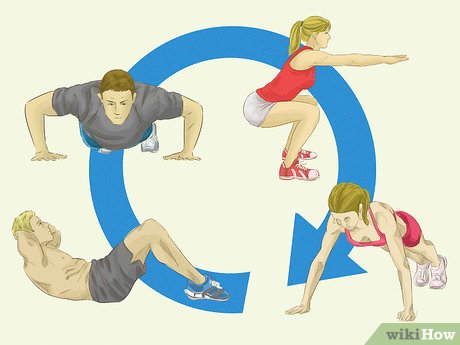
Circuit: 3 rounds of 10 Push-Ups, 15 Air Squats, 20 Mountain Climbers (rest 60s between rounds)
-
-
Day 6 & 7: Rest or Light Activity
-
Focus on sleep, nutrition, and hydration.
-
The Long Game
Improving your fitness like an athlete is a marathon, not a sprint. It requires a fundamental shift from working out to training—a deliberate, intelligent, and holistic process. It demands patience, consistency, and a respect for the intricate balance between stress and recovery.
By adopting the athlete’s mindset, embracing compound strength training, conditioning your energy systems, fueling strategically, and prioritizing recovery with the same intensity as your workouts, you will no longer be just “exercising.” You will be engineering a stronger, more resilient, and more capable version of yourself. The path to elite-level fitness is now yours to follow.