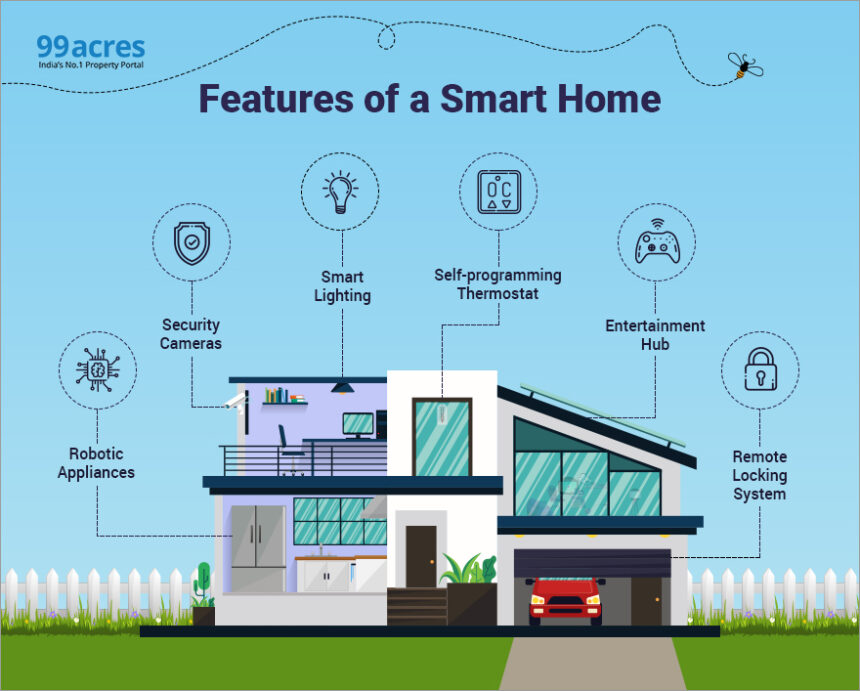
The Ultimate Guide to Building a Smart Home in India: A Strategic, Step-by-Step Approach
Welcome to the future of living, where your home is no longer just a shelter but an intelligent partner in your daily life. The concept of a smart home in India has evolved from a luxury for the tech-elite to an accessible reality for urban and suburban dwellers. However, the journey can seem daunting—riddled with technical jargon, compatibility issues, and security concerns.
This comprehensive guide is designed to cut through the noise. We will walk you through a strategic, step-by-step process to build a smart home that is secure, scalable, and perfectly tailored to the unique challenges and opportunities of the Indian context.
Part 1: The Foundation – Mindset and Planning Before Purchasing
Before you buy a single device, the most critical step is to lay a philosophical and practical foundation. Rushing in without a plan leads to a frustrating collection of disconnected gadgets, not a unified smart home.
1.1. Define Your “Why”
What problem are you solving? Your answer will dictate your entire strategy.
-
Convenience & Control: Do you want to control lights and appliances with your voice or phone?
-
Security & Safety: Is your primary goal to secure your home with cameras, sensors, and smart locks?
-
Energy Efficiency: Do you want to reduce electricity bills by automating ACs, geysers, and lights?
-
Comfort & Ambiance: Are you looking to create lighting scenes and a comfortable environment automatically?
Most Indian homes will have a mix of these, but knowing your primary driver is key.
1.2. Choose Your Ecosystem: The Most Critical Decision
This is the “religion” of your smart home. Devices within the same ecosystem work together seamlessly. Mixing ecosystems can be done, but it adds complexity. The three main contenders are:
-
Amazon Alexa: Widely available in India via Echo devices. Huge selection of compatible devices (“Works with Alexa”). Strong in voice control and routines. Ideal for beginners due to its simplicity and extensive Hindi language support.
-
Google Assistant: Native on Android phones and Google Nest speakers. Excels at answering questions and integrating with your Google Calendar and Photos. The voice recognition is often considered more natural for query-based tasks.
-
Apple HomeKit: The premium, privacy-focused choice. Requires a HomePod, Apple TV, or iPad as a hub. Devices are often more expensive but undergo strict security and compatibility certification. Best for users deeply invested in the Apple ecosystem.
Our Recommendation for India: For most users, starting with Amazon Alexa provides the best balance of affordability, device compatibility, and local support. Google Assistant is a very close second.
1.3. Connectivity: The Nervous System of Your Smart Home
A robust network is non-negotiable. Smart devices are notoriously sensitive to poor Wi-Fi.
-
Mesh Wi-Fi Systems are Essential: Ditch the single router. A mesh system (like those from TP-Link Deco, Google Nest Wifi, or Netgear Orbi) blankets your entire home in a strong, single-network signal, eliminating dead zones. This is crucial for devices in far-flung corners.
-
Dedicated 2.4 GHz Band: Most smart devices do not support 5GHz. Ensure your router can broadcast a dedicated 2.4GHz SSID (network name). During setup, you will often need to connect your phone to this 2.4GHz band.
-
Consider a Smart Hub (For Advanced Users): Protocols like Zigbee and Z-Wave create a separate, low-power wireless network for your devices, reducing Wi-Fi congestion and improving reliability. They require a central hub (e.g., Samsung SmartThings Hub). While excellent for large setups, it’s an added layer of complexity beginners can avoid initially.
Part 2: The Phased Implementation – A Practical, Room-by-Room Approach
The golden rule: Start small, master it, and then scale. Do not attempt to smarten your entire home in one weekend.
Phase 1: The Entry Point – Smart Lighting & Smart Speakers
This is the easiest and most impactful starting point.
-
Smart Speaker: Buy an Amazon Echo Dot or Google Nest Mini. Place it in your living room. This becomes your voice control center.
-
Smart Lighting: You have two primary options:
-
Smart Bulbs (e.g., Philips Wiz, Syska Smart, Havells MyXL): Best for lamps, pendant lights, and fixtures where you want color-changing capabilities. Simply screw them in. Downside: If the physical wall switch is turned off, the smart bulb becomes dumb and unresponsive.
-
Smart Switches (e.g., Anchor by Panasonic Roma, GM, or other reputable brands installed by an electrician): These replace your existing wall switches. They control the circuit, so you can use any normal bulb. This is often a more cost-effective and intuitive solution for entire rooms, as the physical switch remains functional. Crucial Note: Hire a qualified electrician for this. Indian wiring can be complex, and safety is paramount.
-
Project: Create a “Good Morning” routine that turns on the lights at 10% brightness and reads out the weather and your calendar.
Phase 2: Enhance Security & Peace of Mind
Once comfortable with lighting, move to security.
-
Smart Camera: Start with an indoor camera like the TP-Link Tapo C200 or Ezy Cam 360. Use it to monitor common areas or check on pets. For outdoors, look for weatherproof models with night vision.
-
Smart Plugs: These are incredibly versatile. Convert any “dumb” appliance like a coffee maker, geyser, or fan into a smart device. You can schedule your geyser to turn on before your morning shower, saving significant energy. Brands like TP-Link Kasa and Amazon Smart Plug are reliable.
-
Contact Sensors: Place these on doors and windows. Get a notification on your phone if a door is opened when it shouldn’t be. These are often part of broader kits from brands like Xiaomi.
Project: Create an “Away Mode” routine that turns off all lights and activates the security camera when you say, “Alexa, I’m leaving.”
Phase 3: Comfort & Climate Control
This phase involves higher-investment appliances but offers immense comfort and energy savings.
-
Smart ACs & Controllers: If buying a new AC, invest in a smart model from Daikin, LG, or Samsung with native Wi-Fi. Alternatively, use a universal smart AC controller like the Sensibo Air or Cielo Breez Plus, which can make any IR-controlled AC smart.
-
Smart Air Purifiers/Humidifiers: Brands like Philips (with its Air+ platform) and Dyson offer smart purifiers that you can automate based on air quality readings or schedule to run before you get home.
-
Smart Ceiling Fan Controllers: Devices like the Bond Bridge can add smart control to your existing IR/RF ceiling fans, allowing for speed control and scheduling.
Project: Create a “Coming Home” routine that turns on the living room lights and the AC to 22°C 30 minutes before you arrive.
Phase 4: The Advanced Frontier – Smart Locks & Blinds
These require more permanent installation and a higher level of trust in technology.
-
Smart Locks: Brands like Godrej Locks offer biometric and keypad-based smart locks. They allow you to grant temporary digital keys to guests or house help and auto-lock when you leave. Ensure you have a reliable physical key backup.
-
Smart Blinds/Curtains: Motorized curtain rods from brands like SwitchBot can be retrofitted to your existing curtains, allowing you to open them with the sunrise.
Part 3: Navigating the Indian Challenge – Power, Internet, and Local Considerations
A smart home in India must be resilient.
-
Power Backup (UPS/inverter) is Non-Negotiable: Your Wi-Fi router and at least your primary smart speaker must be on inverter/UPS backup. If the power goes out and your Wi-Fi dies, your smart home is paralyzed. For critical devices like smart locks, check if they have battery backup.
-
Internet Reliability: A stable broadband connection is the backbone. Have a fail-safe, like using your smartphone’s mobile data hotspot, for critical notifications (e.g., a security alert during a broadband outage).
-
Dust and Heat: India’s environment is harsh. Choose devices with good build quality. Smart speakers and TVs need ventilation. Outdoor cameras must have a proper IP (Ingress Protection) rating (e.g., IP65 or higher) for dust and rain resistance.
-
Local Brands vs. Global Brands: Indian brands like Syska, Wipro, Havells, and GM offer excellent, value-for-money smart bulbs and plugs that are optimized for local voltage fluctuations and have good customer support. Global brands like TP-Link, Philips Hue, and Xiaomi often offer more advanced features and better ecosystem integration.
Part 4: Privacy and Security – Your Digital Fort Knox
As you invite more devices into your home, you must secure them.
-
Change Default Passwords: Every device and its associated app account must have a strong, unique password.
-
Enable Two-Factor Authentication (2FA): Wherever available (especially on your Amazon/Google accounts), enable 2FA. This adds a critical layer of security.
-
Create a Separate Guest Wi-Fi Network: Keep your main network for personal devices and put all smart home gadgets on a separate guest network. This isolates them, preventing a compromised smart plug from giving access to your laptop or phone.
-
Regular Firmware Updates: Manufacturers regularly release updates to patch security vulnerabilities. Enable auto-updates where possible, or make it a habit to check monthly.
-
Be Mindful of Microphones and Cameras: Understand the privacy policies of your devices. Most smart speakers have a physical mute button for the microphone. Use it when discussing sensitive information. Point cameras away from private spaces.
Part 5: Sample Setups for Different Indian Homes
The Urban Apartment (2 BHK) – Budget: ₹15,000 – ₹25,000
-
Ecosystem: Amazon Alexa
-
Devices: 1x Echo Dot, 4-6 Smart Bulbs (Wiz/Syska) for living room and bedrooms, 2x Smart Plugs (for geyser and coffee maker), 1x Indoor Camera (Tapo).
-
Focus: Convenience, security, and energy savings on the geyser.
The Suburban Family Home (3 BHK) – Budget: ₹40,000 – ₹70,000
-
Ecosystem: Google Assistant (using existing Android phones) or Alexa.
-
Devices: 2-3 Nest Minis/Echo Dots, Smart Switches for all main rooms, Smart AC Controller (Sensibo), Smart Doorbell Camera, Water Leak Sensor, Mesh Wi-Fi System.
-
Focus: Whole-home control, security, and climate management.
The Premium/Luxury Home – Budget: ₹1,00,000+
-
Ecosystem: Apple HomeKit or a professional system like Crestron/Savant (installed by an integrator).
-
Devices: All of the above, plus motorized blinds, a multi-room audio system (like Sonos), a comprehensive security system with door/window sensors, smart locks on all exterior doors, and full integration with HVAC and lighting scenes.
-
Focus: Seamless, whole-home automation, ambiance, and top-tier security/privacy.
Your Journey to an Intelligent Indian Home
Building a smart home is a marathon, not a sprint. It is a personal journey of iterative improvement. By starting with a solid plan, choosing a core ecosystem, and building outwards in phases, you can create a home that is not just intelligent, but intuitively responsive to your lifestyle.
The true magic of a smart home is not in shouting commands at a speaker, but in the automation that works silently in the background—the lights that turn on as you pull into the driveway, the AC that pre-cools your bedroom before you sleep, and the peace of mind that your home is secure. In a country as dynamic and demanding as India, this isn’t just a luxury; it’s a modern tool for creating a more convenient, secure, and efficient life.
Start today. Begin with a single smart bulb and a voice command. You’ll be amazed at how quickly your house becomes a home.