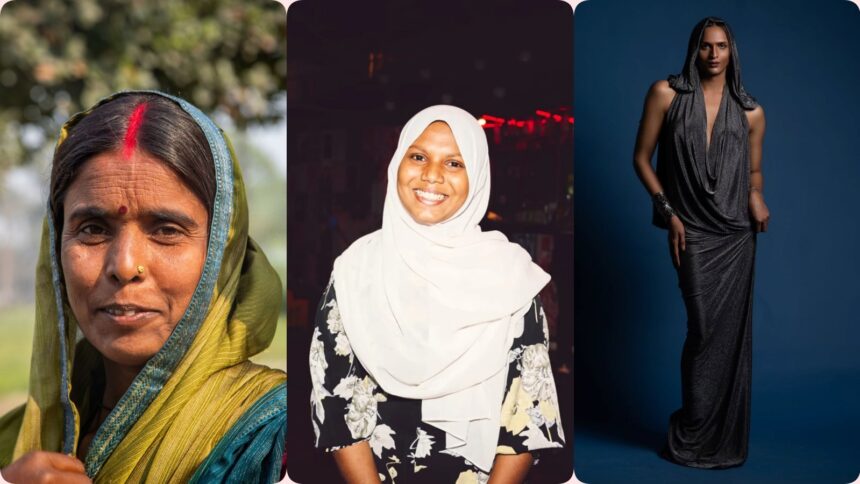
I was 14 when I sensed the fire for journalism in me. Growing up in small-town Bihar, women are born with a fixed template, which doesn’t ask for much. The big gorilla in the room is the government job, which parents want their daughters to pitch for. While my sister submitted to these, getting married at the “right” age, pursuing stable government jobs, and, most importantly, “behaving like a woman”, I became the first in my bloodline over time to defy these societal expectations, without taking the tomboy route.
I traded the complacency for the woman I wanted to become: one with a voice, without a man/a partner/husband to speak for me. It wasn’t just about financial independence; having a voice leads a woman to her destiny against every grain of expectation.
As the world observes International Women’s Day, these journeys reflect a broader reality for women pursuing their independence, leaving the expectations baggage by the roadside. Across the world, women who break barriers — in war zones, workplaces, or digital spaces — continue to face threats, harassment, and suppression despite what they have done.
The ‘First in My Bloodline’ series highlights these experiences, who have challenged limitations and reshaped possibilities for those who come after them.
In India, the trend snowballed after a 23-year-old Kerala woman posted a photo of herself on a solo trip with the caption, “First in my bloodline to travel without a husband”. The post, at the time of writing this article, has over 36 million views.
first in the bloodline to travel without husband.
— sith (@veyyaaahh)
The ‘First in My Bloodline’ trend isn’t limited to urban households where women may have greater freedom or support. It also resonates in small villages where women carve out their own path instead of sticking to their set roles. Devki Didi, colloquially known as ‘Solar Didi’, is one such example.
A resident of Ratanpura, Bihar, Devki became the first woman in her “khandan” to become an entrepreneur. With no formal education or exposure, she was married off at the age of 15. Devki joined a local self-help group, where she learned about a solar irrigation pump scheme. Her grit and hard work brought her into the national limelight after Prime Minister Narendra Modi hailed her in ‘Mann Ki Baat’.
“No one believed in me. But, I was determined to work for a better life,” Devki told indianexpress.com. It is about a woman from a village in Bihar — with little institutional or social support — refusing to be weighed down by society.
“I wanted to study beyond Class 5, but my father did not send me to school. I got married and came to my husband’s house. But, things were not very good here too,” she said.
Still, Devki pressed on with her never-give-up attitude. She saw an opportunity in solar pumps and helped farmers irrigate land through them. “I am the only woman in my family who have come this far,” she said.
Today, Devki continues to empower women in her village by educating them about solar-powered irrigation and providing them employment opportunities, ensuring her journey opens doors for many others.
The ‘First in My Bloodline’ conversation also extends beyond traditional gender narratives. Generational barriers can’t be dealt with without acknowledging transgender individuals, many of whom are not only the first in their families to pursue unconventional careers, but are also the first to openly live their authentic selves.
For Anyra Dayaseelan, breaking shackles began with her identity. “Being a transgender woman was the biggest barrier I had to break,” she said. “To my knowledge, no one in my family before me had openly been part of the LGBTQIA+ community. Choosing to live authentically as myself was the biggest decision of my life.”
She came out at 17 while still in school. Initially, she pushed hard for acceptance. “I rebelled because I wanted immediate answers from people, acceptance or rejection,” she said. “But, later I realised that if it took me years to understand myself, it would take time for others too.”
Over time, that patience paid off. During a college break, her mother, who after reading up, told Anyra she would accept her if she still felt the same way. “That moment made me realise that sometimes patience works better than rebellion,” she said.
Today, the 27-year-old has built a career few in her family had imagined, appearing in a feature film, modelling for fashion campaigns and reality shows like MTV Roadies, and working with designers such as Manish Malhotra. She works as a communications and branding specialist while continuing her work in the entertainment industry.
Despite all the support, she believes discrimination still appears unexpectedly. Recently, she was barred from a Valentine’s Day event after organisers learned she was transgender. “It was the first time someone directly told me I couldn’t attend because of my identity,” she added
Anyra refuses to frame her story through hardship alone. “I consider myself fortunate,” she said, adding, “The people who were in my life before I came out are still with me today,” adding, “Every decision I made brought me here.”
Stela, a journalist, is the first in her family to earn a Master’s degree. She also became the first woman in her family to move cities for work, have a live-in relationship, get a tattoo, and keep her surname after marriage.
“I had to protest every day. Fight for what I wanted to study, what I wanted to wear, who I should speak with,” she said, recalling how she realised early on that choosing her own path would not be easy. “I realised very early on that this will be a difficult fight. But I put my foot down. My decisions and choices were my own.”
As she puts it, “A girl child needs a great education, but that lasts till family and children call.” For her, resistance at home was constant. “Many of my clothes were torn. Ones they didn’t like. They wouldn’t speak to me for weeks if I did something that didn’t sit well with them.”
Her relationship with her parents is still complicated. “My relationship with my parents will always be strained but they don’t even realise it. Because I still am normal with them on the face,” she said.
However, her parents are “ironically” proud of her. “They take credit for every choice I fought to make,” she said, adding that in their telling, “the great upbringing they gave me” shaped her success and that “the beating got me back.”
For Saniya Mistri Qaiyummuddin, a rapper who emerged as a compelling voice in Indian hip-hop, her hijab stole the spotlight before she even said a word on stage. The 19-year-old fought all odds, becoming the first in her bloodline to become one of the prominent faces of hip-hop, hijab intact.
“People often judge Muslim women by stereotypes. Some women choose to follow their religion, some don’t. But it’s not fair to generalise that Muslim women are oppressed. Everyone has their own story,” she said.
These stories, emerging under the “First in the Bloodline” trend, are far more than fleeting moments on the Internet. They form a larger picture of women rewriting the rules, becoming the markers of social change.
According to social experts and psychologists, the ‘First in my Bloodline’ trend is strongly defying centuries-old Indian traditions that prioritise early marriage, discourage careers, and dismiss independent decisions. “Breaking traditions does not always mean rejecting culture. It means questioning limitations that prevent women from growing. When a woman becomes the first in her family to pursue higher education or live independently, she often changes the mindset of the entire family for future generations,” Deepti Kanade Modak, Clinical Psychologist, Jupiter Hospital, Pune, said.
Kanade stressed that simple decisions like travelling alone, choosing a career, or moving to another city for better or higher education represent a major social shift.
“When women openly share that they are the first in their family to achieve something, it validates their struggles and inspires others. For many women, the biggest barrier is not capability but the fear of judgment or rejection from society. This trend helps normalise ambition and independence among women,” Kanade said.
She added that the ‘First in my Bloodline’ trend plays a crucial role in shaping confidence in women who see others from similar backgrounds attaining freedom when it comes to career and dreams.