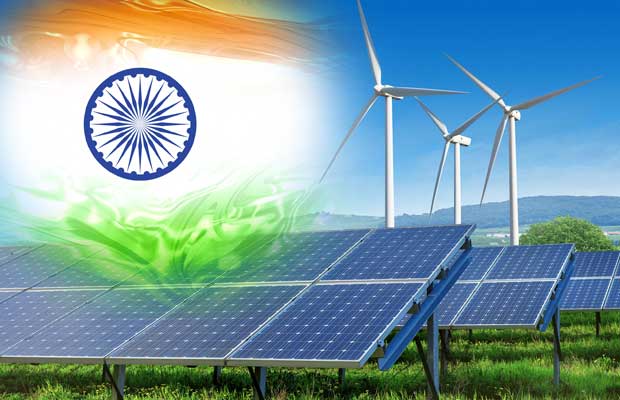
How India Is Leading in Renewable Energy Projects in 2025
From solar dominance to green hydrogen — how India is powering the world’s clean energy transition
In 2025, India has emerged as one of the global leaders in renewable energy — not only in scale, but also in ambition and innovation. Once heavily dependent on coal, India is now rapidly transitioning to a cleaner energy mix, spearheading some of the world’s largest solar, wind, and green hydrogen projects. With bold policies, record investments, and technological breakthroughs, the country is redefining what sustainable growth looks like for developing economies.
This in-depth article explores how India is leading the global renewable energy revolution — covering its achievements, strategies, flagship projects, emerging technologies, and the road ahead.
1. The Big Picture: India’s Renewable Energy Journey
India’s renewable energy journey began with modest beginnings in the early 2000s, but by 2025, it has become a model of sustainable development. The nation’s strategy aligns with both its economic goals and climate commitments, including the pledge to achieve Net Zero emissions by 2070 and 50% of total energy capacity from non-fossil sources by 2030.
Key Statistics (as of 2025)
-
Total installed renewable energy capacity: Over 190 GW, including solar, wind, hydro, and bioenergy.
-
Solar capacity: Surpassed 80 GW, making India one of the top three solar producers in the world.
-
Wind capacity: Exceeded 45 GW, ranking fourth globally.
-
Hydropower and biomass: Around 60 GW combined, providing steady renewable baseload.
-
Green hydrogen and battery storage: Emerging sectors attracting billions in investments.
India’s renewable expansion is not just a climate imperative — it’s an economic engine that’s creating jobs, reducing import dependency, and positioning the country as a global green power exporter.
2. Government Vision and Policy Backbone
India’s leadership in renewable energy is rooted in strong policy frameworks and national missions that align industrial growth with sustainability.
2.1. National Solar Mission (NSM)
Launched in 2010 under the National Action Plan on Climate Change, the NSM set out to make India a global leader in solar energy. In 2025:
-
India has surpassed its original 100 GW solar target, years ahead of schedule.
-
Mega solar parks like Bhadla Solar Park (Rajasthan) and Pavagada Solar Park (Karnataka) are among the largest on Earth.
-
Rooftop solar installations have expanded rapidly, especially in urban housing and small industries.
2.2. National Wind-Solar Hybrid Policy
The government encourages co-location of wind and solar farms to optimize land use and reduce transmission costs. Hybrid projects in Gujarat and Tamil Nadu are delivering power more consistently by balancing solar and wind output.
2.3. National Hydrogen Mission
India’s most ambitious step yet — the National Green Hydrogen Mission — aims to make the country a global hub for hydrogen production, export, and technology.
Targets by 2030 include:
-
5 million metric tonnes of green hydrogen annually
-
Electrolyzer capacity of 60–100 GW
-
Major export deals with Europe and Japan underway in 2025.
2.4. Production-Linked Incentive (PLI) Schemes
The PLI scheme supports domestic manufacturing of solar panels, batteries, and green hydrogen equipment, reducing import dependency on China and stimulating local industries.
2.5. Energy Storage and Electric Mobility Policies
The government has approved large-scale investments in battery energy storage systems (BESS) to manage renewable variability and integrate EV charging infrastructure nationwide.
3. Flagship Renewable Energy Projects Transforming India
India’s leadership in renewables is best illustrated through its mega projects — each showcasing scale, technology, and innovation.
3.1. Bhadla Solar Park, Rajasthan
-
Capacity: 2,245 MW
-
Area: 14,000+ acres
-
Highlights: World’s largest solar power park, developed in phases by multiple companies like Adani and ACME Solar.
-
Impact: Powers over 1.3 million homes and offsets 4 million tonnes of CO₂ annually.
3.2. Pavagada Solar Park, Karnataka
-
Capacity: 2,050 MW
-
Model: Community-based development where local farmers lease land to solar developers.
-
Impact: Provides stable income to farmers while producing clean energy for the grid.
3.3. Rewa Ultra Mega Solar Project, Madhya Pradesh
-
Capacity: 750 MW
-
Highlights: Supplies power to the Delhi Metro and industries across central India.
-
Model: Known for India’s first power purchase agreement (PPA) that made solar cheaper than thermal power.
3.4. Kurnool Ultra Mega Solar Park, Andhra Pradesh
-
Capacity: 1,000 MW
-
Significance: One of India’s earliest large-scale solar projects, it demonstrated the feasibility of grid-scale solar generation.
3.5. Tamil Nadu & Gujarat Offshore Wind Projects
-
Status (2025): Pilot projects of 4–5 GW each underway with international partnerships.
-
Goal: To tap India’s vast coastal wind potential and diversify renewable generation sources.
3.6. Ladakh Renewable Power Project
-
Capacity (planned): 13 GW of solar and wind combined.
-
Goal: Supply renewable energy to northern states through high-voltage transmission lines.
-
Uniqueness: One of the highest-altitude renewable projects globally.
4. India’s Global Leadership in Green Hydrogen
Why Green Hydrogen Matters
Hydrogen produced from renewable power via electrolysis offers a carbon-free fuel for industries like steel, cement, shipping, and aviation — sectors difficult to decarbonize.
India’s Edge
-
Low-cost solar power: Makes green hydrogen production economically viable.
-
Massive land availability: Supports gigawatt-scale hydrogen clusters.
-
Government support: Viability gap funding, PLI incentives, and export promotion.
Major Green Hydrogen Projects (2025)
-
Reliance Industries: Setting up a 20 GW solar-to-hydrogen project in Gujarat’s Dholera region.
-
Adani New Industries Ltd: Targeting 1 million tonnes of green hydrogen annually by 2030.
-
ONGC & Indian Oil Corporation: Collaborating on green hydrogen for refining and mobility.
-
ReNew Power: Partnering with global players for hydrogen exports to Europe.
India is positioning itself as the world’s green hydrogen factory, aiming to export hydrogen derivatives like ammonia and methanol to global markets.
5. Innovation and Technology Driving the Revolution
India’s renewable transition is powered not only by scale but also by cutting-edge innovation across technology, manufacturing, and data analytics.
5.1. Smart Grids and AI-Powered Energy Management
-
Smart meters and AI analytics balance demand and supply dynamically.
-
IoT devices track performance of solar panels and wind turbines in real time.
-
Predictive maintenance reduces downtime and boosts efficiency.
5.2. Battery Storage and EV Integration
Battery technology is improving rapidly. Companies like Amara Raja, Exide, and global entrants like Tesla Energy are building gigafactories in India.
These batteries support both:
-
Renewable energy storage (to stabilize the grid)
-
Electric mobility, where EVs double as mobile energy reservoirs.
5.3. Domestic Manufacturing Boost
Under the “Make in India – Solar” initiative:
-
Domestic module manufacturing capacity has surpassed 40 GW annually.
-
India now produces indigenous solar cells, inverters, and electrolyzers, enhancing self-reliance.
5.4. Floating Solar and Agrivoltaics
-
Floating solar plants, such as the one in Ramagundam, Telangana (100 MW), utilize water reservoirs for power generation.
-
Agrivoltaic farms allow solar panels and crops to coexist — optimizing land use and benefiting farmers.
6. Economic and Social Impact
6.1. Job Creation
India’s renewable boom has created over 1 million green jobs, from construction to maintenance, manufacturing, and research.
Sectors like solar manufacturing, EVs, and hydrogen are projected to add another 1.5 million jobs by 2030.
6.2. Energy Security and Reduced Imports
India’s dependence on crude oil and coal imports is shrinking as renewable capacity expands. By generating power domestically, India saves billions in foreign exchange annually.
6.3. Rural Empowerment
Solar mini-grids, biogas plants, and decentralized renewable systems provide 24×7 electricity to rural areas, empowering micro-enterprises, irrigation systems, and local education.
6.4. Climate and Environmental Benefits
Every gigawatt of renewable capacity avoids approximately 1 million tonnes of CO₂ annually. India’s transition thus contributes substantially to global climate goals and cleaner air.
7. Global Collaboration and Investment Momentum
7.1. International Partnerships
India’s leadership in multilateral initiatives such as the International Solar Alliance (ISA) — co-founded with France — demonstrates its commitment to global solar cooperation. The ISA now has over 120 member nations.
Other partnerships include:
-
India-U.S. Clean Energy Partnership
-
EU-India Green Hydrogen Alliance
-
Japan-India Energy Transition Collaboration
7.2. Foreign Direct Investment (FDI)
India’s renewable energy sector has attracted over $25 billion in FDI since 2020. Top investors include TotalEnergies, Brookfield, Shell, and NextEra Energy.
7.3. Sovereign Green Bonds
India issued its first sovereign green bonds in 2023 to fund clean projects — an initiative that continues to attract ESG-focused global investors.
8. Challenges and the Road Ahead
Despite major progress, India faces challenges that require continuous innovation and policy refinement.
8.1. Transmission and Storage Gaps
-
Renewable-rich states like Rajasthan and Gujarat often produce more power than they can transmit.
-
Nationwide grid modernization and battery storage capacity (50+ GWh by 2030) are crucial.
8.2. Financing and Investment Risk
-
Smaller renewable developers face high financing costs.
-
Policy stability and transparent PPAs are needed to maintain investor confidence.
8.3. Land Acquisition and Environmental Concerns
-
Large solar parks need vast land areas, sometimes conflicting with agricultural priorities.
-
Future growth will likely focus more on rooftop, floating, and hybrid renewable models.
8.4. Technology Dependency
India still imports some advanced solar materials and electrolyzer components. Strengthening R&D and domestic production will ensure long-term independence.
9. The Roadmap to 2030 and Beyond
By 2030, India targets:
-
500 GW of renewable energy capacity
-
50% of electricity generation from non-fossil sources
-
5 million tonnes of green hydrogen production
-
Net-zero emissions by 2070
To reach these goals, India’s focus areas include:
-
Deepening public-private partnerships (PPP)
-
Accelerating energy storage infrastructure
-
Fostering innovation in carbon capture and smart grids
-
Expanding skill development for the green workforce
The next frontier of India’s renewable revolution lies at the intersection of digital and green technologies — combining AI, IoT, and renewable power to build a smart, resilient, and carbon-neutral economy.
10. Conclusion: India’s Green Future Is Now
India’s rise as a renewable energy powerhouse is one of the most inspiring transitions of the 21st century. It’s not just about replacing coal with solar panels — it’s about reimagining growth itself.
By 2025, India stands tall as:
-
The third-largest producer of renewable power globally
-
A hub for green hydrogen and clean manufacturing
-
A driver of affordable sustainability for developing nations
What sets India apart is its ability to merge scale with inclusion, technology with accessibility, and ambition with execution. From the deserts of Rajasthan to the coastlines of Tamil Nadu, the renewable revolution is powering millions of dreams — lighting homes, fueling industries, and shaping a cleaner planet.
The future of energy is renewable, and the future of renewable energy is being written in India.