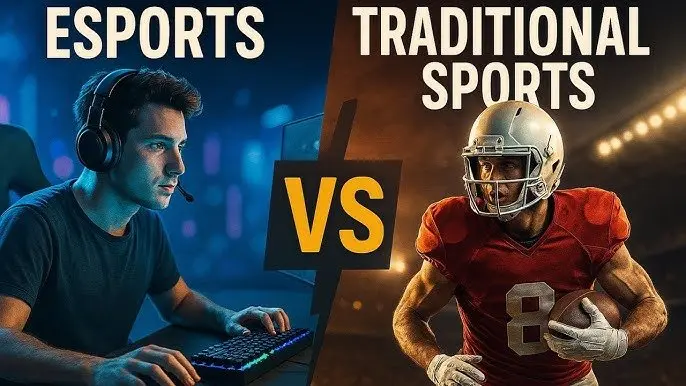
The Digital Coliseum: How Esports is Challenging and Reshaping the World of Traditional Sports
For over a century, the concept of “sport” has been intrinsically linked to physical prowess—the raw power of a sprinter, the graceful endurance of a footballer, the explosive strength of a boxer. This paradigm, long dominated by traditional athletic institutions, is now facing its most significant disruption since the invention of television: the relentless rise of esports.
To say esports is “taking over” is not to declare the imminent death of the NFL or the Premier League. Rather, it signifies a fundamental shift in the cultural, economic, and demographic center of gravity. Esports is not merely a competing form of entertainment; it is a new cultural operating system that is forcing traditional sports to adapt or risk irrelevance. This analysis explores the multifaceted ways in which competitive gaming is eclipsing its traditional counterparts in key areas and redefining what it means to be a sports fan in the 21st century.
Part 1: The Demographic Conquest – Winning the Next Generation
The most powerful and irreversible advantage esports holds is its demographic destiny.
-
The Native Digital Audience: While traditional sports leagues grapple with an aging viewer base, esports is the native language of Generation Z and Alpha. These generations did not discover the digital world; they were born into it. Their formative social and competitive experiences are as likely to happen in a Fortnite lobby or a Valorant server as on a soccer pitch. A 2023 study by Newzoo revealed that over 60% of esports enthusiasts are between the ages of 18 and 34, a demographic that advertisers crave and that traditional sports broadcasters are desperately struggling to retain.
-
The Accessibility Paradox: Becoming a professional footballer requires access to a field, a coach, and often, a certain genetic predisposition. Becoming a professional esports athlete requires a computer/console and an internet connection. While the digital divide is real, the barrier to participation is orders of magnitude lower. This creates a massive, global funnel of participants, from which a tiny fraction of elite professionals emerge, but a vast community of engaged fans is built.
-
The Shift in Attention Spans: Traditional sports often operate on a slow, ritualistic timeline. Esports, by contrast, is engineered for the modern brain. Constant action, high-frequency rewards, and meta-game shifts that can completely alter strategies overnight create a dynamic, ever-evolving spectacle that many young people find more engaging than the seasonal rhythms of traditional leagues.
Part 2: The Structural Superiority – Built for the Digital Age
Esports was born from the internet, and its entire ecosystem is optimized for the contemporary media landscape in ways that traditional sports can only clumsily imitate.
2.1. The Content Engine: A 24/7/365 Ecosystem
Traditional sports have a natural rhythm: game day, followed by days of analysis and anticipation. Esports has no off-season.
-
Always-On Competition: Between official tournaments, there is a perpetual stream of high-level competitive play. Pro players are almost always live-streaming their practice sessions on platforms like Twitch and YouTube, offering an unprecedented, intimate look into their world. This creates a constant, direct connection between star and fan that a traditional athlete, bound by team media policies and limited public appearances, cannot match.
-
The Player as a Media Channel: An esports pro like Tyler “Ninja” Blevins or Ibai Llanos is not just an athlete; they are a one-person media empire. Their Twitch channel is their stadium, their talk show, and their commercial hub all in one. This direct-to-fan model bypasses traditional media gatekeepers and creates a more authentic, powerful brand.
2.2. Global from Day One
Traditional sports like American football or baseball are deeply regional. Esports titles like League of Legends or *Counter-Strike 2* are global from their inception.
-
The World Cup, Every Year: The League of Legends World Championship or The International (for Dota 2) are truly global events that pit the best teams from Asia, Europe, and the Americas against each other annually, not every four years. This creates a consistent, high-stakes narrative of international rivalry that fuels fan engagement worldwide.
-
A Universal Language: The language of a game’s interface and core mechanics is universal. A fan in Seoul can intuitively understand the action of a match being played in Berlin, eliminating the cultural and linguistic barriers that can hinder the global growth of traditional sports.
Part 3: The Economic and Technological Vanguard
The business models and technological adoption of esports are setting a new standard that traditional sports is scrambling to follow.
3.1. The Interactive Viewing Experience
Watching a football game on TV is a passive experience. Watching an esports tournament is an interactive one.
-
Twitch and Co-Viewing: Platforms like Twitch transform viewing into a social event. The live chat, emotes, and direct interaction with the streamer create a sense of shared community that a television broadcast cannot replicate. You are not just watching a game; you are in the crowd, reacting with thousands of others in real-time.
-
Data Integration: Esports broadcasts seamlessly integrate real-time data, player perspectives, and complex statistics directly into the viewer’s experience. This caters to both casual viewers and hardcore analysts, a level of customization traditional broadcasts are only beginning to explore.
3.2. The In-Game Economy and Digital Fandom
Fandom in esports is expressed digitally and financially in ways that extend far beyond buying a jersey.
-
In-Game Purchases (Microtransactions): Fans can purchase “skins” (cosmetic upgrades for weapons or characters) to show support for their favorite team or player. This creates a multi-billion dollar revenue stream that is directly tied to fan engagement and flows back to the teams and developers. It is a more integrated and continuous form of monetization than a once-a-season ticket or merchandise purchase.
-
Blockchain and Digital Collectibles: Esports is at the forefront of experimenting with NFTs and digital collectibles, offering fans new ways to own a piece of the action, from iconic moment highlights to digital player cards.
Part 4: The Response – The Great Convergence
The rise of esports has not gone unnoticed. Traditional sports, in a classic case of “if you can’t beat ’em, join ’em,” are responding with a strategy of aggressive convergence.
-
Sports Franchises Investing Heavily: NBA teams were pioneers, with virtually the entire league owning a franchise in the NBA 2K League. European football giants like Paris Saint-Germain, FC Schalke, and Manchester City have all fielded professional esports rosters, seeing it as a crucial channel for global fan acquisition.
-
Traditional Broadcasters Adapting: Networks like ESPN now broadcast major esports tournaments, lending them mainstream legitimacy while attempting to capture a slice of the valuable youth audience.
-
Betting and Analytics: The massive data output of esports has spawned a sophisticated betting and analytics industry, mirroring the developments in traditional sports.
The Inevitable Challenges
Despite its meteoric rise, esports faces significant hurdles that traditional sports have largely overcome.
-
Governance and Stability: A lack of unified global governance, volatile game metas controlled by developers, and questions about the long-term financial sustainability of teams create an ecosystem that is less stable than the century-old structures of the Premier League or NFL.
-
Player Welfare: Issues like burnout, a lack of player unions, and short career spans are endemic problems the industry is only beginning to address systematically.
-
Saturation and Discoverability: With dozens of major titles and hundreds of tournaments, the market can feel saturated, making it difficult for new fans to know where to start.
The Redefined Playing Field
Esports is not “taking over” in the sense of causing stadiums to empty overnight. Instead, it is achieving something more profound: it is redefining the very architecture of sports fandom, economics, and culture. It has built a global, digital-native, and deeply engaged community that represents the future of entertainment consumption.
Traditional sports will not disappear; they will evolve. We are already seeing the emergence of a hybrid future—the “sports enthusiast” who watches the Champions League final on Saturday and the Valorant Champions Tour on Sunday. The most forward-thinking traditional sports organizations understand this. They are no longer just competing on the field; they are competing for attention in the digital coliseum, where the rules are being written not by athletic commissions, but by game developers, streamers, and a new generation of fans whose allegiance is to skill, community, and spectacle, regardless of whether it happens on grass or in the cloud. The playing field has been leveled, and the game has forever changed.