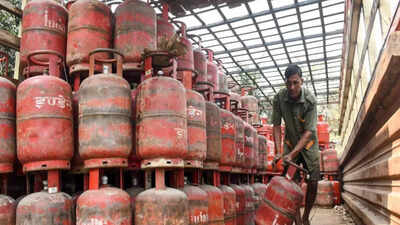
Representative image
The Centre has classified key energy data as a matter of national security and directed all entities across India’s oil and gas value chain to submit detailed operational information, as the government moves to tighten oversight of supplies disrupted by the ongoing Middle East war.The oil ministry has issued the Petroleum and Natural Gas (Furnishing of Information) Order, 2026, requiring refiners, LNG importers, pipeline operators, city gas distributors and petrochemical firms across both public and private sectors to regularly report granular data to the Petroleum Planning and Analysis Cell (PPAC), in some cases on a daily basis.
New order seeks real-time view of India’s energy supply chain
The March 18 gazette notification mandates disclosure of data such as production, imports, stock levels and consumption patterns.
Israel Iran War
The order is aimed at creating a centralised, real-time information system that would allow the government to respond faster to supply disruptions, prioritise critical sectors such as power, fertilisers and household LPG, and make better procurement decisions during crises.Officials cited by news agency PTI said that the initiative is designed to improve India’s ability to monitor supply chains, manage inventories and reduce vulnerability to geopolitical shocks.
Move comes amid war-driven supply stress
The order comes against the backdrop of heightened energy security concerns after the war in the Middle East disrupted gas and LPG supplies.India imports around 88 per cent of its crude oil, 50 per cent of its natural gas and 60 per cent of its LPG.Before the conflict, more than half of India’s crude oil imports came from Saudi Arabia, Iraq and the UAE via the Strait of Hormuz. 85-95 per cent of LPG imports and about 30 per cent of gas supplies also moved through the strait.With the Strait effectively shut due to the war, India’s energy flows have been hit.While crude oil disruptions have been partly cushioned through alternate sourcing from Russia, West Africa, the US and Latin America, gas and LPG supplies to industrial and commercial users have been curtailed because of shortfalls from Gulf suppliers.
Who must report and what data must be shared
The order has a wide scope and applies across the petroleum and natural gas ecosystem.According to PTI, it covers crude oil producers and importers, oil refining companies, oil marketing firms, storage and terminal operators, natural gas producers, LNG importers and terminal operators, gas pipeline operators, gas marketers, city gas distribution entities, petrochemical plants using gas or petroleum products as feedstock, and any public or private entity forming part of the oil and gas supply chain.The notification states, “Every entity engaged in the production, processing, refining, storage, transportation, import, export, marketing, distribution or consumption of petroleum products or natural gas… shall furnish to PPAC, information relating to production, imports, exports, stocks, storage, allocation, transportation, supply, consumption and utilisation of petroleum products or natural gas, aggregated or disaggregated by geography, time or consumers as may be specified”. The government has also left the reporting format flexible.“The information shall be furnished in such form, manner, electronic platform and periodicity as may be specified by the Central government or by PPAC and may include daily, weekly, monthly or other periodic returns,” the order said.
Confidentiality clauses will not apply
One of the most significant parts of the order is that it overrides confidentiality protections.The notification makes it clear that companies cannot refuse to share information by citing commercial sensitivity or proprietary concerns.“The obligation to furnish information under this order shall apply notwithstanding anything contained in any contract, agreement, commercial arrangement or confidentiality obligation and no entity shall refuse to furnish information required under this notification on the ground that such information is commercially sensitive or proprietary,” the order said.
Legal backing under Essential Commodities Act
The ministry has invoked powers under the Essential Commodities Act, 1955 to issue the order.The law allows the central government to require any person producing, importing, exporting, stocking or dealing in an essential commodity to provide information on production, supply, distribution, stocks or utilisation.The government said it considers the new system necessary in the public interest to build a centralised institutional mechanism for the systematic collection, compilation and analysis of petroleum and natural gas data for effective monitoring of the supply chain.
Tighter compliance burden for industry
Industry players will now have to upgrade their internal data systems and reporting processes to comply with the tighter framework.The order signals a broader shift in how the government is approaching energy security. Beyond securing alternate supplies, the Centre is now placing equal emphasis on real-time visibility across the chain, from imports and storage to allocation and final consumption, as it prepares for prolonged volatility in global energy markets.
.