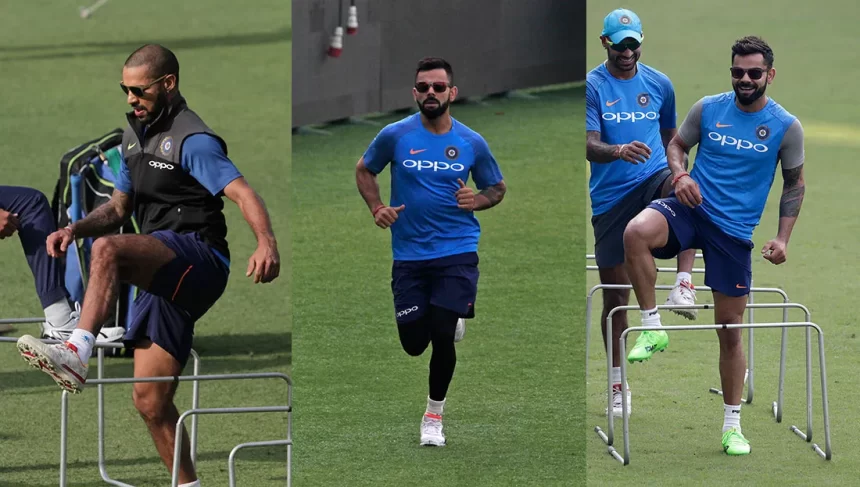
Beyond the Boundary: Unlocking Elite Fitness Through the Regimens of Professional Cricketers
The modern professional cricketer is a paradigm of athletic evolution. Gone is the era where talent with bat and ball alone could guarantee a long career at the highest level. Today’s cricketer is a hybrid athlete, a meticulously engineered blend of explosive power, unwavering endurance, agile movement, and formidable mental fortitude. They are no longer just sportspeople; they are high-performance athletes whose discipline and training methodologies offer a masterclass in holistic fitness.
For the everyday fitness enthusiast, the training regimes of these athletes are not just inspirational—they are a treasure trove of practical, evidence-based lessons. By deconstructing the principles that guide the fitness of icons like Virat Kohli, Jasprit Bumrah, and Ben Stokes, we can extract a powerful blueprint for elevating our own health, performance, and resilience. This analysis moves beyond mere imitation to explore the core tenets of cricketing fitness that can be applied to any training regimen.
Part 1: The Foundational Pillar – A Performance-First Mindset
Before a single weight is lifted or a sprint is run, the most critical lesson is mental. Professional cricketers train with a purpose that transcends aesthetics.
Lesson 1: Train for a Function, Not Just a Form
A cricketer’s training is ruthlessly specific. A fast bowler doesn’t just want big shoulders; they need the rotational power and stability to deliver a ball at 90+ mph repeatedly. A batsman doesn’t just want strong legs; they need the explosive power for quick singles and the stability for a solid defensive stance.
-
Application for You: Shift your mindset from “What do I want to look like?” to “What do I want my body to be able to do?” Do you want to run a faster 5k? Lift a heavier weight? Play with your kids without getting out of breath? Define your performance goal. This reframes exercise from a chore into a targeted mission, dramatically increasing motivation and ensuring your training is effective.
Lesson 2: Embrace the Grind of Consistency
A cricketer’s career is built on thousands of hours of repetitive drills, gym sessions, and recovery. There are no shortcuts. Virat Kohli’s famed fitness level is not the result of a 12-week program but over a decade of unwavering dedication.
-
Application for You: Prioritize consistency over intensity. Showing up for four 30-minute workouts every week is infinitely more impactful than one punishing, three-hour session that leaves you injured and demotivated. Build sustainable habits. The cumulative effect of small, daily efforts far outweighs sporadic bursts of extreme effort.
Part 2: The Training Trifecta – Strength, Power, and Conditioning
A cricketer’s physical preparation is a delicate balancing act, developing seemingly contradictory qualities simultaneously.
Lesson 3: Foundational Strength is Non-Negotiable
The gym is not an option; it is the bedrock of injury prevention and performance. The focus is on compound, functional movements.
-
Key Exercises: Squats, Deadlifts, Lunges, Pull-Ups, and Overhead Presses. These movements build a robust musculoskeletal system that can withstand the immense forces of sprinting, jumping, and bowling.
-
The Rationale: A strong posterior chain (glutes, hamstrings, back) is vital for power generation in bowling and batting and for preventing common injuries like hamstring and lower back strains.
Lesson 4: Train for Explosive Power (Plyometrics)
Cricket is a game of sudden, explosive actions. A cover drive, a sprint between the wickets, and a leap for a catch are all power movements.
-
Cricketer’s Toolbox: They utilize plyometrics—exercises that train the muscles to exert maximum force in short intervals. This includes box jumps, medicine ball throws, and clap push-ups.
-
Application for You: Incorporate power training into your routine. This could be as simple as adding jump squats to your leg day or medicine ball slams to your conditioning workout. Power training enhances athleticism, improves bone density, and boosts metabolism far more than slow, steady-state cardio alone.
Lesson 5: Condition Your Energy Systems Intelligently
Cricket is a stop-start sport, demanding a unique blend of anaerobic and aerobic fitness. A fast bowler needs to produce short, maximal efforts (anaerobic) repeatedly, while a batsman needs the endurance to concentrate and perform for hours (aerobic).
-
The Cricketer’s Method: Their conditioning is rarely just long, slow running. It involves High-Intensity Interval Training (HIIT): short bursts of all-out effort followed by brief recovery periods. This mimics the pattern of the game—sprinting, recovering, then sprinting again.
-
Application for You: Ditch the notion that cardio only means jogging. Incorporate HIIT sessions 1-2 times per week. For example, 30 seconds of all-out effort on a bike, rower, or burpees, followed by 90 seconds of rest, repeated 8-10 times. This is a highly time-efficient way to build cardiovascular health and burn fat.
Part 3: The Unseen Game – Recovery and Nutrition
The work done off the field is what enables the performance on it. This is where the true professionals separate themselves.
Lesson 6: Prioritize Recovery as Actively as You Train
Training breaks the body down; recovery builds it back stronger. For a cricketer playing a multi-format season, recovery is a dedicated practice, not passive rest.
-
Key Protocols:
-
Sleep: The ultimate performance enhancer. Athletes like Steve Smith and Joe Root prioritize 8-10 hours of quality sleep for muscle repair, cognitive function, and hormone regulation.
-
Mobility and Flexibility: Dynamic stretching pre-workout and static stretching/post-workout are mandatory. This maintains range of motion, prevents stiffness, and reduces injury risk.
-
Hydration: Dehydration impairs concentration, coordination, and physical performance. Cricketers hydrate strategically before, during, and after play.
-
-
Application for You: Treat your recovery with the same seriousness as your workouts. Schedule your sleep. Incorporate 10 minutes of dedicated stretching post-exercise. Carry a water bottle and sip consistently throughout the day.
Lesson 7: Fuel for Performance, Not Just Pleasure
Nutrition is the fuel in the tank. Cricketers view food functionally—as the source of energy for training and the building blocks for repair.
-
The Cricketer’s Plate:
-
Protein is Prime: Essential for muscle repair. Lean chicken, fish, eggs, lentils, and dairy are staples to rebuild tissue broken down in training.
-
Carbohydrates are Fuel: They are not the enemy. Complex carbs like oats, sweet potatoes, and brown rice provide the sustained energy required for long training days and matches.
-
Strategic Hydration and Electrolytes: It’s not just about water. During intense exertion, replenishing electrolytes lost through sweat is crucial for preventing cramping and maintaining nerve function.
-
-
Application for You: Adopt a “food as fuel” mindset. Plan your meals around your training. A carb-and-protein-rich meal 2-3 hours before a workout provides energy, and a similar meal afterwards kickstarts recovery. Stay hydrated, and for workouts over 60-90 minutes, consider an electrolyte drink.
Part 4: Sport-Specific Skills with a Fitness Lens
Lesson 8: Develop Unilateral Strength and Balance
Cricket is a sport played largely on one leg. Bowling, batting, and fielding all require exceptional single-leg stability, strength, and balance.
-
Cricketer’s Regimen: Exercises like single-leg squats (pistol squats), lunges in all directions, and single-leg Romanian deadlifts are fundamental.
-
Application for You: Ensure your strength training is not just bilateral (two-legged). Incorporate unilateral exercises to correct muscle imbalances, improve stability, and build a more resilient and functional body that is less prone to injury in daily life.
Lesson 9: Cultivate Mental Resilience and Concentration
Fitness is not just physical. A batsman waiting to go in, a bowler at the top of their mark—they are managing immense psychological pressure. Their ability to focus, block out distraction, and reset after a failure is a trained skill.
-
Application for You: Apply this to your fitness journey. You will have bad workouts. You will hit plateaus. The key is not to avoid failure but to learn from it and return with a clear, focused mind. Practice mindfulness or simply use your workout as a form of moving meditation, focusing solely on the task at hand.
Emulating the Ethos, Not Just the Regimen
The greatest fitness lesson from professional cricketers is not found in a specific exercise or diet plan. It is found in their holistic, disciplined, and purposeful approach to their physical and mental well-being. They demonstrate that peak performance is the result of a synergistic system: consistent, functional training, intelligent nutrition, dedicated recovery, and an unbreakable mindset.
You may not need to bowl a 10-over spell, but you can train with the same intention. You can fuel your body with the same respect for its function. You can prioritize your recovery with the same diligence. By adopting this athlete’s ethos, you transform your fitness from a hobby into a craft, building a body that is not just leaner, but stronger, more resilient, and truly capable. The playing field may be different, but the principles for winning are the same.