With the International Space Station set to retire in about five years, the rush to set up commercial space stations could be the biggest driver of space-related activities in the next one decade, a top executive of one of the leading private space companies in the United States has said.
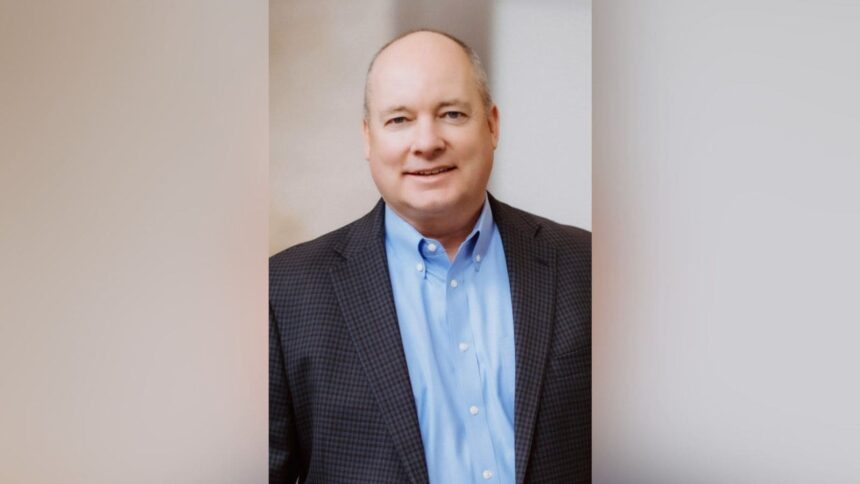
“Commercial space stations would be the next big thing, I think. People are very excited with the Artemis programme which is taking humans back to the Moon. And I don’t want to understate its importance, it would be a very big event, and would start a whole new age of space exploration, but I think the beginning of a new lunar economy is still some distance away. In the near term, the big innovations, in terms of technologies, and real commercial benefits likely come from the space stations,” Eric Stallmer, executive vice president of Voyager Technologies, a private US space and defence company, said in an interview.
International Space Station (ISS), which is orbiting the Earth at a distance of about 400 km from its surface, is the longest-serving laboratory in space, having been in service since 1998, and been continuously inhabited with astronauts for the last 25 years. It has hosted close to 300 astronauts till now for various periods of time. Originally meant to serve only for 15 years, ISS has been working on extension for over a decade now, mainly because its replacement was not yet ready.
A Chinese space station, Tiangong, has been operational since 2022, but unlike the ISS, which has hosted astronauts from over 25 countries, it has been used only by Chinese astronauts.
A number of private companies, including Voyager Technologies, are planning to set up space stations in the next few years, to take over from the ISS. Facilities like the ISS are used to carry out a variety of scientific experiments relating to space exploration, long-term human presence in space, or development of technologies for Earth using the special microgravity conditions of space.
“There is definitely space for multiple space stations operating simultaneously. The real potential of the kinds of things that can be achieved in space is just beginning to unfold. I think there is just going to be a whole new range of experiments conducted in space environment, especially from the commercial sector,” Stallmer said.
Voyager Technologies, in partnership with a few other companies like Airbus and Mitsubishi, is building Starlab, which is often talked about as the direct successor of ISS. It is planned for a launch in 2028-29 time frame. Unlike the ISS, which was assembled in space after multiple modules were launched separately, Starlab is likely to be launched in one shot, as one full unit.
Another US company Axiom Space, which had flown Indian astronaut Shubranshu Shukla to ISS on one of its missions last year, is also building a space station. Indian Space Research Organisation () has plans to set up its own space station, to be called Bharatiya Antariksh Station, in the 2035 time frame.
Stallmer said the demand for utilising the space environment for carrying out experiments, or developing technologies, was so great that Starlab was booked almost to full capacity.
“I think there is plenty of market to operate may be five space stations. There is a huge demand for biomedical research, for example. A lot of it is already happening. There is a lot of interest from the academia, students, and researchers from a variety of fields. And, increasingly corporates too,” he said.
Stallmer, who has previously served as president of Commercial Spaceflight Federation in the United States, space activities in the future was likely to be dominated by the private industry, while the national space agencies like NASA or ISRO would focus more on strategic requirements, and scientific explorations.
“In today’s world, the space programme is not entirely dependent on what the government does. Governments are still a big customer, and big user, but there are so many fantastic commercial technologies out there, and such a large functioning commercial ecosystem, that it is enough to keep the space very active,” he said.
“I see the private space industry in India is also growing very fast. I guess the industry in the United States still has a headstart because it began early, but it is only a matter of time before we see some great space companies emerge from the Indian private sector. I have met many of these companies, and they are doing fantastic things, working on cutting edge technologies, experimenting with new and different things,” Stallmer said.