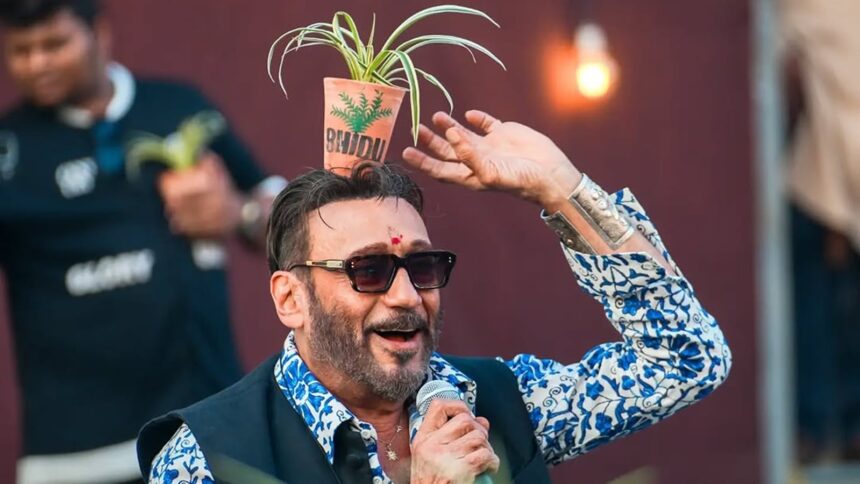
Advice directed at Gen Z often centres on ambition, hustle, and digital success. But some voices are urging young people to think beyond personal growth and focus instead on responsibility. Recently, Jackie Shroff shared his thoughts on what today’s youth should prioritise.
In an interview with ANI circulating online, taken just before he was entering his car, he said, “(Advice) yahi hai ki unko samjhaya jaye, aaj kal ke bacchon ko unki bhaasha mein samjhaya jaye ki kis tarah se seva karni chahiye: apne maata-pita ki, dharti ki, jhaad ki (The advice is that they should be made to understand, today’s children should be explained in their own language how to serve their parents, the earth, and the trees and plants) (sic).”
He continued in Hindi, “In the same way, they should understand our past life, our history, our India, and learn to do something that is in service. Just try to , the birds, your elders, and anyone. Help them and move forward.”
Understanding how such values can be meaningfully integrated into modern life requires thoughtful exploration.
| | Actor Jackie Shroff says, “The younger generation should be taught how to serve others. Serve your parents, earth, nature, nation…”
— ANI (@ANI)
Gurleen Baruah, organizational psychologist and culture consultant at That Culture Thing, tells indianexpress.com, “Values don’t just appear by telling young people what to do. They are actually learned through how life actually feels and operates around them. Children absorb values from home culture: how parents treat elders, how resources are respected, what conversations happen at the dinner table. Gen Z today is already quite informed and ‘woke’ in many areas.”
She adds, “Deloitte’s 2025 Gen Z and Millennial Survey shows that around 65% of Gen Z say environmental sustainability worries them regularly, and many consider it when choosing employers or , often using social platforms to express and act on those values.” Because they move in both real and digital worlds, she says, messages that connect family respect and environmental care to purpose, community impact, and shared human experience will resonate more than old-school mandates. What matters is meaning, shared stories, and real examples; not just rules.
“It shapes deeply,” reveals Baruah, adding that acts of service help young people shift focus from a self-centred identity to a connected identity. “When they help parents, elders, or the community, they learn early that privilege isn’t just ‘what I have,’ but how I use it. This cultivates empathy and responsibility.”
Psychologically, she notes, service experiences help young people internalise something bigger than achievement; they experience how their actions matter to others. That can deepen emotional development, build compassion, and even temper entitlement. Instead of just chasing success or validation, they begin to see themselves as part of a larger human story.
Culture isn’t just rituals or clothes; it’s the values we live by when no one’s watching. Baruah believes that young people can connect with cultural roots by having real conversations with elders, listening to stories, and participating in practices that .
“It’s not about rejecting modernity, but blending both. Dialogues between old and young, offline meet-ups, mentoring, reverse mentoring, and community activities help bridge tradition with new ideas. In this way, heritage enriches identity, while independence and modern goals remain intact,” concludes Baruah.