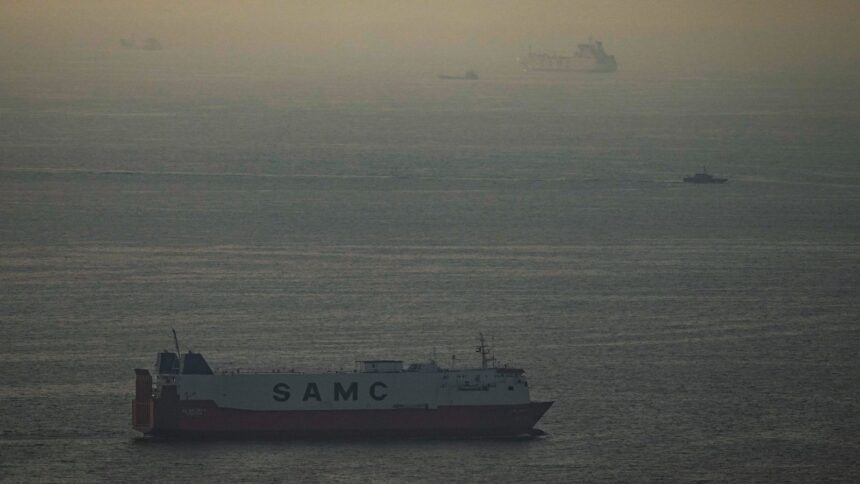
A day after US President Donald Trump threatened to “finish off Iran” to put “non-responsive Allies in gear”, six nations signalled they may explore a joint effort to address Iran’s blockade of the Strait of Hormuz, a move that could ease oil and gas prices across the world. The Strait of Hormuz is a vital global energy corridor, which facilitate the passage of 20% of the world’s oil transit.
The United Kingdom, France, Germany, Italy, the Netherlands, and Japan said they are open to planning a mission aimed at restoring access through the vital shipping lane. However, no timeline or nature of the joint effort has been announced yet. Germany and the Netherlands have made it clear that their involvement would depend on a ceasefire or, at minimum, a halt in hostilities.
ALSO READ |
In their statements, the countries slammed Iran’s blockade. “Together with our allies, we condemn in the strongest terms recent attacks by Iran on unarmed commercial vessels in the Gulf, attacks on civilian infrastructure including oil and gas installations, and the de facto closure of the Strait of Hormuz by Iranian forces,” UK Prime Minister Keir Starmer said.
ALSO READ |
The joint statement stressed the importance of ensuring safe maritime passage. They also pointed to the need for coordinated releases from strategic petroleum reserves and steps to increase oil production to stabilise supply. The six nations called for an immediate halt on the attacks on oil and gas facilities on both sides of the war.
The announcement, published on official government platforms came shortly after President . “I wonder what would happen if we “finished off” what’s left of the Iranian Terror State, and let the Countries that use it, we don’t, be responsible for the so called “Strait?” That would get some of our non-responsive “Allies” in gear, and fast [sic],” he posted.
European nations and Japan — both heavily dependent on oil imports from the Gulf — are increasingly concerned about rising Brent crude prices and the risk of supply disruptions.
Trump had earlier said that he had been informed by most of the US’s NATO allies that “they don’t want to get involved” in the military operations by the US and Israel against Iran.
ALSO READ |