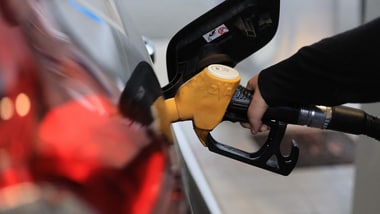
Petrol and diesel prices remained largely stable across major Indian cities on November 28, although Gurgaon and Noida recorded reductions in the prices of both fuels. Thiruvananthapuram, meanwhile, saw a marginal increase in diesel prices.
According to data from Goodreturns, in Gurgaon fell by ₹0.20 per litre to ₹102.77, while rates in Noida declined by ₹0.16 to ₹101.96. Diesel prices in both cities also came down, with Gurgaon recording a reduction of ₹0.20 to ₹95.44 per litre and seeing a decline of ₹0.12 to ₹95.44.
Diesel prices in Thiruvananthapuram increased marginally by ₹0.01 to ₹104.41 per litre.
International crude oil prices remained volatile as attacks on energy infrastructure and oil tankers in the Middle East heightened concerns about potential supply disruptions.
According to Bloomberg, fell around 1% to settle near $95 a barrel on Friday but still recorded a weekly gain. Saudi Arabia’s Jazan refinery, located near the Red Sea coast, was attacked again by Iran-backed Houthi militants, days after the kingdom’s Ras Tanura oil export hub on the Persian Gulf was targeted.
Attacks on tankers and around the Strait of Hormuz have also continued as the Iran war entered its tenth month, raising questions about the sustainability of the recovery in Gulf oil shipments.
The International Energy Agency (IEA) expects the global oil market to move into a surplus this quarter. However, persistent geopolitical tensions have kept supply concerns in focus.
“Traders are still focused on the escalation of Strait of Hormuz attacks, and that’s keeping a bid under prices,” Dennis Kissler, senior vice president for trading at BOK Financial Securities Inc., told Bloomberg.
He added that oil volumes moving through and around the Strait of Hormuz continued to indicate the possibility of an oversupplied market.
Traders are also monitoring an upcoming OPEC meeting, where the alliance is considering retaining its existing output quotas through January as members remain divided over sustainable production levels.
Bloomberg also reported that diesel futures in Europe and retail fuel prices in the US have declined from peaks recorded earlier in the war, offering some relief to oil-product markets.
Rising international energy prices are also increasing India’s import bill, given the country’s continued dependence on imported crude oil and natural gas.
Tarun Kapoor, adviser in the Prime Minister’s Office, said high crude oil and natural gas prices have added an estimated ₹6-7 lakh crore annually to the financial burden on the Indian economy.
Speaking at the 16th Energy Security Conference organised by the Confederation of Indian Industry (CII), Kapoor called for a structural shift towards electric vehicles in both freight and passenger transportation to reduce dependence on imported fossil fuels.
He warned that India’s heavy reliance on energy imports leaves the economy vulnerable to international price shocks.
India imported 122.7 million tonnes (MT) of crude oil during the first half of the 2026-27 financial year, marginally higher than the 121.8 MT imported in the corresponding period a year earlier.