The Adani Group will prepare the ground for a potential listing of its airport business, with the corporate structure expected to be ready next year, paving the way for a possible demerger or initial public offering in FY28.
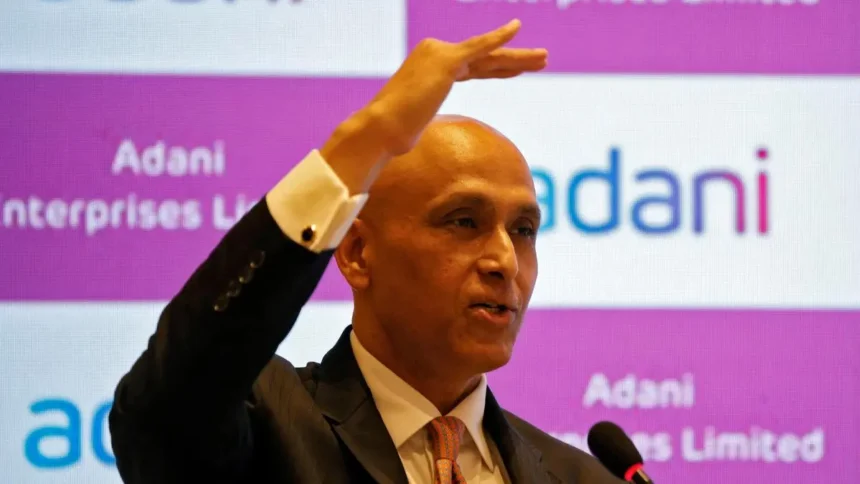
Jugeshinder (Robbie) Singh, Group CFO, Adani Group, said the group is working to ensure the airport business can fund its own investment programme and that its revenue profile is aligned with the proposed structure. The share of non-aeronautical revenue in the airport business is currently about 60 per cent, and the group expects it to rise to 65 per cent or more over time, he said on the sidelines of the India Debt Capital Market Summit organised by the Trust Group on Friday.
Non-aeronautical revenue includes income from retail, food and beverages, advertising, commercial property, and other passenger-related services, and it is an important component of an airport’s profitability.
On a possible venture into the aviation sector, he said the group would rather remain an investor and let an entrepreneur run the business. The group believes India’s aviation infrastructure has significant growth potential, he said, pointing out that the country currently has about 3,200-3,300 flights a day against a potential of 30,000 as air travel penetration increases.
Given the potential demand, the group has requested that the government allow it to fund a company seeking to venture directly into aviation, said Singh.
Adani Power is expected to emerge as a large issuer in the domestic public and private debt markets. Other group companies are also looking to tap domestic capital markets through equity and debt issuances, said Singh.
The group plans to continue its annual equity-raising programme of about $2-4 billion, primarily to broaden its shareholder base and bring in more long-term investors rather than meet immediate funding requirements.
Adani Power and Adani Energy Solutions are also exploring qualified institutional placements (QIPs), largely to improve their shareholder registers.
The group is considering issuing long-dated dollar bonds after April, potentially with a 20-year maturity. While around $600 million of debt is approaching maturity, the relevant businesses have sufficient cash to retire it. The proposed issuance would partly help extend the maturity profile of borrowings, he added.
The Adani Group plans to invest around $140 billion over the next five years across its infrastructure and energy businesses. “We would like our capital markets and domestic markets to account for about 70-75 per cent of total capital markets, like Australia and Japan,” he said.
In the longer term, the domestic share could increase to 75-80 per cent, with global funding accounting for the balance. The group expects to repay around $25-30 billion of bank borrowings over the next five to 10 years, while continuing to raise fresh funds to finance expansion.
On data-centre financing, the group said it had secured an overall funding arrangement of about $3 billion for its AdaniConnex business, of which about $900 million has been drawn down. The facility is expected to be drawn in tranches of $1.6 billion and $1.4 billion. The funding requirement could increase to around $10 billion over the next four years as the business expands.
The group is initially relying on external commercial borrowings (ECBs) to finance its data centre and digital connectivity businesses, as this is currently the easiest route to funding.
Published on November 27, 2026