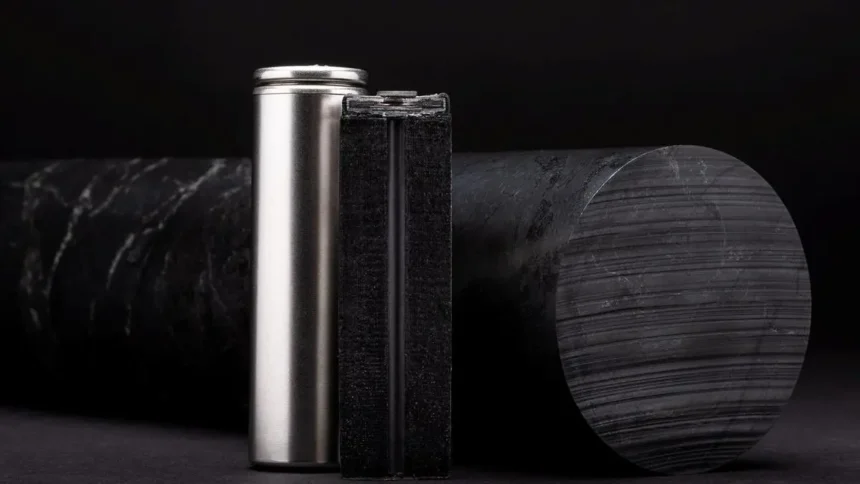
Global demand for graphite electrodes is expected to increase by 1 lakh to 1.50 lakh tonnes over the next few years, supported by the expansion of electric arc furnace (EAF)-based steelmaking capacity and the closure of manufacturing facilities in developed markets, Ravi Jhunjhunwala, Chairman, HEG told businessline on the sidelines of its listing.
HEG Group has graphite as a separate business under HEG, which got listed on Friday at Rs 580 per share, while HEG Advanced Material with battery energy solutions, advanced materials, and green power businesses was listed in September.
Jhunjhunwala said that the demerger of HEG’s businesses was aimed at allowing two separately listed companies to focus on distinct growth opportunities.
While Bhilwara Group company HEG will concentrate on graphite electrodes, HEG Advanced Materials will pursue advanced materials, including graphite anodes and graphene, largely catering to the electric vehicle battery ecosystem.
The new entity has invested around ₹2,200 crore in its projects, with production expected to commence in about six months. The separation will allow investors to evaluate the two businesses independently, he added.
On the HEG growth path, he said the global graphite electrode industry has seen the closure of around 1.50 lakh tonnes of manufacturing capacity over the last two to three years, taking total worldwide capacity down from about 6.50 lakh tonnes to nearly 5 lakh tonnes, Jhunjhunwala said.
The closures have largely been in the US, Europe and Japan, even as the world is adding around 100 million tonnes of new EAF-based steelmaking capacity.
“On one side, international capacities have closed down by about 1.50 lakh tonnes, while the world is adding 100 million tonnes of new electric arc furnaces,” he said.
Around 22-23 million tonnes of the proposed new EAF capacity has already been commissioned, while another 40-42 million tonnes is expected to come on stream over the next 18 months. The remaining capacity is likely to be added between 2028 and 2030.
Graphite electrodes are critical consumables in EAF steelmaking, with about 1.5 kg of electrodes required to produce one tonne of steel. The expansion of EAF capacity, therefore, is expected to significantly improve the demand-supply balance for manufacturers.
HEG, which currently has an installed graphite electrode capacity of 1 lakh tonnes, is operating at 93-95 per cent utilisation. The company is expanding capacity to 1.15 lakh tonnes, with the additional capacity expected to be ready by April-May 2028.
On raw material availability, Jhunjhunwala said needle coke, a petroleum-based critical input, was not a major concern as only three to four large refineries globally possess the technology to manufacture it. Power is another key input, with HEG requiring around 80-90 MW for its operations. The company’s Madhya Pradesh facility has had adequate power availability, he said.
Published on November 27, 2026