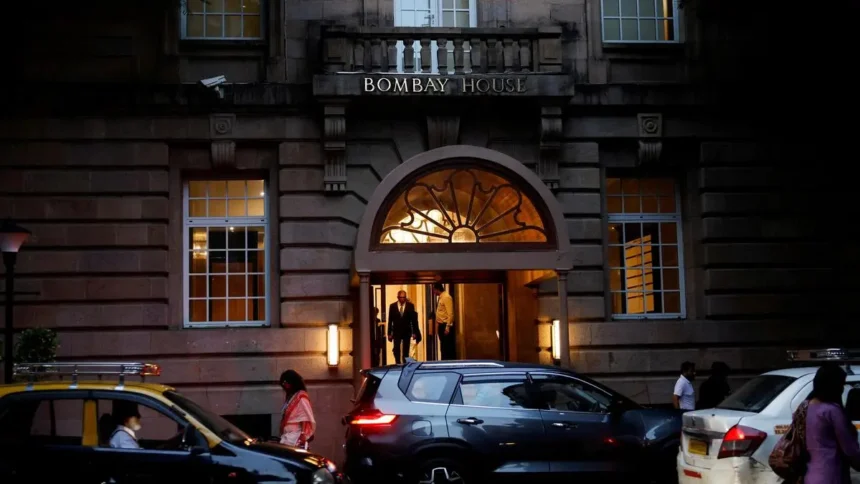
The battle to lead Tata Sons, the owner of marquee brands such as Jaguar Land Rover and Tetley Tea, headed for court on Friday after the sprawling conglomerate flouted the wishes of its controlling charity arm to reappoint the chairman.
Tata Trusts holds a stake of 66% in Tata Sons, but the latter’s board re-appointed chairman N. Chandrasekaran and has decided to pursue a possible stock market listing, putting the power struggle at the centre of the standoff.
It is the second such fight in a decade for one of India’s oldest and most reputed business houses, after a years-long legal battle over Tata Sons’ decision to remove earlier chairman Cyrus Mistry ended in the Supreme Court upholding the decision.
It’s Tata v/s Tata as governance dispute spills into Bombay HC
Here is how the current fight could play out, along with views of both sides and the complex structures, according to people familiar with the matter:
Two of the seven charitable trusts that control Tata Sons asked the Mumbai high court on Thursday to declare Chandrasekaran’s reappointment ‘invalid, illegal, null and void’, copies of internal memos reviewed by Reuters showed.
They also seek court directions that key decisions by Tata Sons require complete support from the charity arm.
Reuters has learnt the trusts will tell the court that the board should not have proceeded with the decision as both trust nominees did not back the chairman’s reappointment.
Tata Trusts to file suits in Bombay HC against Tata Sons board resolution approving reappointment of N. Chandrasekaran
At Friday’s hearing, the trusts are expected to ask for a halt to plans for a November 30 board meeting set to decide next steps towards listing if the chief of the charity arm and family head Noel Tata, as trust nominee, does not vote in favour.
The board of Tata Sons agrees to the stock market listing, ordered by the central bank, but the charity arm does not.
Both sides have hired top lawyers to defend them and explain who can call the shots.
Lawmaker and Congress party leader Abhishek Manu Singhvi is representing the Tata Trusts led by Noel Tata.
Singhvi has previously said the dispute is about shareholder supremacy and the conglomerate cannot act like a “runaway board” independent of the controlling shareholder.
Noel Tata objects to board meet agenda, wants his proposals to be tabled first
That position is disputed by Tata Group’s Chandrasekaran, who has roped in Harish Salve, a former solicitor general of India who often represented the government in global forums.
In television remarks Salve has said the board’s decision was in line with internal governing rules, urging the charity arm to get past the “I control the trusts, I control this group mindset.”
The Tata Trusts have problems of their own that weaken their influence. Formed of several affiliated charities, they could have used their voting power to call for a shareholders’ meeting to effectively oust Chandrasekaran.
But a regulator has barred one of the main charities, the Sir Ratan Tata Trust, from convening its own meetings in a dispute over internal appointments.
Charity Commissioner permits Tata Trusts to invest ₹150 cr in shares
In turn, internal rules mean the charities currently lack the power to call for a meeting of Tata Sons shareholders.
The trusts can either wait for the deadlock to lift, once the regulatory inquiry ends, or ask a court to lift the curbs, two people familiar with the matter said.
At the heart of the dispute facing the court is the Tata Sons’ governance framework known as the “articles of association”, since Tata Trusts and Tata Sons disagree on the interpretation of thee rules, which are not public.
Tata Sons board meeting deferred to November 30
The charity arm says Noel Tata’s opposition to the reappointment was sufficient to halt the decision. It believes such decisions cannot be made in the absence of support of a majority of the trusts’ two board nominees.
In this case, “majority amongst two is two and not one,” the charity arm has publicly argued.
Tata Sons’ lawyer Salve disagrees, saying both trust nominees voted differently, prompting a casting vote that helped reappoint the chairman under the governance rules.
Published on November 27, 2026