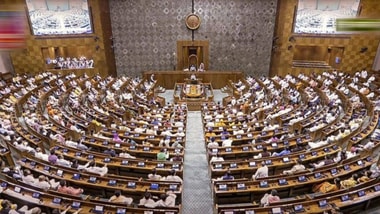
The Centre is considering expanding the strength of the Lok Sabha to up to 850 members as part of its renewed push to implement 33% reservation for women in Parliament and state assemblies before the 2029 general election. The proposed expansion could also increase the government’s expenditure on parliamentary administration, MPs’ salaries, allowances and infrastructure.
According to a Hindustan Times report, the is likely to consider changes to the Constitution (131st Amendment) Bill and the Delimitation Bill, which were withdrawn in April after the government failed to secure the required two-thirds majority in the Lok Sabha.
The government has called for a short session of Parliament. While no official announcement has been made regarding the business of the House, Delimitation Bill will likely to be the top of the agenda, according to multiple media reports.
Parliamentary affairs minister on Thursday announced that the Union govt has requested Speaker Om Birla to reconvene Lok Sabha on November 30 and Rajya Sabha Chairman C P Radhakrishnan to call a sitting of the House on December 2.
The proposed constitutional amendment seeks to increase the ‘s maximum strength from 550 to 850 members, with up to 815 seats for states and 35 for Union Territories. The Rajya Sabha’s maximum strength of 250 members would remain unchanged.
The expansion is intended to facilitate the implementation of the 33% women’s reservation law before the 2029 Lok Sabha election. Under the proposed changes, the delimitation exercise would be based on the latest published Census, which in practice would mean using the 2011 Census.
An increase in the number of Lok Sabha members would also mean higher expenditure on running Parliament and supporting its elected representatives.
The government would have to account for additional salaries, constituency allowances, office expenses, travel allowances and other facilities provided to MPs. A larger House could also require more parliamentary staff, administrative support and infrastructure, including office space and facilities for conducting proceedings.
The expansion could also increase the permissible size of the Union Council of Ministers. Under Article 75(1A) of the Constitution, the total number of ministers, including the Prime Minister, cannot exceed 15% of the strength of the Lok Sabha.
If the Lok Sabha’s strength increases to 815 members, the constitutional ceiling on the Council of Ministers could rise from 81 to 122. However, this would be the maximum permissible strength and would not automatically require the government to appoint additional ministers.
The exact expenditure would only be known once the Bill passes and the government announces the budget for it. The delimitation exercise would itself be a time and cost consuming.
The proposed expansion has triggered concerns among southern states, which have recorded slower population growth than several northern states. A delimitation exercise based purely on population could reduce their relative representation in Parliament.
To address these concerns, the government is considering a formula under which every state could receive an increase of up to 50% in its Lok Sabha seats while retaining the existing inter-state proportions based on the 1971 Census, according to a Hindustan Times report.
However, the formula is still under consideration. According to the Hindustan Times report, the revised draft may also restore the 1971 Census as the basis for distributing seats among states.
The earlier proposal was defeated in the Lok Sabha on April 17, securing 298 votes in favour and 230 against, falling 54 votes short of the required 352.