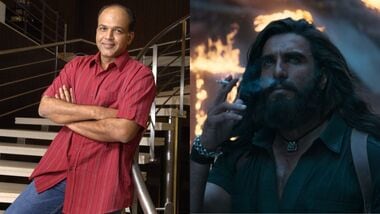
Filmmaker has praised Aditya Dhar’s , describing it as an “extended opera” and crediting its screenplay, music and performances for keeping audiences engrossed. He also spoke about the growing interest in Indian folklore, Nitesh Tiwari’s and the enduring appeal of Lagaan, which completes 25 years.
In a conversation with , Gowariker, who is serving as the festival director of the International Film Festival of India (IFFI) this year, discussed the changing landscape of Indian cinema and the importance of bringing regional stories to a wider audience.
Speaking about Dhurandhar, Gowariker said the film’s realistic treatment of the spy genre and its storytelling set it apart. He credited director Aditya Dhar for keeping the narrative engaging.
“First of all, I think the genre of Dhurandhar is something you haven’t seen before. The spy genre is presented in such a realistic manner, with a thrilling twist every 10 minutes. It’s almost like watching an extended opera unfolding before you. The duration simply doesn’t matter.”
He also praised the film’s music and Ranveer Singh’s performance, along with those of the rest of the cast.
“I give complete credit to Aditya Dhar for scripting this kind of screenplay. He has kept the story moving and created it in a manner that leaves people enthralled. It’s not just an engaging film; it’s an enthralling film.”
Gowariker added: “I think it’s a triumph. When you watch the film, you realise why it has captured the imagination of the entire nation.”
Gowariker also discussed how Rishab Shetty’s Kantara has encouraged filmmakers to explore Indian folklore and regional traditions.
He said Shetty was inspired by the folk tales he had grown up with, rather than setting out to change the landscape of cinema. Gowariker compared the renewed interest in folklore with the revival of historical films after Jodhaa Akbar.
“Now, so reinvention is happening, and I’m glad that we are reinventing our folklore and the tales from different regions. We have so many stories and myths that we have grown up with.”
He also cited Chandamama and Amar Chitra Katha as part of India’s storytelling tradition that filmmakers can explore.
Gowariker praised the performances of Ranbir Kapoor, Sai Pallavi and Yash in Nitesh Tiwari’s Ramayana. He also acknowledged producer Namit Malhotra’s contribution to the project.
“The way Nitesh and Namit Malhotra have come together to create this film is remarkable. I am mentioning both their names because the film cannot be imagined without the two of them.”
On Lagaan, which is completing 25 years and is being screened at IFFI, Gowariker said the film’s continued popularity made him feel grateful.
“The first thing that comes to my mind when I think about Lagaan is gratitude. I feel grateful simply because audiences still love the film. Those who watched it as children have now grown up and introduced it to their own children.”
He said watching newer audiences respond to the film in the same way as viewers did when it was first released was particularly moving.
As IFFI festival director, Gowariker has chosen Stories Without Borders as this year’s theme. He said the idea extends beyond geographical boundaries to include divisions within relationships and society.
The filmmaker also highlighted the festival’s efforts to showcase regional cinema, animation, short films and documentaries, alongside international films and retrospectives.