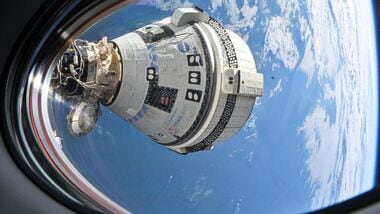
A SpaceX Dragon spacecraft has returned to Earth with a collection of scientific experiments from the International Space Station (ISS), carrying research material that could offer new insights into cancer, cardiovascular diseases and antibiotic resistance.
The cargo also includes equipment used to study how specialised lighting can improve astronauts’ sleep during extended space missions.
The uncrewed capsule splashed down in the Pacific Ocean near Los Angeles at 2:03 PM PST on November 21, completing 35th SpaceX commercial resupply mission to the orbiting laboratory.
According to NASA, Dragon undocked from the ISS at 11:05 AM CST on November 20, bringing back scientific samples and equipment for analysis on Earth.
The experiments are part of a broader effort to understand how microgravity affects living organisms, human cells and biological processes.
Unlike research conducted on Earth, experiments in the near-weightless environment of space allow scientists to investigate changes that gravity can influence or mask.
Here are the key experiments returning from orbit and what researchers hope to learn from them.
Among the scientific samples aboard Dragon were frozen tumour organoids that had undergone experimental treatments on the ISS.
Organoids are miniature, laboratory-grown models that reproduce certain characteristics of human tissues and .
They allow researchers to examine disease processes and study how different treatments affect cancer cells.
The returned samples will undergo further laboratory analysis to establish how the experimental treatments affected them.
Dragon also carried a 3D-bioprinted blood vessel construct designed to help scientists investigate vascular ageing and cardiovascular diseases.
Bioprinting uses living cells and specialised materials to create tissue-like structures.
By examining how these constructs behave in microgravity, researchers hope to understand biological changes associated with blood vessel ageing and cardiovascular health, as per .
The findings could eventually support research into treatments for vascular conditions on Earth.
Another experiment involved frozen microbial samples used to investigate antibiotic resistance, a growing global public health challenge.
will study how bacteria resistant to antibiotic treatments survive, adapt and evolve under the unusual conditions of space.
Understanding these responses could provide insights into microbial behaviour and the mechanisms that allow certain bacteria to withstand hostile environments.
The research is also relevant to astronaut safety. During prolonged missions, access to medical facilities and conventional treatments is limited, making infection prevention and control particularly important.
The spacecraft also brought back a specialised lighting system that had been aboard the for more than three years.
said researchers used the equipment to examine how lighting could support astronauts’ sleep and well-being during long-duration missions.
Sleep is a critical concern in space because the ISS orbits Earth approximately every 90 minutes, exposing astronauts to repeated cycles of sunrise and sunset. This can interfere with the body’s circadian rhythm, which regulates sleep and wakefulness.
The research could help scientists develop better lighting strategies to maintain healthy sleep patterns in space, with potential applications for people on Earth who work night shifts or experience irregular sleep schedules, according to .
Dragon’s journey began on October 13, when it launched aboard a Falcon 9 rocket from Cape Canaveral Space Force Station in .
It arrived at the on October 15, delivering supplies and scientific cargo for the Expedition 75 crew.
After more than a month at the station, the spacecraft reportedly returned with experiments that will now undergo further examination in laboratories on Earth.