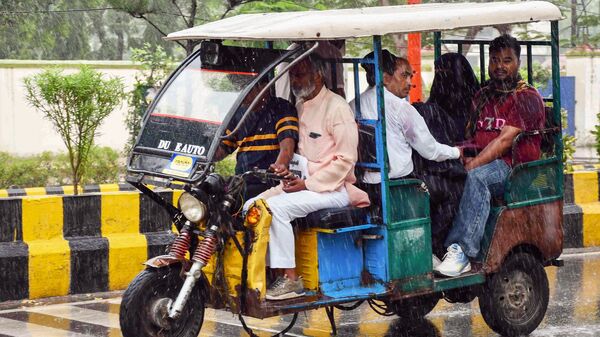
Tighter rules on electric rickshaws are prompting drivers to shift towards larger electric and CNG autos, and Bajaj Auto Ltd and Mahindra & Mahindra Ltd are reaping the benefits.
The numbers speak for themselves: e-rickshaw registrations between January and October 2026 were down 14% compared to the same period last year to 3.19 lakh, whereas passenger 3-wheelers were up 31% to 7.11 lakh, Mint’s review of Vahan data showed. The market appears to be moving towards vehicles from the established manufacturers.
The genesis can be traced back to a government notification in November 2025. From April 2026, factories making e-rickshaws and e-carts will be subject to audits. From 1 April 2027, every new one will have to be on a lithium-ion battery pack.
“The safety and regulatory standards have been raised substantially to be almost L5 level. As a result of these two changes, you’re seeing a reduction in the number of e-rickshaws,” said Suman Mishra, chief executive officer (CEO) at Mahindra Last Mile Mobility, in the 5 November earnings call.
Mishra was responding to Bank of America’s analyst Gunjan Prithyani, who pointed to a growing migration from e-rickshaws to formal three-wheelers.
Mahindra is among the leading manufacturers of electric three-wheelers in India, with its Treo range of passenger and cargo vehicles. The company is positioned to benefit from drivers moving to more formal electric three-wheelers.
Bajaj Auto had flagged a similar trend during its first-quarter earnings call in July. Executive director Rakesh Sharma said the company was seeing e-rickshaw drivers upgrade directly to electric autos following the regulatory changes.
“We’ve also seen some of the E-rick drivers upgrading to even E-autos,” he said during the 21 July call, adding that this was one of the contributors to the strong growth in electric autos.
This suggests that rather than spending ₹1.5-2.5 lakh on a lithium-ion e-rickshaw, where speed remains capped at 25 km/h, many drivers are stretching their budgets for full-fledged L5 autos, which cost ₹2.2-2.6 lakh for CNG and ₹2.9-3.8 lakh for electric.
L5 autos have higher speeds, heavier payloads, and longer daily range than e-rickshaws. Moreover, formal players can also offer financing options for these autos.
Other manufacturers, including Montra Electric and Piaggio, could also benefit from the shift as drivers move towards organised manufacturers offering financing and after-sales support.
The regulatory changes stem from a government notification in November 2025. The rules require manufacturers of e-rickshaws and e-carts to undergo audits of their facilities from April 2026. More importantly, all e-rickshaws and e-carts manufactured from 1 April 2027 must be fitted with packs.
The change could affect a large part of the existing e-rickshaw market. Industry estimates suggest that nearly 90% of e-rickshaws currently use lead-acid batteries, which are cheaper upfront but have shorter lifespans and require more frequent replacement.
The government is seeking to move the industry towards safer battery technology and better manufacturing standards. The disposal of lead-acid batteries, particularly through informal recycling channels, also creates environmental and health concerns.
“The disposal of lead-acid batteries creates a lot of toxic waste, which is why the government wants to crack down,” said Amit Bhatt, India managing director at the International Council on Clean Transportation. “However, the high upfront cost of lithium-ion battery-powered e-rickshaws could be a challenge for buyers, potentially leading some to also consider ICE-powered autos as an alternative.”