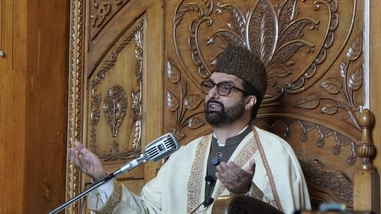
Mirwaiz Umar Farooq, Jammu and Kashmir’s chief cleric and Hurriyat Conference chairman, has been recognised among the world’s 500 most influential Muslim personalities for the 13th consecutive year.
He was featured in the ‘Political’ category of the 2027 edition of The Muslim 500—published by the -based Royal Islamic Strategic Studies Centre (RISSC).
Mirwaiz was acknowledged for his enduring religious leadership and long-standing engagement with Kashmir’s complex socio-political landscape, The Deccan Herald reported.
The publication clarified that its selections are based on assessments of global influence and do not necessarily imply an endorsement of any individual’s political stances.
Mirwaiz Umar Farooq serves as the chief preacher at Srinagar’s historic Jamia Masjid—one of Kashmir’s primary centres for Islamic learning and congregational worship.
According to the DC report, Mirwaiz Umar was thrust into the public eye amidst tragedy — he assumed the position of the 14th Mirwaiz in 1990 at the age of just 17, following the assassination of his father, Mirwaiz Moulvi Mohammad Farooq, by militants.
He quickly emerged as a prominent voice in Kashmiri political discourse, taking over the leadership of the All Parties Hurriyat Conference in 1993.
His RISSC profile highlighted his consistent advocacy for dialogue between India and Pakistan, describing his approach as a sustainable, non-violent route toward peace in the region.
This latest international recognition arrives against the backdrop of continuing political complexities following the abrogation of Article 370 in August 2019. Despite his global visibility, Mirwaiz’s public role at home remains heavily constrained.
Following the region’s reorganisation into a Union Territory, he was placed under house arrest from August 2019 until September 2023. He continues to face intermittent curbs today, including limitations on his access to lead prayers at the Jamia Masjid.
For , his 13th consecutive appearance in the global ranking underlines his continued international visibility, even as he argues that such domestic restrictions belie official claims of normalcy in Kashmir.
Earlier this month, Mirwaiz Umar said authorities in the Union Territory should review the approach of booking the youth under anti-terror laws.
In a statement, Mirwaiz cited a case in which two young men from Baramulla spent six years in jail under stringent anti-terror laws before being acquitted, after the court found the evidence against them unreliable.
The case highlights the serious human cost of prolonged detention when evidence is ultimately found insufficient to sustain a conviction, he said.
“The years lost by the two young men cannot be returned,” he said, adding that their case also raises wider concerns about the arrests and continued detention of Kashmiri youth, the Mirwaiz said.
In a post on X, he said the authorities should review this approach and “relook and do justice to the thousands of youth under prolonged detention”.