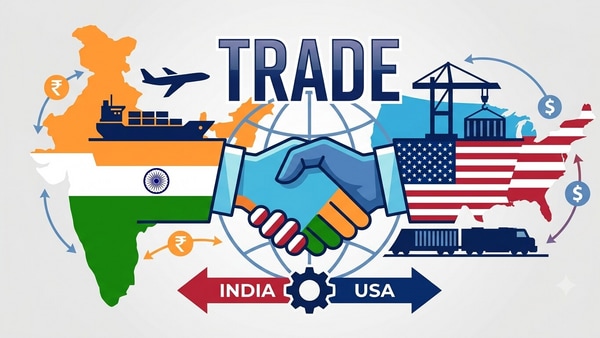
New Delhi: India and the US continue to engage to finalize the first tranche of a proposed trade agreement, with a two-member US team visiting Delhi on 2-3 November for discussions, a senior Indian government functionary said on Tuesday.
The two sides deliberated on the customs and trade facilitation chapter as part of the proposed deal, the functionary added.
The US last week reaffirmed its commitment to ties with India, seeking to allay concerns that the Republicans’ midterm election defeat could derail trade talks with New Delhi.
The American embassy spokesperson in New Delhi told Mint on 4 November that US President Donald Trump “remains firmly in command” of the US foreign policy, including the trade agenda. “The midterm election results do not change our commitment to strengthening our partnership (with India),” the spokesperson said.
Experts in India have viewed both challenges and opportunities from the development. While a Democrat-controlled Congress could make ratifying a trade deal harder, Trump’s political setback may also give New Delhi greater leverage at the negotiating table.
The US is India’s largest export market, accounting for $87 billion in goods in fiscal year 2025-26. This represented nearly a fifth of India’s total merchandize exports in FY26.
Mint‘s questions emailed to the offices of the US Trade Representative, US commerce secretary and the American Embassy in New Delhi, and the Indian commerce ministry spokesperson late on Tuesday were not immediately answered.
For Indian exporters, the deal may offer greater certainty on US tariff policy, allowing them to price contracts with more confidence, according to experts. Any increase in exports would also provide timely support to an economy contending with the fallout from the war in West Asia.
The biggest beneficiaries, once the pact takes effect, are likely to be labour-intensive sectors such as textiles, garments, leather goods, and gems and jewellery, which have borne some of the steepest US duties.
In return, India may lower tariffs on a select list of American farm products and increase purchases of US crude oil and liquefied natural gas (LNG). The agreement also aims to deepen cooperation in defence technology and critical minerals, experts added.
Indian exports to the US currently face an uneven tariff regime. About 55% of shipments, including engineering goods, textiles and garments, and gems and jewellery, attract the usual most-favoured-nation (MFN) duties, along with a punitive tariff of 10% imposed over the alleged use of forced labour in exported goods.
In textiles and garments, US MFN duties can go up to 32%. For most gems and jewellery, they range between 5.5% and 6%.
Another 35-40% of goods, including smartphones, pharmaceuticals and certain farm products, are exempt from the levy. Steel and aluminium exports, however, face a much higher tariff of 50%.