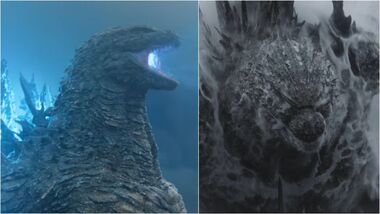
Godzilla has returned to theatres, and the legendary Japanese monster is creating box office history once again. , the latest film in the 72-year-old franchise, has collected $63 million worldwide in its opening period, including $31.6 million in the US and .
The Japanese-language film has topped the box office, setting a record for the biggest opening weekend for a live-action foreign-language film in the region.
Directed by Takashi Yamazaki, the film is a sequel to 2023’s Godzilla Minus One. Its North American opening is nearly three times that of its predecessor, which started its US theatrical run with approximately $11.4 million.
The latest film was released across 3,254 theatres in North America on 6 November and has also delivered a strong performance in its home market.
had already witnessed a major opening when the film arrived in theatres on 3 November, celebrated as Godzilla Day. According to figures announced by Toho and GKIDS, the film earned ¥910 million, approximately $5.75 million, on its first day, with more than 590,000 admissions.
This made it the biggest opening day for a live-action film in Japanese box office history, beating the opening-day performance of by 201%.
According to TheWrap, the film collected around $17 million in Japan, while its North American earnings alone accounted for $31.6 million. Its worldwide opening has also taken it past the $55.7 million collected by the Indian epic during its opening period.
One of the biggest factors behind the film’s opening has been its release in premium cinema formats, particularly IMAX. According to reports, screenings generated $21.3 million worldwide, accounting for approximately 34% of the film’s opening box office.
The film also received an early IMAX-only release in some markets before its wider theatrical launch. Its performance shows that audiences are willing to turn out for a Japanese-language film when it offers a large-scale theatrical experience.
The comparison with Ramayana is also interesting. Both films were made for the IMAX format and opened during the same period. While Godzilla Minus Zero collected $31.6 million in North America, Ramayana earned approximately $8.7 million in the same market during its three-day opening weekend. The Indian film, however, performed strongly at home, collecting around $32 million in India.
Godzilla is one of the oldest monster franchises in cinema. The character first appeared in the Japanese film Godzilla, also known as Gojira, in 1954. The original film presented the giant creature as a result of nuclear destruction, reflecting Japan’s experience of the and the atomic bombings.
Over the years, Godzilla has appeared in dozens of Japanese films produced by Toho. Hollywood also introduced its own version of the monster, eventually building the MonsterVerse franchise, which brought Godzilla together with other giant creatures, including King Kong.
Here is how some of the biggest recent Godzilla films performed at the worldwide box office:
Godzilla (2014) – $529 million
Godzilla: King of the Monsters (2019) – $387.3 million
Godzilla vs Kong (2021) – $470.1 million
Godzilla x Kong: The New Empire (2024) – $572.5 million
Godzilla Minus One (2023) – $105.2 million
Among these films, Godzilla x Kong: The New Empire remains the biggest recent box office success, earning more than $572 million worldwide. The 2014 reboot also performed well, collecting approximately $529 million.
However, Godzilla Minus One achieved something different. Made on a reported budget of around $15 million, the Japanese film earned approximately $105.2 million worldwide. It also won the for Best Visual Effects at the 2024 Oscars, becoming the first Godzilla film to win an Oscar in the category.
The success of Godzilla Minus One helped introduce a new generation of international viewers to Toho’s Japanese version of the monster.
Indian audiences will have to wait a little longer to watch the film in theatres. Godzilla Minus Zero was initially expected to release in India on 6 November, but its theatrical release has been postponed to 20 November 2026.
The decision was taken to avoid a direct clash with , which arrived in theatres on 5 November. The Indian epic was expected to occupy a large number of premium screens, including IMAX theatres. Moving the Japanese film’s release gives it a better opportunity to secure these screens and reach Indian audiences.