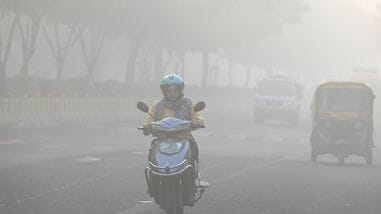
Delhi’s air quality remained dangerously close to the severe category on Friday, with several parts of the national capital recording alarming pollution levels.
According to an analysis of Central Pollution Control Board data by the Hindustan Times Pollution Dashboard, 31 monitoring stations recorded severe air quality, while another 28 fell in the very poor category.
Delhi’s overall AQI stood at 391 at 12 pm Friday, just nine points below the threshold of 401, beyond which air quality is classified as severe. The dashboard calculates the city’s average using readings from monitoring stations reporting data to the .
The 10 most polluted monitoring locations in , according to the latest dashboard update, were:
Rohini: 474
Punjabi Bagh: 465
Jahangirpuri: 458
DTU: 454
RK Puram: 450
Mundka: 446
Vivek Vihar: 438
Sonia Vihar: 436
Bawana: 435
Alipur: 434
The readings underline how pollution has spread across several parts of the capital, with residential areas, busy road networks and locations around major institutions reporting particularly poor air quality.
The deterioration comes ahead of Diwali, when increased traffic and festive activities could add to the existing pollution burden. Weather conditions have also played a role in trapping close to the ground, making it harder for the air to clear.
The worsening situation also came under scrutiny in the Supreme Court on Friday, with the top court identifying vehicular emissions as a major contributor to air pollution across .
A bench comprising Chief Justice of India Surya Kant and Justices Joymalya Bagchi and V Mohana expressed concern over the heavy, bumper-to-bumper traffic on roads across the national capital and neighbouring areas.
“We keep talking, sometimes make statements and suggestions, but the point is that AQI is already touching 400,” the Chief Justice observed during a hearing in a suo motu case concerning measures to tackle air pollution.
The bench specifically highlighted the large number of vehicles travelling between Delhi and neighbouring areas, including , Greater Noida, Gurugram and Faridabad. It called for immediate, medium-term and long-term measures to bring pollution levels under control.
The court also stressed the need to educate farmers about alternatives to stubble burning, including the use of machinery to manage crop residue. Additional Solicitor General Aishwarya Bhati informed the bench that farm fires accounted for 14% of Delhi’s pollution on Thursday.
The Centre also outlined existing measures covering , vehicle pollution, construction dust, road dust and stubble burning. These include restrictions on certain vehicles, geo-tagging of pollution under control certificates and action against visibly polluting vehicles.
The Supreme Court indicated that it would pass further orders, with the matter scheduled to be taken up again on 16 November, after the vacation.