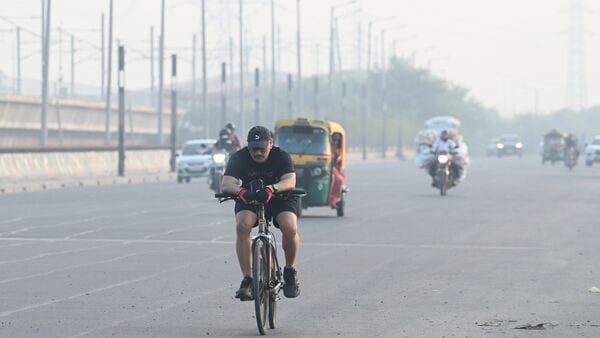
NEW DELHI: As toxic smog pushes air pollution back into the public-health spotlight across northern India, the health ministry has directed states and Union territories to step up tracking of pollution-linked illnesses, requiring hospitals to screen patients, use standardised disease codes and report cases regularly.
The move seeks to build a clearer picture of air pollution’s effects on respiratory and cardiovascular health amid worsening air quality and growing concerns over its long-term health costs.
Under the new guidelines, running cardio-respiratory health effects screening and treatment (Chest) clinics will have to maintain daily patient records, classify cases using World Health Organization () codes, and submit regular reports to health authorities, according to two officials and a ministry communication seen by Mint.
Hospitals will submit daily patient numbers to district and health authorities, which will share the data monthly with the National Centre for Disease Control (NCDC). The ministry has also mandated fortnightly progress reviews with states and linked Chest clinics with Ayushman Arogya Mandirs (AAMs) to facilitate follow-up of high-risk patients through ASHA workers, the officials said.
Clinicians will use the WHO’s International Classification of Diseases (ICD) codes to record asymptomatic exposure, symptomatic cases and pollution-associated illnesses. The standardized system is intended to create a more consistent record of pollution-related health effects.
The Centre runs the National Programme on Climate Change and Human Health (NPCCHH) through the NCDC. The programme provides “a structured approach for screening, diagnosis, management and counselling for air pollution related illnesses in patients of all age groups through establishment of chest clinics at District Hospital and Medical College Hospitals from September to February of each year,” the ministry said in its communication to states and Union territories.
The guidelines call for “screening and risk communication for air pollution-related illnesses” and establishing “possible causes (including air pollution) and confirm diagnosis”, alongside ensuring the “indenting and stocking of essential equipment, drugs and consumables”.
Queries sent to the health ministry spokesperson and the NCDC remained unanswered till press time.
The surveillance push comes amid mounting evidence of the health toll from air pollution. A 2024 study published in The Lancet Planetary Health estimated that long-term exposure to fine particulate matter caused roughly 16.6 million deaths in India between 2009 and 2019, averaging 1.5 million annually under WHO safety guidelines.
Exposure to these pollutants is associated with stroke, cardiovascular and respiratory diseases, lung cancer and a higher risk of premature death, according to experts.
The urgency is particularly visible in Delhi-NCR, where the air quality index (AQI) reached 332, in the ‘very poor’ category, at 9.05am on 3 November, according to the Central Pollution Control Board’s SAMEER app. Jahangirpuri recorded a ‘severe’ reading of 452.
The deterioration from 117 on 31 October to 324 on 2 November prompted the Commission for Air Quality Management (CAQM) to invoke Stage II of the Graded Response Action Plan (GRAP), deploying mechanical sweeping, water sprinkling with dust suppressants and hotspot inspections.
Environmentalists, however, say administrative enforcement must accompany health surveillance.
“Appropriate action must be taken in accordance with the law, including penal action wherever necessary, against polluting industries operating in non-conforming areas and on agricultural land in Delhi,” said Paras Tyagi, co-founder of the Centre for Youth Culture Law and Environment. Resident welfare associations (RWAs) and civil society groups must also be involved in reporting violations, he added.
Health experts caution that tracking pollution-related illnesses is only part of the response. Effective intervention requires coordinated action across regions, rather than isolated measures by individual cities or states.
“There is no doubt about the devastating health impacts of air pollution, which contributes to nearly two million deaths annually in India. When levels spike, hospitals see immediate surges in asthma, COPD exacerbations, and heart attacks. While tracking clinic data is a good step, data collection alone is not enough—we need urgent, coordinated action,” said Dr. Sowmya Swaminathan, former WHO chief scientist and former ICMR director general.
Swaminathan stressed that tackling pollution requires coordinated, multi-year action across the Indo-Gangetic airshed, covering transport, industry, dust, clean cooking fuel and stubble burning, rather than isolated efforts by Delhi and neighbouring states.
There is also a clinical challenge in determining how much of a patient’s illness can be attributed specifically to air pollution, doctors say. Respiratory symptoms can have multiple triggers, making it difficult to isolate the contribution of polluted air.
“Over the past week, we have seen a sharp rise in patient footfalls suffering from acute respiratory allergies and severe asthma exacerbations,” said Dr. Dhiren Gupta, senior consultant and co-director, paediatric ICU at Sir Ganga Ram Hospital, New Delhi.
Gupta said seasonal changes, viral infections and pollution often produce similar symptoms, making it difficult to isolate pollution as the cause. He said implementation remained a key challenge, particularly for children, and urged families to ensure adequate hydration, adhere to prescribed inhaler use, avoid firecrackers and reduce indoor pollutants such as incense.