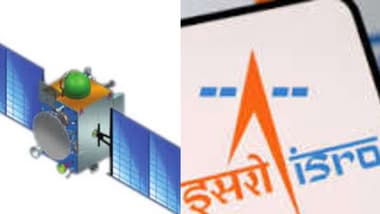
The Indian Space Research Organisation (ISRO) will launch its much-anticipated navigation satellite NVS-03 aboard a Geosynchronous Satellite Launch Vehicle (GSLV) rocket on October 30, the space agency said on Wednesday.
The GSLV-F18/NVS-03 mission is scheduled to lift off at 11:51 pm on Friday, from the Satish Dhawan Space Centre in , Andhra Pradesh.
is the third satellite in India’s next-generation navigation satellite system, designed to ensure continuity of services under the Indian Regional Navigation Satellite System (IRNSS).
The satellite is equipped with an indigenous atomic clock, alongside procured atomic clocks. It also features the L1 frequency band in addition to the existing L5 and S bands, which provide positioning and location-related information, according to PTI.
The navigation system is designed to cover India’s landmass and an area extending up to 1,500 km beyond the country’s geopolitical boundaries.
GSLV-F15 rocket, marking the space agency’s 100th launch, successfully placed the 2,250-kg NVS-02 satellite into its intended initial elliptical transfer orbit of 170 km x 37,785 km on January 29, 2025. The satellite’s solar panels also deployed successfully after launch.
However, NVS-02 could not reach its final circular operational orbit because its onboard liquid-fuelled engine failed to ignite during the orbit-raising manoeuvre.
An investigation by an ISRO Apex Committee, based on telemetry analysis, identified a failure in the electrical signal reaching the pyro valve. This valve uses an explosive-triggered mechanism to open the fuel and oxidiser lines required to fire the engine.
The committee found that at least one contact in each of the main and redundant electrical connector paths had disengaged. This disrupted the electrical circuit and prevented the engine-firing mechanism from functioning, despite the satellite having built-in backup systems.
ISRO plans to deploy five second-generation NavIC — NVS-01, NVS-02, NVS-03, NVS-04 and NVS-05, to strengthen the existing satellite constellation and ensure uninterrupted navigation services with improved capabilities.
The NVS series introduces signals in the L1 frequency band in addition to the existing bands, expanding the range of navigation services offered by the system.
NVS-01, the first satellite in this second-generation series, was launched aboard the GSLV-F12 rocket on May 29, 2023. The mission also marked the first time an indigenous atomic clock was carried onboard an Indian navigation satellite.
Navigation with Indian Constellation (NavIC) is India’s independent regional satellite navigation system. It is designed to provide users with accurate Position, Velocity and Timing (PVT) information across India and an area extending approximately 1,500 km beyond the country’s landmass.
NavIC offers two types of services: Standard Positioning Service (SPS), available to civilian users, and Restricted Service (RS), an encrypted service intended for authorised users.