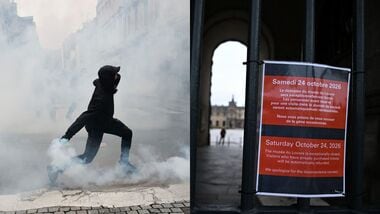
France is in the midst of a massive wave of protests, triggered by the growing discontent among the public over the spiraling cost of living, unaffordable housing, stagnant wages, and rising energy costs. According to French authorities, around 410,000 protesters had marched across the country in the latest wave of demonstrations.
While initial gatherings were relatively peaceful, severe clashes broke out late Saturday evening in Paris. Riot police deployed tear gas and water cannons against crowds to restore order as security forces massed across the country to prevent a repeat of recent violence.
Violence and confrontations with police spread to several major regional hubs, including Lyon, Lille, Marseille, Montpellier, Nantes, and Toulouse.
On Sunday, French Interior Minister Laurent Nunez said that nearly 1,000 people have been arrested in connection with protests that turned violent in some places.
While has made the most headlines, several other European countries are also facing similar protests. This includes Italy. Albania, Belgium, Portugal, and Spain, where demonstrators have been taking to the streets over similar grievances – rising cost of living, low wages, and more.
The protests come at the worst possible time for Europe as its season is just around the corner. European winter tourism season runs from December through March, and millions of tourists from around the world flock to cities across the continent for their iconic Christmas and New Year celebrations.
According to a report by Mordor Intelligence, winter tourism in Europe is witnessing a structural shift in demand. The European winter tourism market s projected to expand from $179.28 billion in 2025 and $186.99 billion in 2026 to $232.68 billion by 2031, registering a CAGR of 4.47% between 2026 and 2031, it noted.
France is the world’s most visited country overall during the winter season, with over 102 million annual visitors. But the ongoing wave of unrest, if they continue, could hamper the upcoming tourist season. While no travel shutdowns have been announced, the clashes have triggered international travel advisories, declining hotel bookings, and targeted museum closures.
Last week, the Indian Embassy in France asked travellers from the country to monitor official updates and check for transport disruptions. It advised those planning trips to or within France to remain in contact with their airlines and travel agencies for information on schedule changes.
Countries including Thailand, Malaysia and China have also issued advisories to their citizens about travel to France.
According to French news outlet Le Parisien, around 10 per cent of hotel bookings have been cancelled due to ongoing protests, and there are fears that the figure could rise if violence continues.
“New excesses, widely reported in the foreign press, would amplify the phenomenon,” Frank Delvau, the president of the UMIH hospitality union in Paris Île-de-France, told Le Parisien.