Pakistan has appointed nine retired senior military officers to diplomatic missions abroad as part of a group of 17 non-career ambassadors and high commissioners, according to a disclosure by Foreign Minister Mohammad Ishaq Dar in the Senate, CNN-News18 reported.
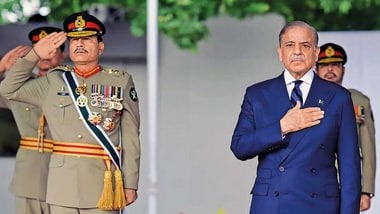
The appointments have also drawn attention to Army Chief ’s influence within Pakistan’s power structure. Munir travels with Pakistan prime minister on major deplomatic missions and sometimes lead them.
The appointments, which span postings across the Middle East, Africa, Europe and Asia, have renewed questions about Islamabad’s selection of diplomatic representatives and the balance between non-career appointments and its professional foreign service.
According to a report by CNN-News18, the details were provided in a written response by Dar to Senator Muhammad Talha Mahmood, who had sought information on non-career diplomats serving overseas, including their professional backgrounds, places of domicile and the procedures governing their appointments.
The Senate response identified nine former senior military officers appointed or designated to diplomatic positions in different countries.
They include Major General (Retd) Kamran Tabrez Savera, High Commissioner-designate to Abuja, Nigeria; Major General (Retd) Khurram Sarfraz Khan, posted to Amman, Jordan; and Major General (Retd) Nayyar Naseer, posted to Colombo, Sri Lanka.
The other six are Air Marshal (Retd) Muhammad Mughes Afzal, posted to Damascus, Syria; Lieutenant General (Retd) Muhammad Aamer, posted to Doha, Qatar; Major General (Retd) Kanwar Adnan Ahmad Khan, posted to Kyiv, Ukraine; Vice Admiral (Retd) Faisal Rasul Lodhi, posted to Male, Maldives; Major General (Retd) Muhammad Irfan, Ambassador-designate to Sarajevo, Bosnia; and Major General (Retd) Mumtaz Hussain, Ambassador-designate to Tripoli, Libya.
The postings place former officers from the army, air force and navy in diplomatic roles across several regions.
The Senate disclosure also listed eight other people from outside Pakistan’s regular foreign service who have been appointed or designated to overseas diplomatic positions.
They are Dr Yousaf Junaid, posted to Ankara, Turkey; Dr Faryal Leghari, posted to Ashgabat, Turkmenistan; Kohdayar Marri, posted to Hanoi, Vietnam; and Muhammad Irfan Tarar, Ambassador-designate to Niamey, Niger.
The remaining names are Zaheeruddin Babar Thaheem, posted to Phnom Penh, Cambodia; Aqil Gillani, posted to Rabat, Morocco; Dr Najeeb Samie, Ambassador-designate to Tunis, Tunisia; and Muhammad Sami-ur-Rehman, posted to Warsaw, Poland.
Together, the 17 appointments show Pakistan’s use of personnel outside its career diplomatic service for overseas representation.
The inclusion of nine retired senior military officers has brought renewed attention to the criteria used to select non-career diplomats and the role of professional foreign service experience in senior overseas postings.
Career diplomats typically build expertise in international negotiations, bilateral relations, international law and consular affairs through years of service. Appointments from outside the regular diplomatic cadre can therefore raise questions about how candidates’ qualifications are assessed and how non-career appointments affect career officers’ prospects.