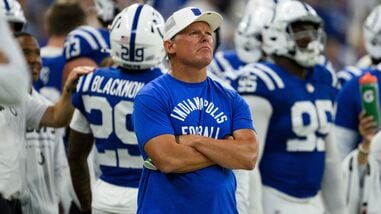
The ’ decision to stick with Chris Ballard through multiple failed efforts to rebuild after Andrew Luck’s 2019 retirement has left the franchise facing a costly reset. Ballard was fired on Monday after a 2-4 start in 2026 and a seven-game collapse to end last season. Ownership’s patience, rooted in the hope that internal drafts and late roster adjustments could restore the team’s path, now carries clear financial and competitive consequences.
When the introduced Chris Ballard on January 30, 2017, late owner Jim Irsay expressed strong confidence. “I really feel Chris is the best candidate for general manager that has come about so far in the 21st century,” Irsay said. That view shaped the years that followed.
After stepped away at age 29, Chris Ballard’s various quarterback experiments and preference for building through the draft kept the core of the 2018 class and later mid-round hits on middling rosters. The Colts finished his tenure 72-82-1 with no division titles, two playoff appearances, and one postseason win.
Carlie Irsay-Gordon, who now leads the franchise with her sisters after their father’s death, previously tied Chris Ballard’s future to coach Shane Steichen’s. After last season’s late skid, she granted both men another year. “We have been very clear with [Ballard] and [Steichen], but giving them another opportunity means that the sense of urgency for them to deliver and perform has never been higher,” Irsay-Gordon said in January. The extra time did not reverse the pattern. Fans chanted “Fire Ballard!” as the Colts lost to the winless Titans, underscoring the gap between the 2017 promise and the results on the field.
Irsay-Gordon framed the midseason firing as intentional. “Making this change during the season was a deliberate decision,” she said. “Waiting would only delay the important work that needs to begin now.” That work includes a November 10 trade deadline at which the may move veterans such as guard Quenton Nelson and defensive tackle DeForest Buckner, both in the final year of their deals.
At quarterback, is completing a career-low 59.6 percent of his passes in his return from Achilles surgery and ranks near the bottom of the league in several efficiency metrics. The Colts can void his two-year, $88 million contract after this season, but doing so would place roughly $35 million in dead money on the 2027 cap. Anthony Richardson Sr. remains on the roster in the last year of his rookie deal yet has not started since 2024. A new general manager will inherit these constraints along with the need to reshape a roster that never fully escaped the middle of the AFC South.
The three sisters now hold final authority for the first time. Kalen Jackson noted last year that their father “never cut us out of any areas of any kind. And I think that will help us in this transition [to ownership].” Longtime COO Pete Ward remains a close adviser as they search for a general manager and decide whether to retain Steichen. The repeated post-Luck recovery attempts under Ballard have narrowed the Colts’ options, and the coming months will show how ownership chooses to pay for that path.