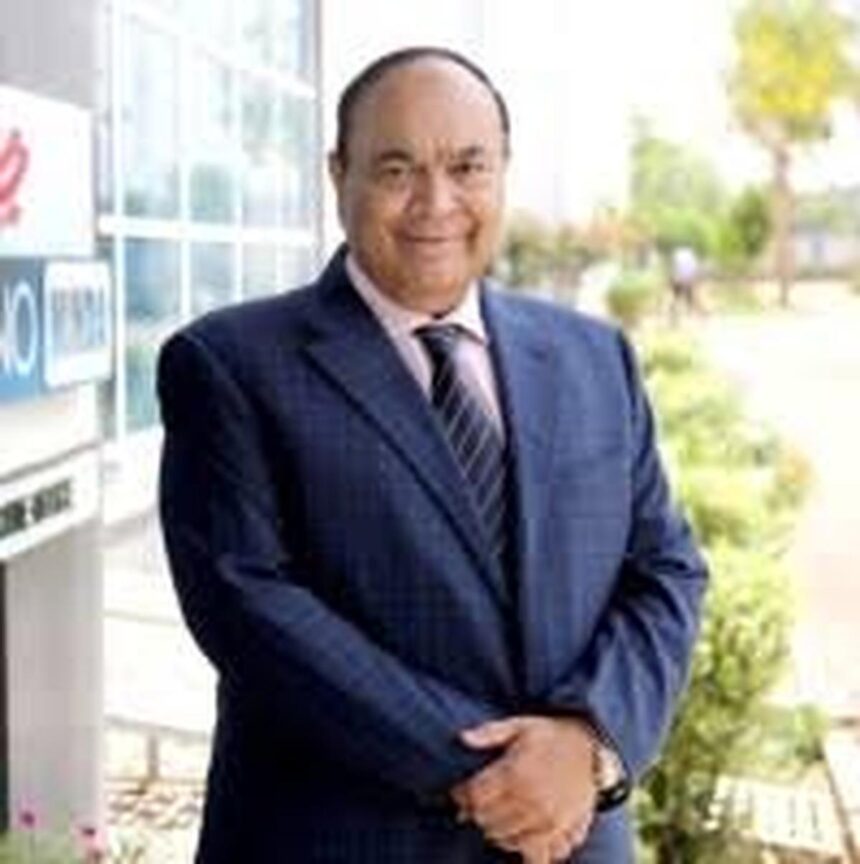
Uno Minda Chairman Nirmal Minda is betting on electric drives, complete passenger-car seating, sunroofs, advanced electronics and alternative-fuel systems to nearly double the automotive component maker’s revenue from ₹19,700 crore in FY26 to as much as ₹40,000 crore by FY30. Backed by ₹1,750 crore in FY27 capital expenditure, technology partnerships, and new factories, these businesses aim to increase revenue earned per vehicle, beyond growth in automobile production alone.
“Our growth strategy is built on capturing significantly higher content per vehicle by delivering complete, advanced integrated systems rather than standalone components,” Minda told businessline in an exclusive interaction at an ASSOCHAM summit.
Of FY27’s ₹1,750 crore expenditure, ₹1,100 crore supports growth and ₹650 crore sustaining operations. Alloy wheels accounted for 41 per cent of a ₹3,670-crore project schedule for May, while EV powertrains and castings represented 32 per cent. Separate September approvals totalled ₹1,415 crore for projects extending into FY29, including ₹670 crore for Toyoda Gosei and ₹80 crore for Kyoraku.
Selected customer programmes have an estimated annual peak revenue potential of ₹450 crore in two-wheeler lighting, ₹390 crore in commercial-vehicle seating exports, ₹200 crore in displays, and over ₹500 crore in sunroofs. They have different ramp-up schedules and are not a consolidated order book. Other wins include four-wheeler lighting for a global automaker, an Indonesian lighting customer, three export seating customers and another EV-charger customer.
“We are seeing strong export traction in lighting, commercial vehicle seating, and specialised electronics,” Minda said.
Brokerages project revenue rose from ₹19,700 crore in FY26 to ₹23,000–₹23,500 crore in FY27, an increase of 17–19 per cent. The FY30 figure is a directional extrapolation, not company guidance.
“The Indian automotive landscape is undergoing a strong, structural wave of secular premiumisation,” he said, citing demand for alloy wheels, ambient lighting, sunroofs, ADAS and infotainment. “This trend creates a massive growth runway for us, enabling us to significantly increase our content per vehicle across both established and newly emerging product categories.”
“The proposed 70:30 venture with China’s Inovance will manufacture electric-drive systems, including motors and inverters, at a Khed facility near Pune, scheduled to begin operations in H2 FY27. A separate ₹550-crore Chhatrapati Sambhajinagar plant, also covering hybrid transmissions, targets Q2 FY28 production.”
“Our vision is clear: to have Uno Minda components and systems in every vehicle on the road, regardless of the underlying technology,” Minda said. “Whether a vehicle is powered by ICE, electric, hybrid, or alternative fuels like CNG and hydrogen, our portfolio is built to be powertrain-agnostic and future-ready.”
A 51 per cent-owned venture with Japan’s Tachi-S is investing ₹320 crore in complete passenger-car seating, targeting Q4 FY28 production. Management estimates complete-seat content at ₹30,000–₹40,000 per vehicle, substantially above individual seating mechanisms.
Denso supports infotainment, including an Android-based programme with estimated annual peak revenue potential of ₹600 crore. Venture sales are not consolidated into Uno Minda’s revenue; its share of profits is recognised instead.
Other partners include Westport for CNG and LPG systems, Toyoda Gosei for safety and interiors, Kyoraku for moulding and Aisin for sunroofs. The FRIWO acquisition adds electric two- and three-wheeler engineering capabilities.
CAFE III, proposed BS7 and phased TREM regulations could expand demand for advanced components, although Uno Minda has not quantified regulation-specific orders. Chinese regulatory approval for Inovance remained pending at the August investor call. First-quarter EBITDA margin stood at 10.3 per cent, below FY27 guidance of 10.5–11.5 per cent.
“Technology leadership requires continuous and disciplined investment. We consistently allocate around 4% of our revenues to R&D,” Minda said.
“While our global technology partnerships allow us to fast-track our go-to-market strategy, our core strength lies in absorbing, adapting, and further developing these technologies locally,” he said. “This ensures we deliver customised, cost-effective, and world-class solutions engineered specifically for Indian and global requirements.”
Published on October 21, 2026