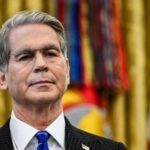
US President Donald Trump on Sunday (October 18) blamed immigration for the unrest sweeping France and urged the country to tighten its border controls, as violent protests left at least 1,800 people arrested, damaged hundreds of businesses and caused losses estimated at several hundred million euros.
“France is burning! The immigration of people from an entirely different world, people with hatred in their hearts, has shattered that once great country,” in a post on his Truth Social platform. “Close your Borders and take control, before it is too late!”
came a day after US Vice President . French authorities, however, have not linked immigrants to the rioting, attributing some of the violence to radical far-left groups and others who joined demonstrations to .
in a social media post: “Western liberals imported the third world into France and other countries in the name of diversity and compassion. They ignored fundamental questions of assimilation and compatibility. They were told it would lead to this and they didn’t listen. I pray that France, a beautiful country of amazing people, will stop this madness before more of its landmarks burn. And I hope Americans are paying attention. This is the future congressional Democrats seek for your country.”
The unrest has piled pressure on French President Emmanuel Macron, with rising living costs, inequality, deteriorating public services and poor conditions in schools.
According to French authorities, around 550,000 people participated in demonstrations across the country, while organisers put the figure at approximately 800,000. More than 500 police officers, gendarmes and firefighters were injured, Interior Minister Laurent Nuñez said.
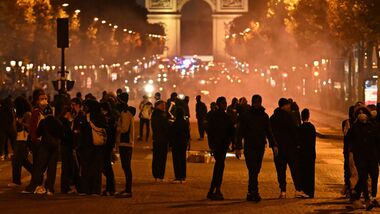
The demonstrations descended into violence in several cities on Saturday, with masked groups setting fires, attacking public buildings, clashing with police and looting businesses.
Alexandre Bompard, CEO of Carrefour and president of the Trade and Distribution Federation, estimated that around 1,500 retail establishments had been directly affected, according to Ukrinform. The damage to French retailers was estimated at several hundred million euros.
Businesses affected included supermarkets, clothing stores, sports retailers, luxury boutiques and mobile phone shops. Looting and damage were reported in Paris, Marseille, Lyon, Bordeaux, Nantes and Nice, among other cities.
In Bordeaux, Mayor Thomas Cazenave said up to 100 stores had been looted. Marseille Mayor Benoit Payan announced emergency financial assistance for businesses affected by the violence.
Paris Mayor Emmanuel Grégoire announced the creation of an emergency unit to help businesses assess the damage.
“The scale of the damage is considerable and unprecedented,” Grégoire wrote in an open letter, adding that the French capital must remain a place where people can demonstrate freely while ensuring that businesses can operate safely.
The damage extended beyond commercial establishments. In Limoges, a city in central , a fire engulfed the 19th-century city hall, causing its roof to collapse.
The protests began in September, when students at a high school in Créteil, southeast of Paris, demonstrated against staff shortages and deteriorating conditions in their schools.
The movement subsequently spread to other Paris suburbs and cities across France, with students organising class strikes, blockades and demonstrations. Hundreds of schools were forced to close because of damage or attacks on staff, according to reports.
Students have complained about under-resourced schools, dilapidated buildings and insufficient teachers, particularly in lower-income neighbourhoods. French media reports have highlighted problems including leaking roofs, damaged furniture, collapsed ceilings and rodent infestations.
Some students have also raised concerns about classrooms becoming unbearably hot during summer heatwaves and cold in winter because of inadequate facilities. Long school days and what students consider an unfair or complicated university admission system have added to their grievances.
The demonstrations have since expanded beyond education, drawing support from people angry about rising living costs, inequality, public spending cuts and the deterioration of public services.
The General Confederation of Labour (CGT), one of France’s largest trade unions, backed the protests and called for lower prices and higher wages and pensions.
This convergence of student anger and wider economic discontent helped turn a movement initially focused on school conditions into nationwide demonstrations involving hundreds of thousands of people.
Although many demonstrations remained peaceful, violent fringe groups targeted public buildings, looted shops and attacked police officers and vehicles.
Police used tear gas and water cannon in Paris, where demonstrators threw stones and fireworks. Violent incidents were also reported in Marseille, Rennes, Toulouse, Angers and other cities.
In Marseille, protesters stormed the town hall and painted an anarchist symbol on a wall. In Lyon, demonstrators set fire to the city’s tourism office.
French authorities said at least 1,800 people had been arrested nationwide. Paris police reported 855 arrests in the capital region alone, while the Paris prosecutors’ office said 557 people had been kept in police custody.
On Sunday morning, damaged storefronts, shattered glass, dislodged cobblestones and burnt-out bicycles marked the aftermath around Paris’ Place de la République and other commercial and tourist areas.
defended the right to peaceful demonstrations while condemning the violence.
“The right to protest is a fundamental right. Deliberately and collectively sowing disorder through violence is not,” he wrote on X, pointing to the looting of businesses across several major cities.
was scheduled to hold an emergency meeting with senior government officials on Sunday afternoon before addressing the nation at 8 pm, according to his office.
The unrest has put the French government under pressure to respond to both the immediate violence and the underlying grievances over education, living costs and public services.