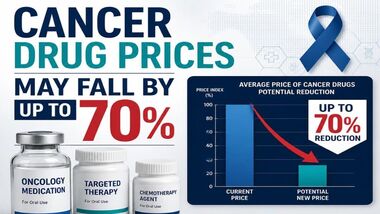
India’s drug pricing regulator, the National Pharmaceutical Pricing Authority (NPPA), has at 30% on 137 non-scheduled , a move expected to reduce their retail prices by up to 70%, depending on existing price structures.
The revised prices will take effect from November 9, according to a statement issued by the Ministry of Chemicals and Fertilisers on Saturday.
The , which functions under the Department of Pharmaceuticals, has implemented the Trade Margin Rationalisation (TMR) mechanism under Paragraph 19 of the Drugs (Prices Control) Order (DPCO), 2013, following the issuance of a gazette notification.
The intervention aims to make more affordable by curbing excessive margins across the distribution and retail supply chain.
The latest move follows recommendations from an expert committee constituted under the Directorate General of Health Services (DGHS). The committee comprises oncologists, medical specialists, hospital experts from across the country and government officials.
The panel recommended 137 anti-cancer formulations for trade margin rationalisation. The list will be updated periodically, the ministry said.
The initiative expands on the NPPA’s 2019 pilot programme, under which trade margins on 42 anti-cancer medicines were capped at 30%. That intervention resulted in maximum retail price (MRP) reductions of up to 90% across 526 brands.
The latest order extends the framework to a substantially larger basket of .
Under the new directive, pharmaceutical companies must publish revised price lists on their official websites and circulate them widely among retailers and hospitals.
Retailers and hospitals will be required to charge the revised prices from November 9 and display the updated rates in their pharmacies.
Hospitals, which directly procure a substantial share of oncology medicines, must also prominently display the revised prices on their websites. They will be directly responsible for ensuring that the new rates are implemented, the ministry said.
Consumers can check the revised prices through the NPPA website and the government’s Pharma Sahi Daam mobile application.
State drug controllers have also been directed to ensure compliance among manufacturers, distributors, retailers, hospitals and other medical institutions.
The NPPA said the measure is intended to curb excessive margins in the distribution and retail channels without affecting legitimate manufacturing revenues or triggering artificial shortages.
Pharmaceutical companies have been directed to maintain existing production and supply levels for the notified formulations to ensure uninterrupted access to essential medicines.
The ministry said the move is intended to improve affordability while safeguarding the availability of critical cancer treatments.
(With PTI inputs)