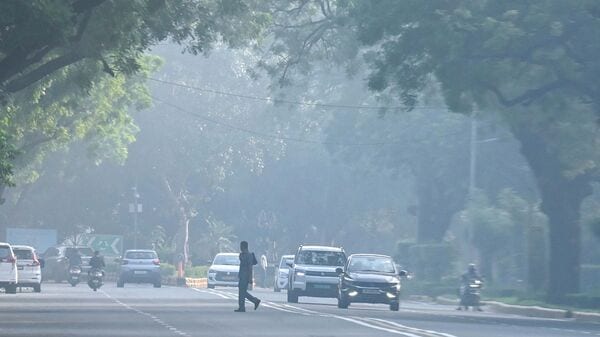
As Delhi, one of the world’s most polluted cities, braces for another winter of hazardous air, an expert panel’s proposal to mandate 100% zero-tailpipe-emission passenger vehicle sales by 2030 in the national capital region has opened a fresh divide in the automobile ecosystem.
Led by IIT Madras professor Ashok Jhunjhunwala, the panel has recommended a sales mandate for original equipment manufacturers (OEMs) selling private four-wheelers in Delhi-NCR. The proposed targets are 20% of new sales in 2027, rising to 45% in 2028, 70% in 2029 and 100% in 2030.
The recommendation has intensified the debate in the automobile industry, pitting proponents of battery-electric vehicles against industries representing compressed natural gas (CNG), ethanol and compressed biogas (CBG). At stake is whether Delhi-NCR should make a decisive shift to vehicles with zero tailpipe emissions or retain a technology-neutral approach that allows multiple fuels to play a role in reducing pollution.
Jhunjhunwala, chair of the Commission for Air Quality Management’s () Expert Committee on Vehicular Emission, told Mint that the panel deliberately rejected an incremental approach based on successive emission norms and alternative-fuel technologies.
“Let’s go all out for zero-emission vehicles. They are increasingly becoming economically viable,” he said. “Tomorrow, hydrogen vehicles will be available. We’re all for any zero-emission vehicle.”
The panel was constituted by CAQM to recommend steps to curb air pollution from transport. The recommendation has been submitted to CAQM which will now decide whether the measures can be implemented.
The 15-member committee Jhunjhunwala led included former AIIMS director Randeep Guleria as co-chair, along with experts and representatives from IITs, government ministries, NITI Aayog and think tanks.
Conversations with doctors helped sharpen the urgency of the exercise, Jhunjhunwala said.
The committee found that air pollution in Delhi-NCR affects people across age groups. It noted that the air quality index () has crossed 460 and that winter PM2.5 concentrations reach nearly 35 times the World Health Organization’s guideline level, exposing millions to hazardous air. It also flagged respiratory illnesses among older people, impaired lung development in children and long-term risks, including cardiovascular disease and diabetes.
The discussions and evidence convinced him that the objective should not simply be to reduce pollution gradually, but ultimately to eliminate it.
“Schools are being closed and children are not allowed to play outside. People are talking about incremental improvement. We have to move towards making daily AQI zero,” Jhunjhunwala said.
The recommendation comes as Delhi’s electric-vehicle policy 2.0 already provides for the introduction of mandates for passenger vehicles. Data from the Society of Indian Automobile Manufacturers show that Delhi is India’s ninth-largest passenger-vehicle market.
The implications could be significant for the industry, particularly Ltd, India’s largest carmaker, which has repeatedly advocated a multi-fuel strategy, with CNG accounting for a significant share of its sales.
The committee has also proposed timelines for taxis, light commercial vehicles, buses and trucks. Its recommendations include the immediate phase-out of BS-I to BS-III vehicles, followed by BS-IV vehicles by 2030, BS-VI two-wheelers by 2035 and BS-VI four-wheelers by 2040.
But the committee’s rejection of a multi-fuel approach has drawn the sharpest response from industry.
Seven industry bodies representing the ethanol, biogas and city-gas sectors have accused the committee of displaying a “pre-conceived and pre-determined inclination” towards battery-electric vehicles during stakeholder consultations, according to a statement shared with Mint.
The associations said their data on ethanol, CNG and CBG had not received a fair hearing and called for a technology-neutral approach.
Their argument is that Delhi’s immediate pollution problem is primarily one of ageing vehicles, rather than an issue that can be resolved by mandating a particular technology for new sales. Citing data submitted by CAQM to the Supreme Court in December 2025, the associations said pre-BS-VI vehicles account for more than 95% of Delhi’s vehicular pollution load.
“Several different industry associations have submitted written representations to senior Government authorities…raising concerns regarding the transparency and fairness of its process, the potential bias in the analysis and concerns regarding the perceived bias towards EVs,” the associations said.
Jhunjhunwala, however, said this was precisely the kind of incremental thinking the committee sought to move away from. He recalled how successive transitions from BS-II to BS-III, BS-IV and BS-VI had been accompanied by arguments that tighter standards would solve the pollution problem, even as the number of vehicles continued to rise.
For him, the issue is not simply about replacing one fuel with another. It is about pushing the ecosystem towards technologies that produce no tailpipe emissions, while giving the industry time to adapt.
“We have given enough time, 10-15 years,” he said. “My problem is that those who are working for some of these industries are looking at short-term profit and they just keep on lobbying.”
Jhunjhunwala has authored more than 100 research papers and is the subject of “Roots & Wings: Building India’s Deep Tech Ecosystem,” an authorised biography covering his work in technology.
Technology has long been central to his work. The proposed EV mandate is his latest attempt to apply that philosophy to Delhi’s .
He expects opposition to continue, but said it would not change his position.
“I know that there will be opposition. Frankly speaking, no opposition will make me not speak,” Jhunjhunwala said. “I’m not with this lobby or that lobby. I don’t care.”
“I stood for a certain truth and used technology to solve problems. I’ll continue to do that,” he added.