India’s para-cycling contingent for the 2026 Asian Para Games in Aichi-Nagoya, Japan, has been reduced to a single athlete following a selection dispute between the Sports Ministry and cyclists who were recommended by the national federation.
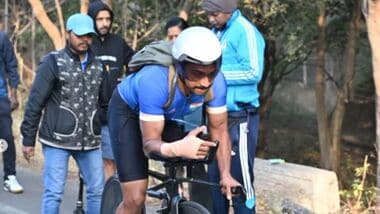
Paralympian Arshad Shaik is the only para-cyclist cleared for the , scheduled from 18 to 24 October. Pavan Kumar Kommoji Sameer, Prashant Arkal, Vishva Vasani, and Lisha Das were left out of the squad.
The decision came despite a joint selection committee of the Cycling Federation of India (CFI) and the Paralympic Committee of India (PCI) recommending six cyclists for the competition at its 28 August meeting.
The controversy centres on the difference between the federation’s recommendations and the government’s performance-based selection criteria. While the Sports Authority of India () has defended the decision, the excluded athletes have questioned the lack of individual explanations for their omission.
Only Shaik subsequently received approval to join the Indian contingent. The final squad approved by the Sports Ministry includes just one para-cyclist, making the discipline one of India’s smallest representations at the .
The excluded cyclists have argued that their recommendations were based on competitive performances, minimum qualifying standards, Asian rankings, Union Cycliste Internationale (UCI) rankings and international qualification requirements.
They have also raised concerns about the expenses they incurred to prepare for the competition, including international participation, equipment and prosthetics.
SAI maintained that the selection was based on the government’s prescribed performance benchmarks and that Shaik was the only cyclist who met the required criteria.
Shaikh finished fourth among nine competitors at the 2026 Asian Para Road Championships. He also placed fifth in the 1km time trial among eight participants at the Asian Para Track Championships. SAI cited these results in defending his selection.
An SAI source told news agency PTI that finishing fourth in a small field was not sufficient to merit selection in the case of the excluded cyclists. The source also argued that obtaining a qualification slot did not automatically guarantee selection, which was subject to the government’s performance requirements.
“Finishing fourth in a four-player field cannot be considered for selection. They are being misled by the Paralympic Committee of India (PCI) and the Cycling Federation of India (CFI),” the source said.
However, the authorities have not publicly provided a detailed, athlete-by-athlete explanation of why each of the five other cyclists on the list failed to meet the selection benchmarks.
The excluded athletes have disputed the decision, arguing that their performances, rankings and qualification credentials warranted consideration.
Speaking to PTI, Prashant Arkal expressed surprise at the omission, saying: “We have been in Leh preparing for the Asian Para Games all this while, we didn’t even know that our names have been omitted.”
Arkal also said that the government had approved only one athlete despite the cyclists having spent money from their own pockets to meet the qualification criteria.
“The Government’s approval lists only one athlete for Para Cycling even though we have spent from our own pocket to meet the qualification criteria,” he added.
The cyclists sought clarity from the authorities and protested outside the Jawaharlal Nehru Stadium in New Delhi.
Their demands included an explanation of the selection process and reconsideration of the decision. Shaik, despite being the only cyclist selected, also joined the protest in solidarity with his fellow athletes, according to The Times of India.
No. Qualification slots and final selection are separate processes. According to the reports, India’s position in the Asian UCI Nations Rankings made multiple slots available under the Asian Para Games qualification framework.
However, SAI maintained that athletes still had to satisfy the government’s selection criteria. The cyclists, meanwhile, argued that their rankings and qualifying performances should have been taken into account when the final squad was decided.
The disagreement has therefore centred not simply on the number of available slots, but also on how the selection benchmarks were applied.