



A tiny freshwater alga and an Indian scientist’s doctoral research in Germany are part of the scientific journey behind the 2026 in Physiology or Medicine.
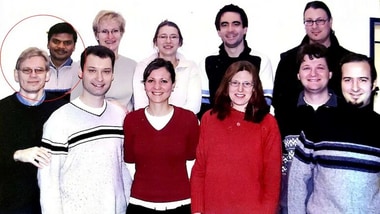
In 2001, Suneel Kateriya was working in Professor Peter Hegemann’s laboratory in Regensburg, Germany, when he searched the genes of Chlamydomonas, a single-celled alga that can detect and move towards light.
Kateriya identified two light-sensing proteins. The were later named channelrhodopsin-1 and channelrhodopsin-2.
More than two decades later, Kateriya is a professor at Jawaharlal Nehru University (), while his work forms part of the scientific foundation behind optogenetics — a technique that allows researchers to control selected cells, including neurons, using light.
The Nobel Assembly awarded the 2026 medicine prize to Karl Deisseroth, Peter Hegemann and Georg Nagel for the discovery of light-gated ion channels and optogenetics.
Kateriya has described his contribution as part of a broader collaborative effort.
“Fundamental science and academic excellence are needed for bigger innovations,” he told India Today Digital.
The original research was not aimed at understanding the human brain.
“We had a fundamental question: how is this alga sensing light, and where are the genes?” Kateriya said. “We never thought it would be used for controlling the human brain.”
The researchers found gene sequences encoding rhodopsin proteins and proposed that they could function as light-driven ion channels.
Experiments that followed showed that these proteins act as tiny molecular gates: light causes them to open, changing a cell’s electrical activity. The first findings involving channelrhodopsin-1 appeared in Science in 2002, followed by research on channelrhodopsin-2 in PNAS in 2003.
Neurons communicate through electrical signals involving the movement of charged particles, or ions.
Channelrhodopsin combines a light sensor with an ion channel. When its gene is introduced into a neuron, light can effectively be used to switch that neuron on or influence its activity.
Professor Nishith Gupta of BITS Pilani’s Hyderabad campus explained why that was significant.
“We could stimulate the brain long before optogenetics,” he said. “What we lacked was the ability to choose a particular population of neurons and control its activity on the millisecond timescale at which the brain communicates.”
Dr Santhosh Sethuramanujam of IIT Madras said older approaches could affect multiple cell types across a brain region, whereas optogenetics allows more targeted control.
“By simply shining light on brain tissue, scientists can switch targeted cells on or off with pinpoint, millisecond precision,” he said.
Optogenetics has since been used to study neural circuits and memory, including experiments in mice that linked specific neurons to learned fear responses.
The technology has also entered early-stage human research. In a 2021 trial, a patient with retinitis pigmentosa received a gene carrying a channelrhodopsin called ChrimsonR. Special goggles then projected light onto the retina.
With the goggles, the patient could perceive, locate, count and touch objects using the treated eye. Without them, the patient could not detect them.
It was a partial recovery in one patient, not restoration of normal sight.
“Blindness is furthest along because the retina is accessible both to gene delivery and to light,” Gupta said.
Despite the promise, optogenetics remains largely a research technology. Scientists still face challenges involving gene delivery, long-term safety, cell-specific targeting and the intensity of light required.
“If I had to name the biggest barrier, it would be achieving safe, durable control of precisely the right cells in the human brain,” Gupta said.
Indian laboratories are also using optogenetics to study vision, glioblastoma and genetic diseases.
For Kateriya, the journey has come full circle: from identifying light-sensitive genes in a microscopic alga as a PhD student to using related tools at JNU to study disease.
“Peter taught me hours and hours, as a PhD student,” he said. “That is very important.”